 What That Noise Is Actually Telling You
Baltimore's 1960s-70s housing stock and severe cold winters mean specific garage door noises point to specific failures.
BlogBaltimore, MD · 4 min read
Wind, Wide Doors, and the Houses Baltimore Actually Has
Why wide garage doors on Baltimore's 1960s-70s housing stock struggle with wind, what the cold-severe climate band does to track hardware, and what a repair runs.
Local detail
How Local Conditions Play In
Baltimore's service area runs across 58 named communities, and the housing under those garage doors mostly went up between 1955 and 2014, with the median landing around 1978. That's not a coastal resort build-out with hurricane-rated everything. It's mid-century and later suburban stock, a lot of it clustered in the 1960s and 70s, where the garage door was specified to keep rain and cold out, not to resist sustained lateral pressure across a 16-foot opening. The climate band here is rated cold and severe, which matters for a different reason than most people assume: it's not the summer storm gust that does the damage over time, it's the repeated freeze-thaw cycling that loosens track bolts and lets hardware shift just enough that a door which held fine in October starts racking sideways by February. A double-wide door depends on everything - tracks, rollers, the center stile if there is one - staying square. Once the fasteners creep, wind doesn't need to be extreme to find the weak point.
The area
What Is Going On
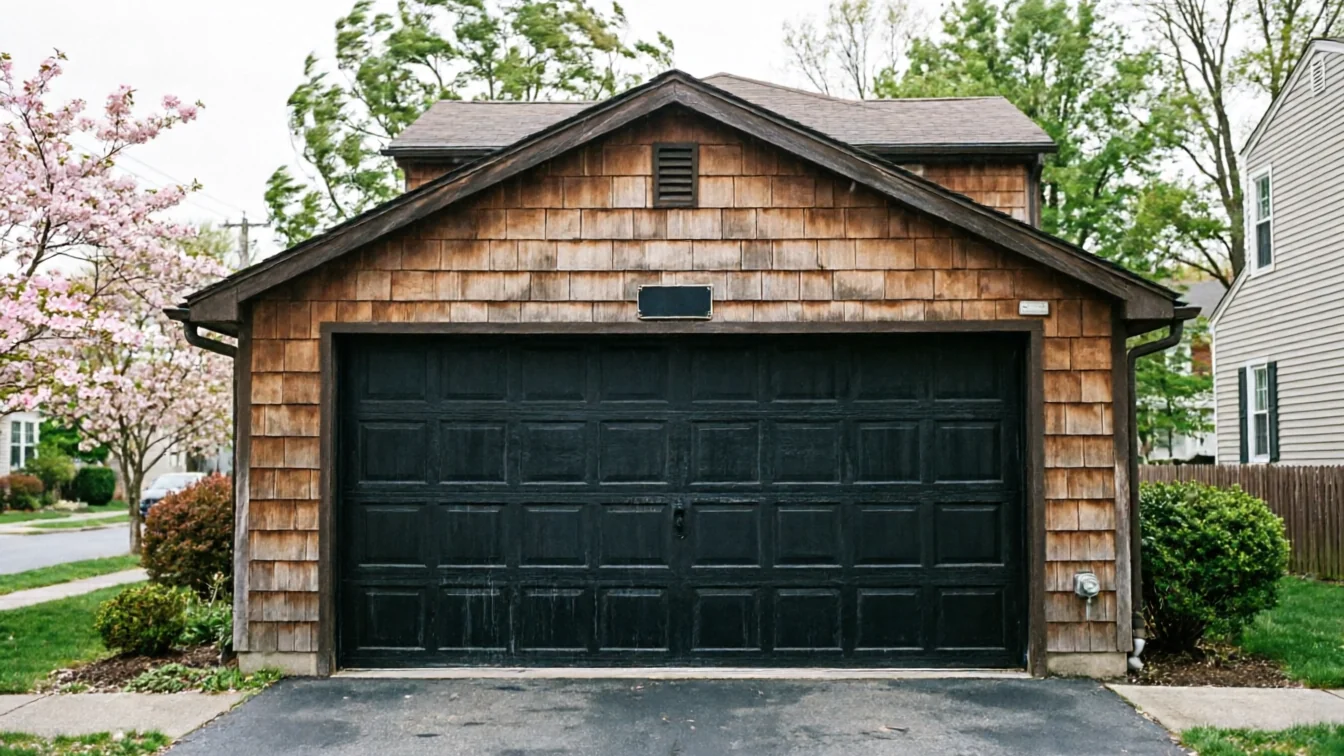
A single door, 8 or 9 feet wide, handles wind load fine on most residential hardware because the whole panel acts as one stiff unit. A double-wide door, 16 feet across, is a different structure - it's really two door-widths of surface area hung on the same two tracks, and wind pressure doesn't push evenly. It concentrates where the panel has the least support, usually the horizontal center seam on doors without a reinforcing strut. Houses from the 1960s and 70s stock that makes up most of this area, per the record on what got built here, were rarely fitted with that reinforcement because it wasn't yet standard practice. So you end up with original or close-to-original double doors, now 50-plus years old in some cases, on hardware that was adequate for the day but was never rated against modern wind-load tables. Add in a cold-severe climate that stresses metal and fasteners every winter, and you get doors that bow outward in a gust, then slam back - the sound homeowners describe as the door 'breathing.' That flex is what eventually cracks a panel seam or pulls a hinge loose, not one dramatic storm.
What we find
What Most People Get Wrong
The common assumption is that a door either survives wind or it doesn't, and if it's still standing it's fine. It isn't that simple on a wide door from this era. The racking happens gradually - a little bow, a little more slack in the track bolts, a hinge that starts to wallow out its screw holes - long before anything visibly fails. People also assume reinforcement struts are something you add after a door gets damaged. On a double-wide door from 1960s or 70s stock, a strut across the center section is often the fix that should have gone in years ago, not an upgrade for later. The other mistake: treating every wide door the same way regardless of what's underneath it. A door on a house from this area's median build year of 1978 has different gauge steel and different track spacing than something installed in the 2000s, and a repair that works on one won't necessarily hold on the other. We don't guess at that part - we look at what's actually hung before we say what it needs.
How we work
What You Pay
We don't have a flat number to quote here without knowing which hardware you've got - panel gauge, whether there's an existing strut, and how far the track bolts have crept all change the job. What we can say is that reinforcing a double-wide door with a center strut is almost always cheaper than replacing a cracked panel after the fact, and on housing stock built in the 1960s and 70s that makes up most of this service area, that's the repair we see most often turn into a bigger job if it's put off. If your door is original to a house from that era and it's never had the hardware checked, that's the honest place to start, not a full replacement - most of these doors don't need replacing, they need the track and strut brought up to what the opening actually demands.
Questions
Common questions
Does a wide garage door really need extra reinforcement for wind?
If it's a double-wide door - roughly 16 feet - without a center strut, yes, especially on houses from the 1960s and 70s stock common across this area. Those doors were built to a standard that predates modern wind-load expectations, and a strut across the center seam is usually the missing piece.
Why does my door flex or bow in the wind?
That's the panel and track responding to pressure they weren't braced for. It's common on older double-wide doors in this area's housing stock. The flex itself won't break the door overnight, but repeated bowing loosens fasteners and eventually cracks a seam or pulls a hinge.
Is a cold winter actually part of the problem?
Yes. The climate band here is rated cold and severe, and the freeze-thaw cycle loosens track bolts and hinge screws over a season. A door that held up fine through fall can rack more easily by late winter once that hardware has crept.
Should I replace the whole door or just add a strut?
Depends on the panel and track condition, which we check before quoting anything. A lot of doors on houses from this era's stock just need a strut and tightened hardware. Full replacement only makes sense if the panel's already cracked or the track is bent beyond adjustment.
Recommendation
You Might Also Like
More garage door guides for Baltimore homeowners.
What That Noise Is Actually Telling You
Baltimore's 1960s-70s housing stock and severe cold winters mean specific garage door noises point to specific failures.
 Openers and Power Cuts in Baltimore Garages
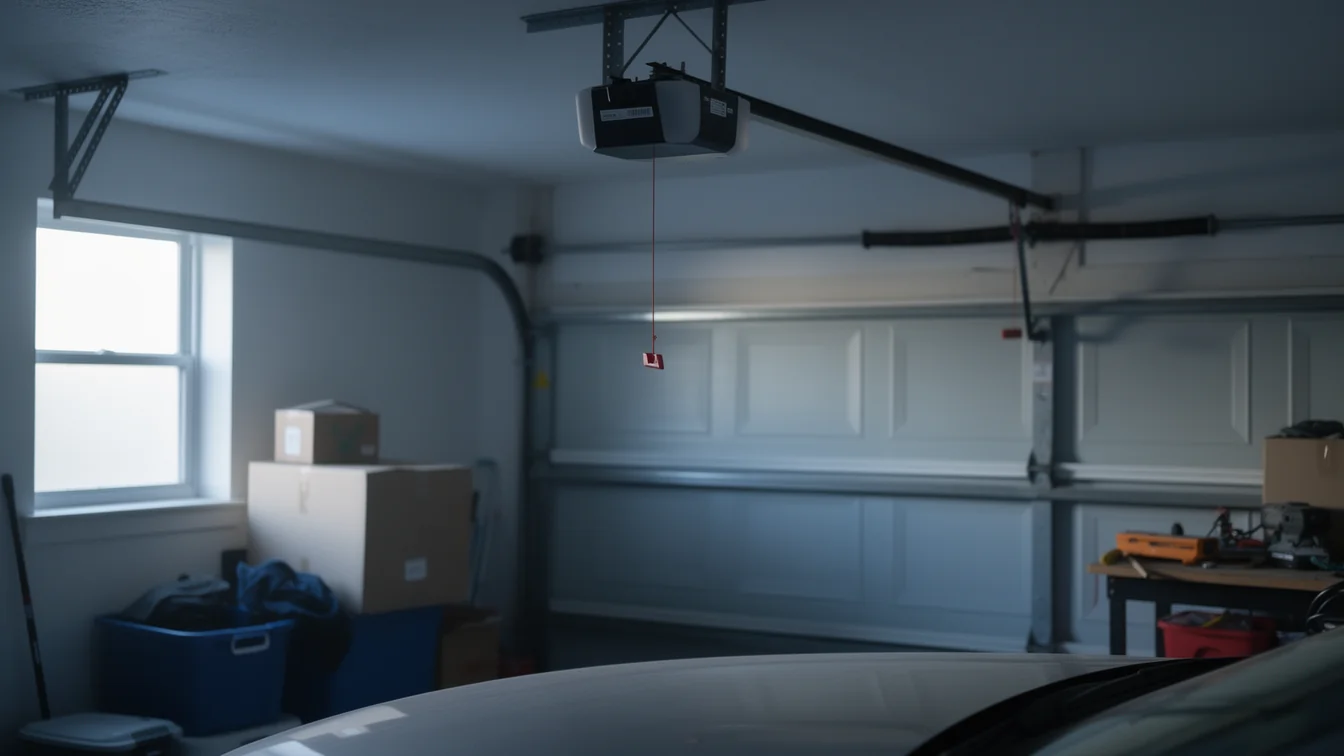
Baltimore's older housing stock and severe cold winters mean openers fail at the worst time.
 When a Spring Goes in Cold Weather in Baltimore
Baltimore's 1960s-70s housing stock and severe cold winters put real strain on torsion springs.
Ready when you are
Need a garage door sorted in Baltimore?
Baltimore Garage Door Pros repairs and installs garage doors, springs and openers in Baltimore, MD and the surrounding area.