 When a Spring Goes in Cold Weather in Baltimore
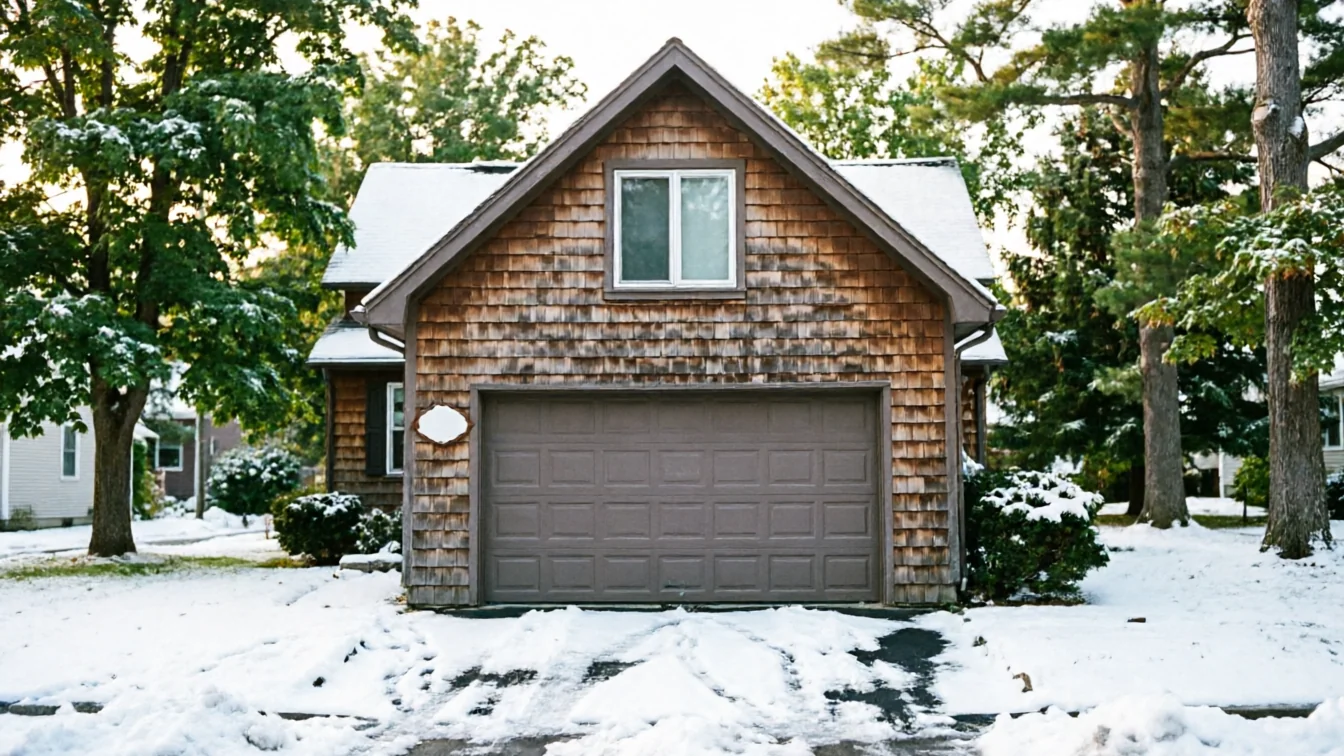
Baltimore's 1960s-70s housing stock and severe cold winters put real strain on torsion springs.
BlogBaltimore, MD · 5 min read
Why a Garage Door Goes Off Track Around Baltimore
Baltimore's 1960s-70s housing stock and cold winters push doors off track in specific ways. Here's what causes it and what a fix actually costs.
Local detail
How Local Conditions Play In
Most of the housing across this service area went up between 1955 and 2014, with a lot of it clustered in the 1960s and 70s across the 58 named communities we cover, from Lansdowne and Brooklyn Park a few miles out to Towson, Dundalk, and Arbutus. That era of construction used tracks and roller hardware sized to the door weight standards of the time, and forty to sixty years on, a lot of that original hardware is still in the opening, just worn.
The climate here is the other half of it. Baltimore sits in a cold, severe band, which means real freeze-thaw cycling every winter. Track brackets mounted to a wood jamb expand and contract with the temperature swings, and the lag screws holding them loosen a fraction of a turn at a time. You don't notice it happening. You notice the door one day when a roller pops out of the track on a cold morning and the door hangs crooked halfway up.
Houses closer to the water side of the service area, toward Dundalk or Edgemere, see a bit more humidity swing on top of the cold, which adds rust to the list of things working against the hardware.
The area
What Is Going On
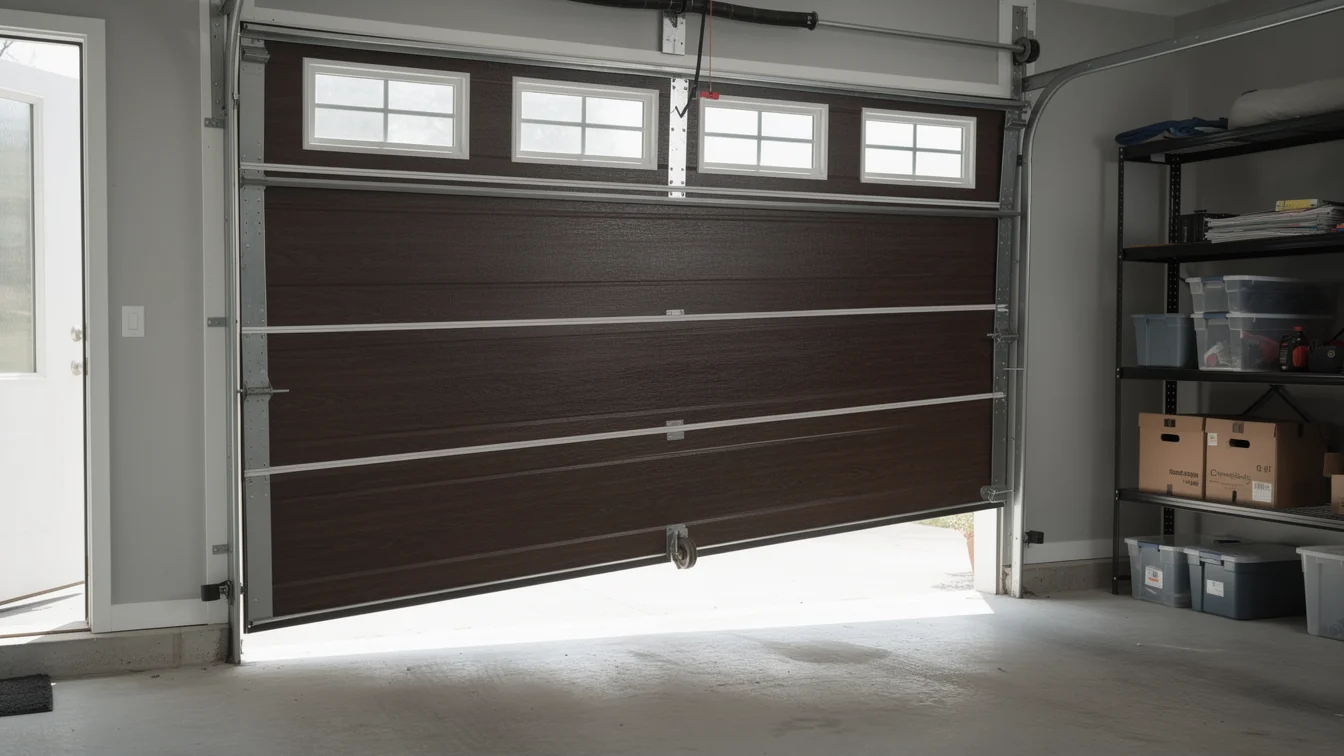
A door goes off track for one of a few reasons, and in a house from this era it's almost always one of these. The track itself has bent, usually from someone backing into it or from the door being forced down against an obstruction. The brackets holding the track to the frame have worked loose from decades of vibration and seasonal movement, which lets the whole track rail shift out of alignment. Or a cable has frayed and jumped its drum unevenly, pulling one side of the door up faster than the other until a roller rides off the rail.
On a lot of the 1960s and 70s builds we see in this area, the original track brackets are still the ones installed at construction. Steel doesn't fail quietly after fifty-plus years of winter contraction and summer expansion - it fatigues at the screw holes first, and that's exactly where we find the problem.
A door that's off track on one side only, with the other side still rolling fine, points almost every time to a bracket or a bent section rather than a spring issue. A door that drops straight down and binds on both sides points somewhere else entirely - usually a cable or a broken spring, not the track.
What we find
What Most People Get Wrong
The instinct is to grab the door and muscle it back onto the rail. Don't. A door under spring tension that's already partway off track can come down fast and hard, and that's how people get hurt or bend the track worse than it already was.
The second mistake is assuming a new track fixes it. If the brackets are the original 1960s or 70s hardware and they've loosened at the screw holes, a new track bolted to the same worn wood will work loose again within a year or two. The fix in houses this old is usually the bracket and the framing behind it, not just the rail.
Third: people wait. A door that's slightly off track still looks like it's working, so it gets ignored through a winter or two. Each cold cycle after that loosens things further and puts more side-load on the opener, which is a more expensive repair than the track ever was. Catching it when the door first starts to run unevenly - a slight shimmy, a scrape near the top of the track - is cheaper every time than catching it after a roller jumps.
How we work
What You Pay
We don't have a flat number to put here that would hold up across every job, because what you pay depends on whether this is a bent section of track, a loose bracket that needs re-anchoring into older framing, or a cable that's taken the roller with it. Those are three different repairs with three different parts lists.
What we can tell you is what drives the cost up in houses like the ones across this service area: original hardware from a 1960s or 70s build often means the mounting surface behind the bracket has degraded, so the job isn't just swap-the-part, it's rebuild-the-anchor-point first. That adds labor time that a newer house in a newer build year usually doesn't need.
The honest limitation here: if a track is bent in more than one place, or if the door itself has racked from being forced while off track, patching the track isn't worth it. At that point you're often better served putting the money toward a new track and roller set than chasing a bend that'll fight you later. We'll tell you straight which one you're looking at before any work starts.
Questions
Common questions
Can I push my garage door back onto the track myself?
No. If the door is partway off track it's likely still under spring tension, and pulling or pushing on it can bring it down fast. Leave it where it is, don't run the opener, and get it looked at before touching it further.
Why does this happen more in winter here?
Baltimore sits in a cold, severe climate band, and the freeze-thaw cycling works mounting screws loose in the wood jamb a little more each season. Add decades of that cycling on original 1960s or 70s hardware and brackets eventually give.
Is a bent track always the cause?
Not always. A loose bracket or a frayed cable that's jumped its drum can both pull a roller off the rail without the track itself being bent. We check all three before quoting a fix.
How do I know if it's the track or the opener?
If the door shimmies or scrapes near the top of its run before the opener even engages hard, that's usually the track or hardware. If the opener strains, grinds, or reverses on its own, that's a separate problem.
Recommendation
You Might Also Like
More garage door guides for Baltimore homeowners.
When a Spring Goes in Cold Weather in Baltimore
Baltimore's 1960s-70s housing stock and severe cold winters put real strain on torsion springs.
 What That Noise Is Actually Telling You
Baltimore's 1960s-70s housing stock and severe cold winters mean specific garage door noises point to specific failures.
 Openers and Power Cuts in Baltimore Garages
Baltimore's older housing stock and severe cold winters mean openers fail at the worst time.
Ready when you are
Need a garage door sorted in Baltimore?
Baltimore Garage Door Pros repairs and installs garage doors, springs and openers in Baltimore, MD and the surrounding area.