What the Repair Takes
Most of the houses we install on went up between 1955 and 2014, with the median around 1978, and across the 58 named areas we work in - Dundalk, Catonsville, Towson, Rosedale, and the rest - that means the jamb and header framing were sized for the doors of that decade, not today's.
Install sequence and framing
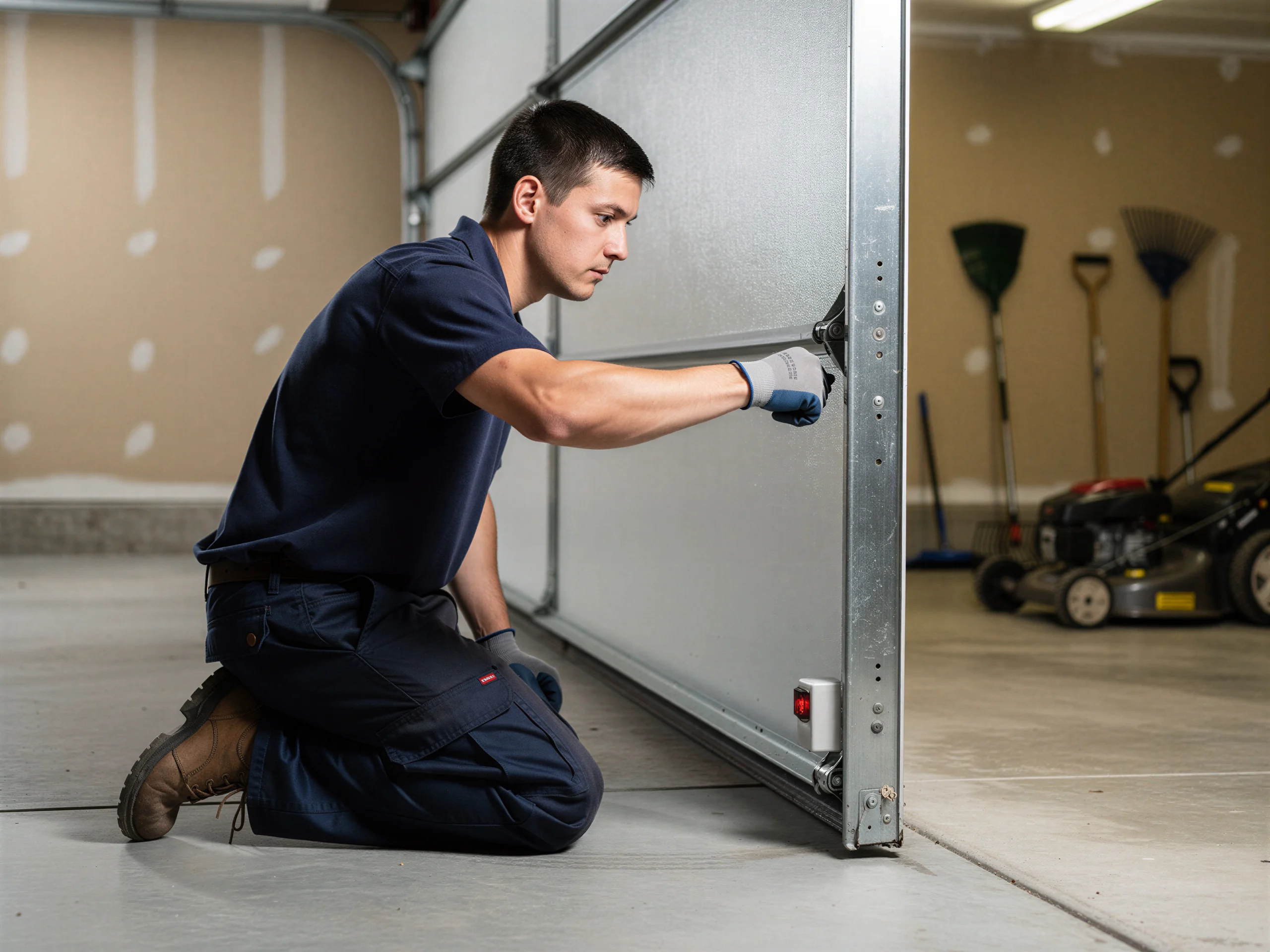
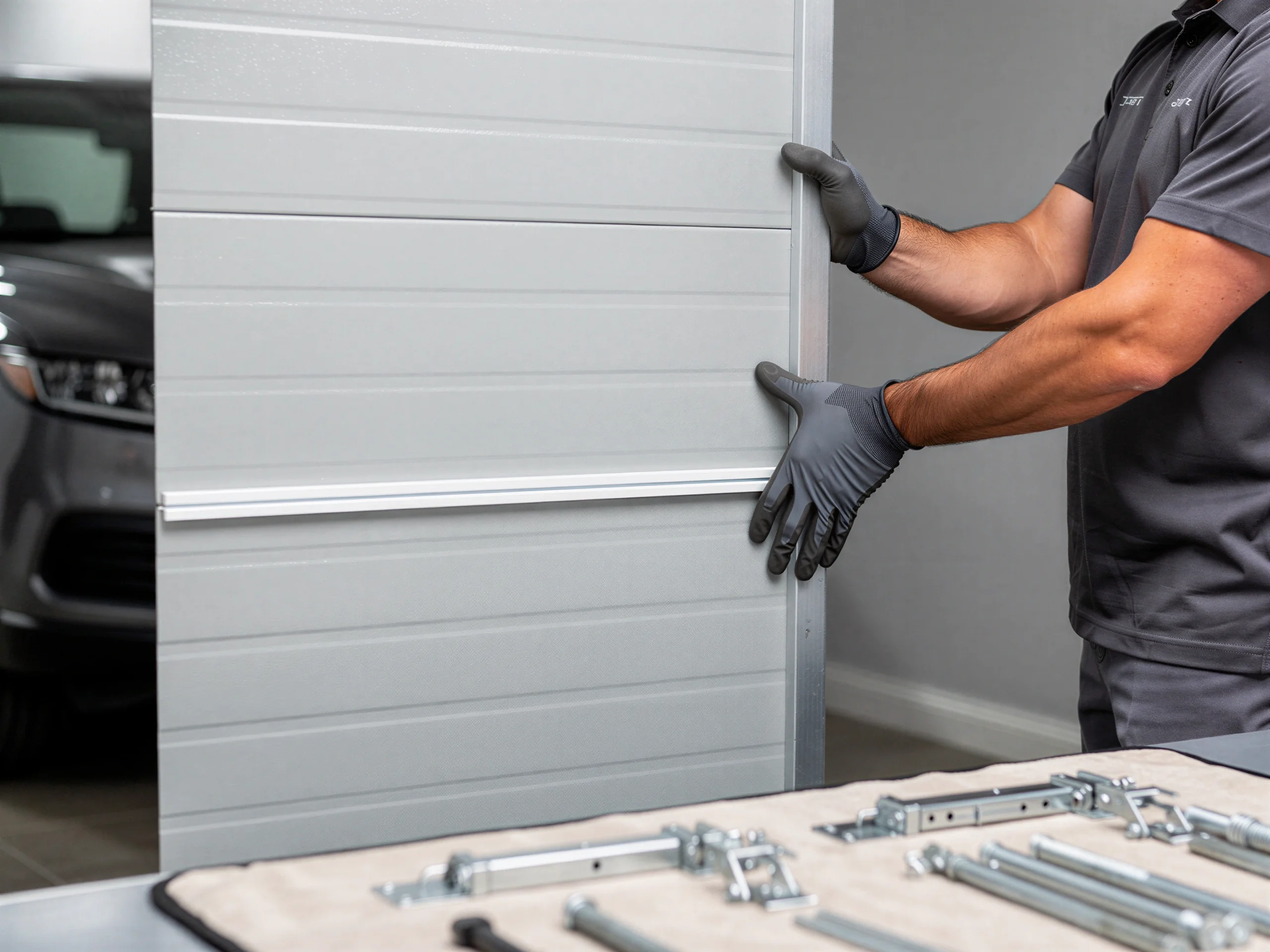
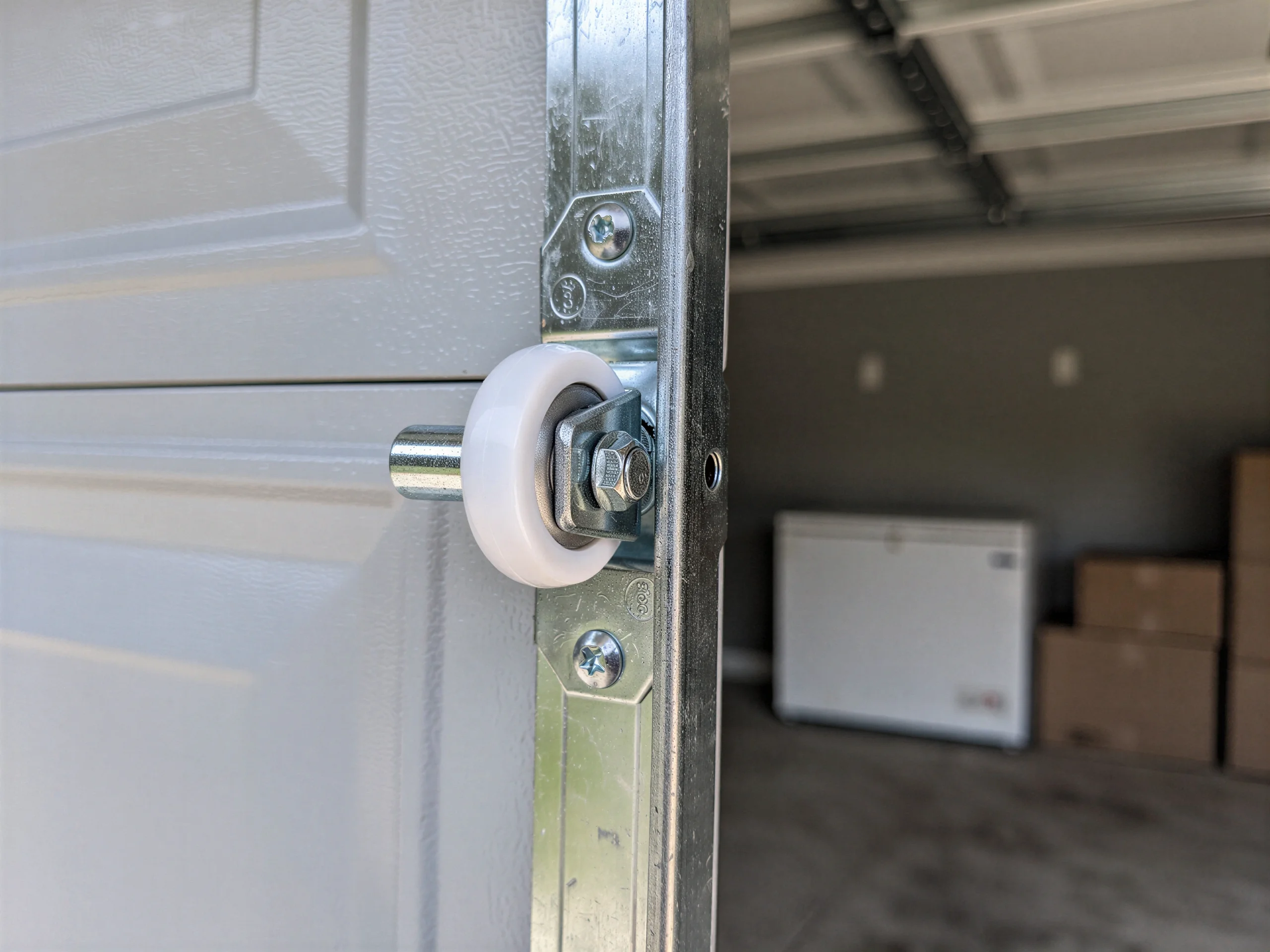
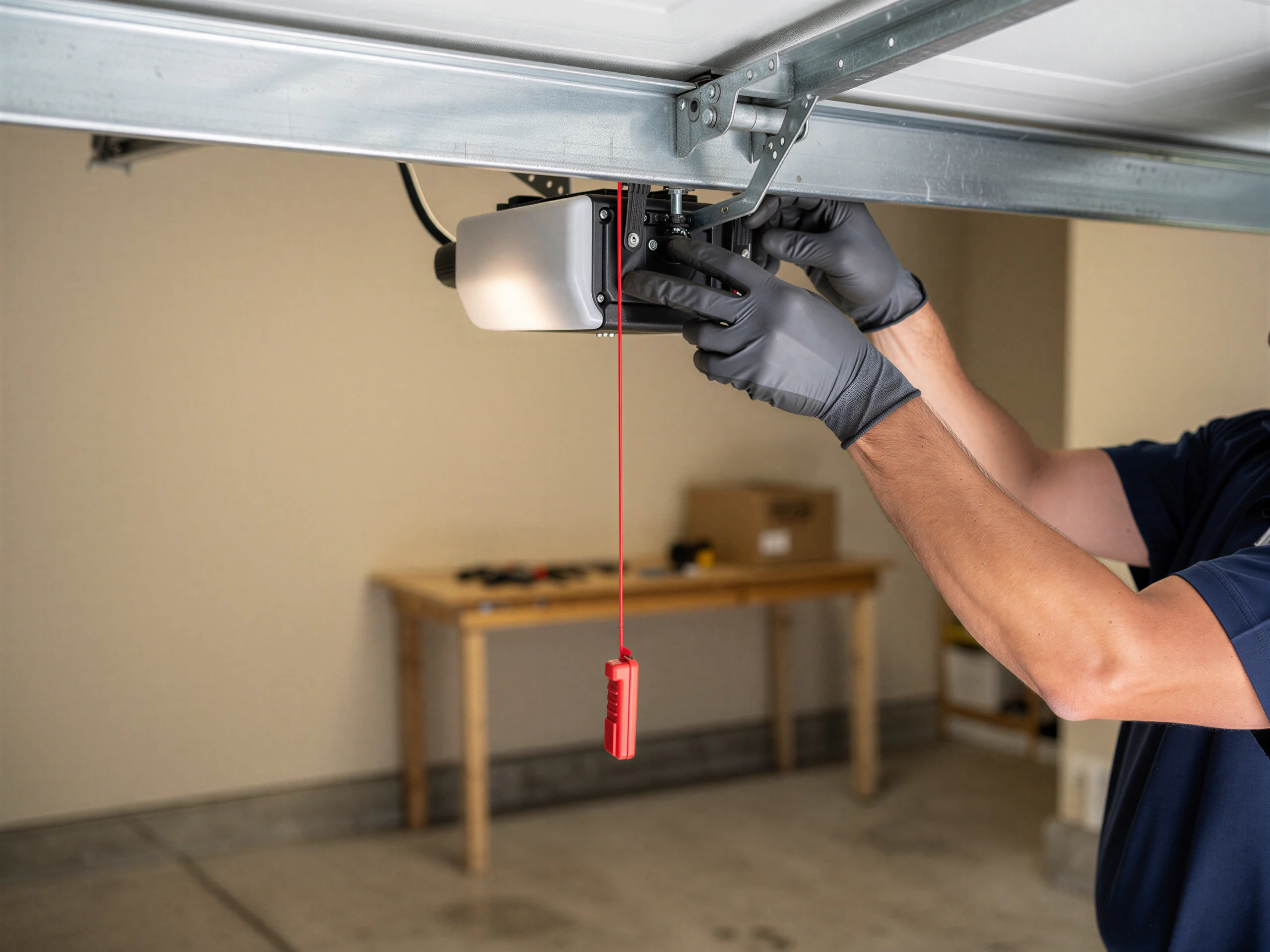
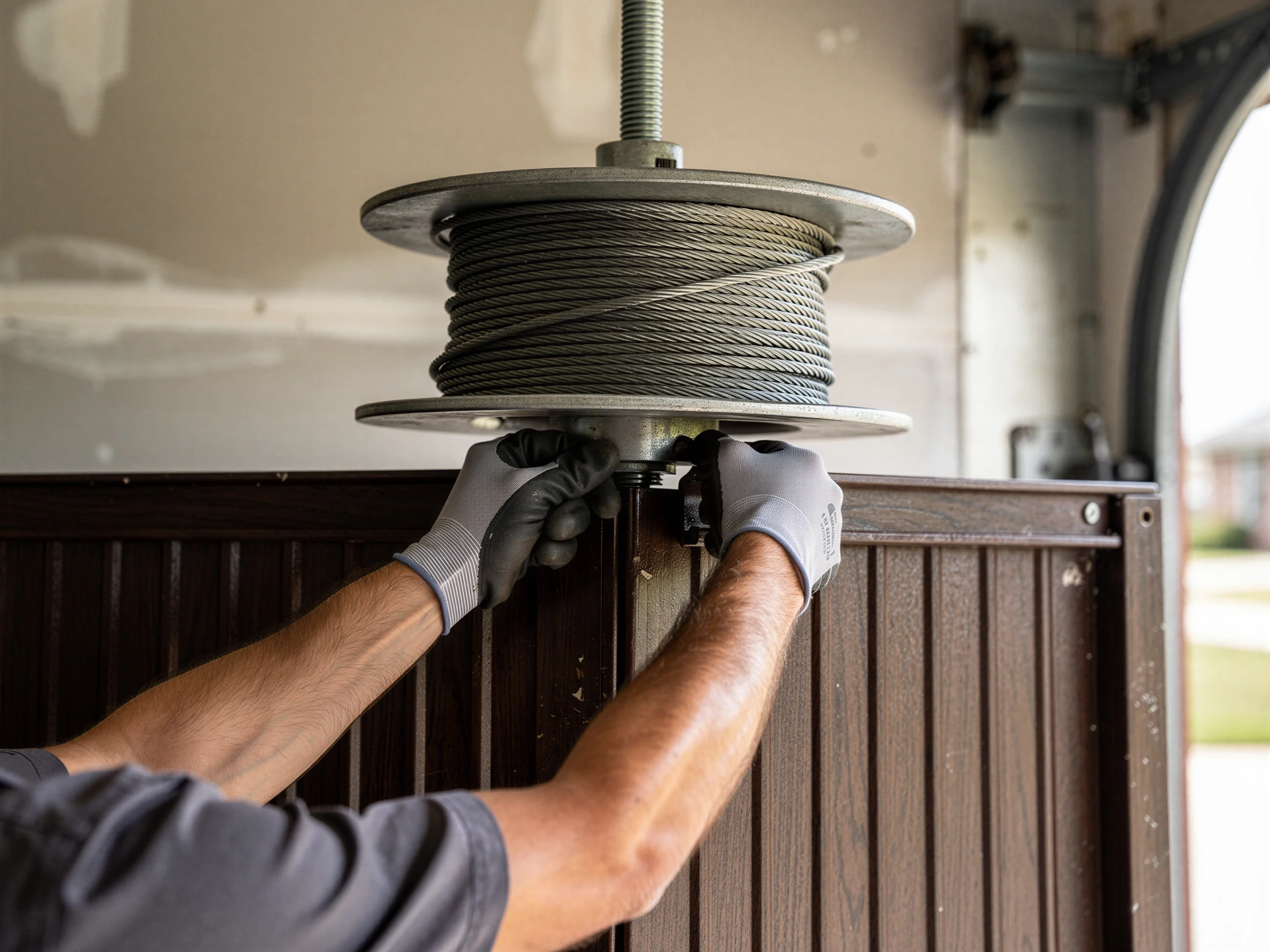
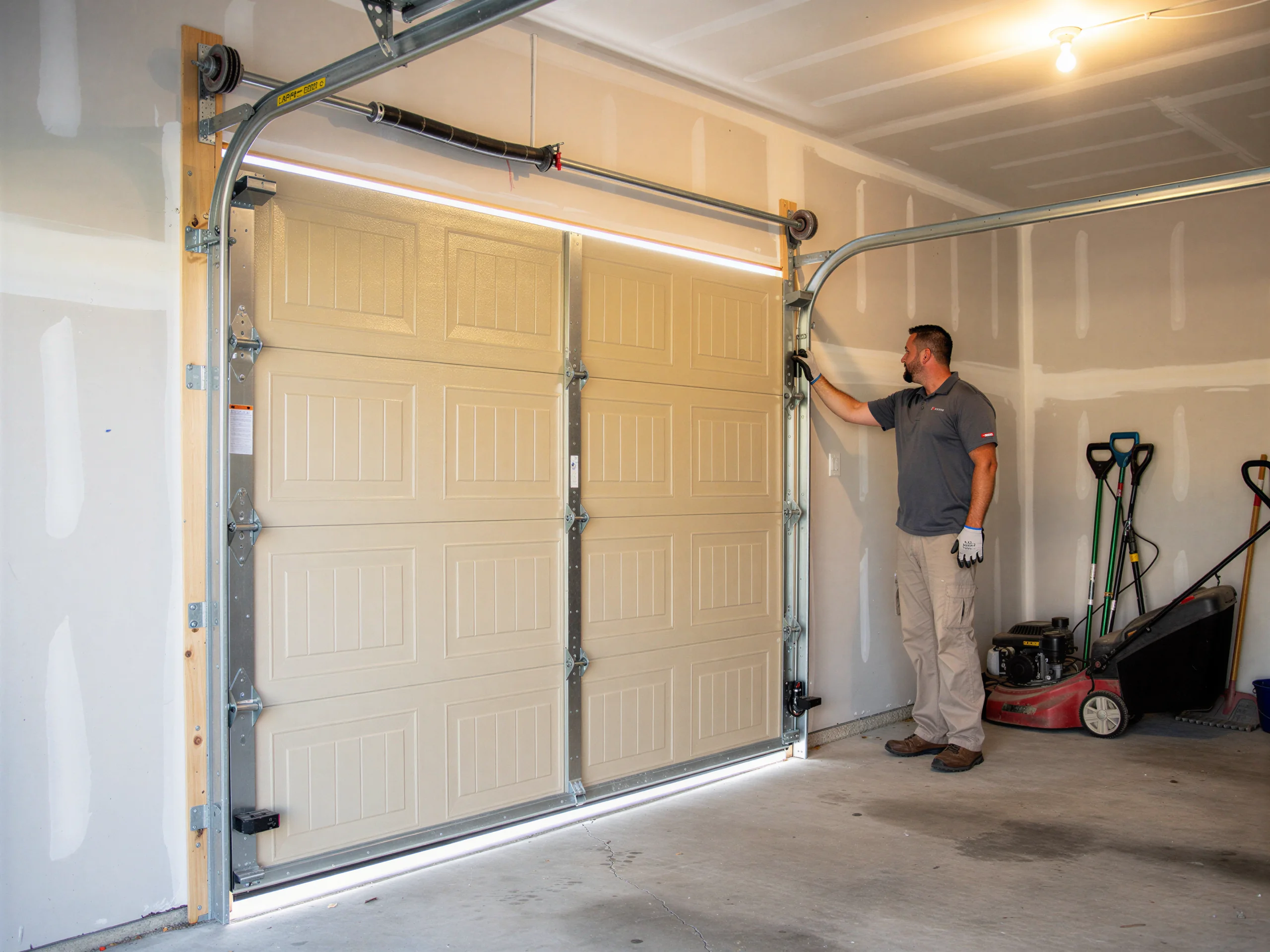
A proper install starts with pulling the old door and track off the original wood jamb, checking that framing for square and rot before anything new goes up, then setting new track, torsion hardware, and the opener bracket to match the header you actually have, not a generic one.
Shimming and re-squaring jamb
On a lot of the 1960s and 1970s rambler and rowhouse stock, the jamb has shifted a half-inch or more over fifty years, so we shim and re-square before the door ever gets hung. Skip that step and the new door binds on one side within a year.
Spring sized to headroom
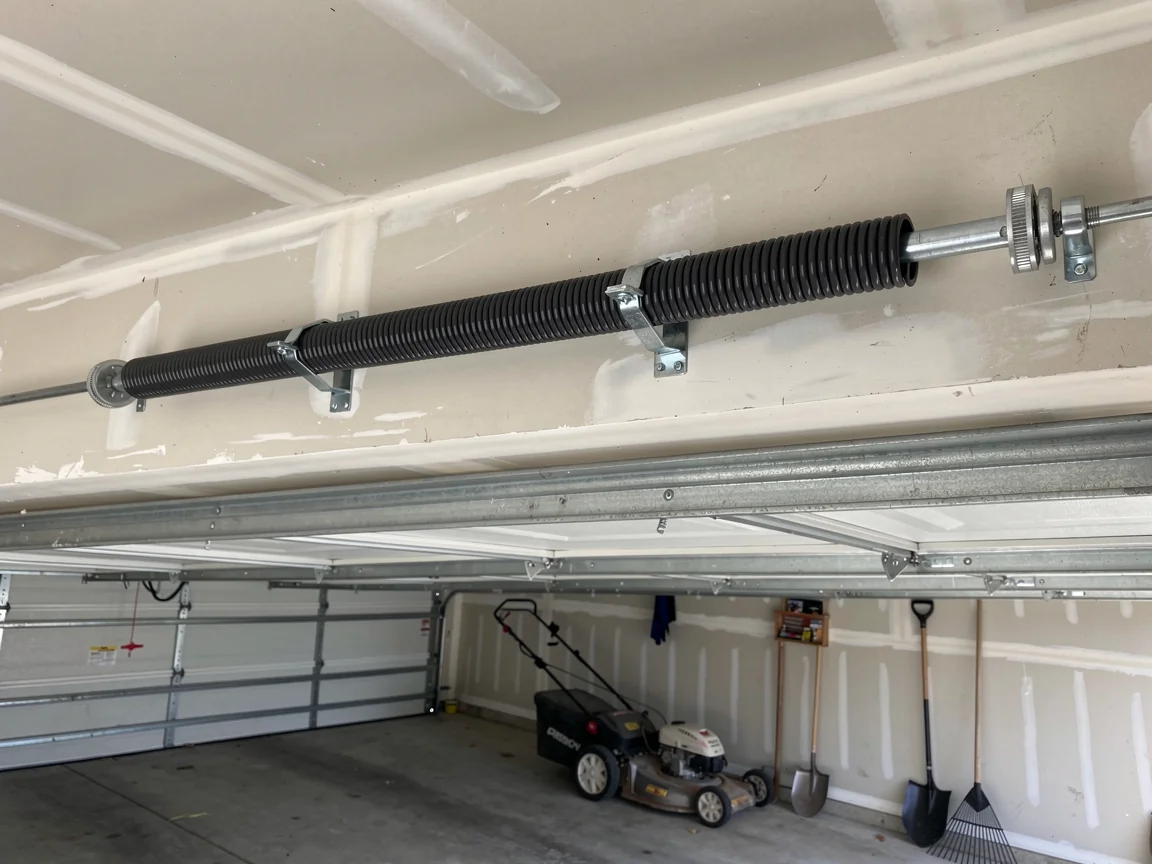
We size the torsion spring to the door weight and headroom you have, not a stock number off a shelf - a 16-foot double door on an older low-headroom opening often needs a different spring and drum setup than the same door on new construction. We don't guess at this part; it's the difference between a door that opens smooth for years and one that strains the opener from day one.
How It Shows Up
The call usually comes after the old door has been failing for a while - a panel that's rusted through at the bottom corner, a wood door that's swollen and dragging on the track every winter, or an opener straining because the spring was never matched to the door in the first place.
Uninsulated original steel doors
On houses from the 1960s and 70s, we see a lot of original steel doors with no insulation and side-mounted torsion springs that were never serviced because nobody stocks the parts anymore. Owners notice it as a door that's gotten loud, or one that won't seal at the bottom and lets cold air into the garage all winter.
Sizing for newer openers
Sometimes it's simpler: the door still works but it's the wrong size for a newer opener, or a homeowner wants an insulated door because the old uninsulated steel is costing them on heating.
Problems building over seasons
Either way, by the time someone calls us for installation rather than a spring swap, the door has usually been a known problem for a season or two, not a surprise.
What Causes It Around Here
Baltimore sits in a cold, severe climate band, and that matters more for garage doors than most people think. A door that cycles from well below freezing to warm and back, repeatedly, over a winter stresses steel panels, hardware, and the seals at the bottom and sides faster than a mild climate would. On the older stock - the 1960s and 70s houses that make up most of what we install on - original doors were built with thinner steel and no thermal break, so that temperature swing shows up as warped panels, cracked bottom seals, and hardware that's seized from rust rather than wear. Rowhouses closer to the water side of the service area, down toward Curtis Bay and Hawkins Point, add salt air into that mix, which speeds up corrosion on uncoated track and hinges. None of that is unique to one street - it's a function of the climate band and the age of the housing stock across the whole area, which is why we see the same failure pattern on a rambler in Parkville as on a rowhouse in Brooklyn.
How Long You Are Without the Door
A standard single or double door install, once we're on site with the right door in hand, is usually a one-day job - old door off, jamb checked, new track and spring set, door hung and balanced, opener reconnected. What stretches that timeline is custom sizing. A lot of the older 1960s and 70s openings in this area aren't standard width or height by today's manufacturing spec, so a non-standard door has to be ordered, and that lead time is outside our control - we'll tell you honestly if your opening needs a special order rather than promising a date we can't hit. We also won't rush a jamb repair to hit a one-day install if the framing's rotted; patching that properly sometimes adds a half day. We'd rather tell you that up front than have the door fail inspection or bind six months later.
Talk to a local pro
Garage door service in Baltimore?
Same-day service with honest, upfront quotes.