
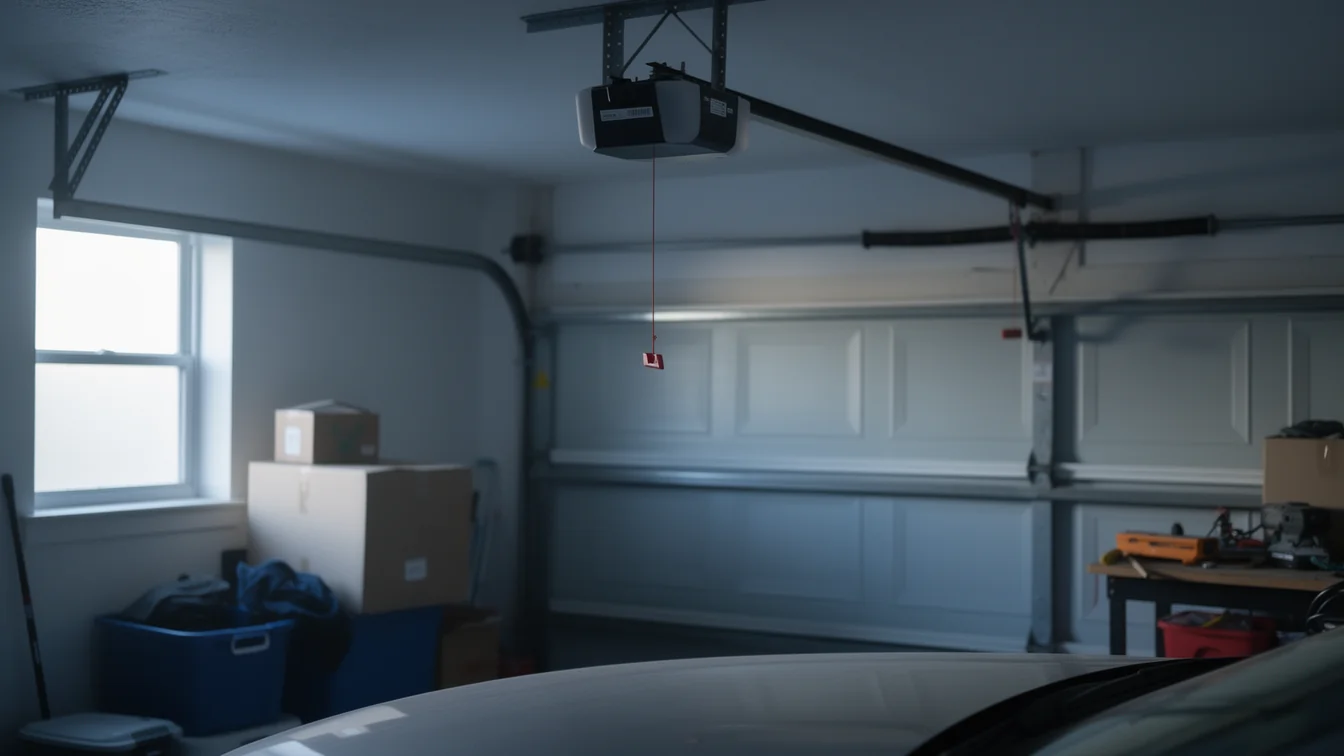
 Openers and Power Cuts in Baltimore Garages
Baltimore's older housing stock and severe cold winters mean openers fail at the worst time.
BlogBaltimore, MD · 4 min read
Why Safety Sensors Keep Drifting in Baltimore Garages
Baltimore's older slabs and freeze-thaw swings knock photo-eye sensors out of alignment more than most towns. Here's why it happens and what fixing it actually involves.
Local detail
How Local Conditions Play In
Most of the housing stock around here went up between 1955 and 2014, with a lot of it clustering in the 1960s and 70s across the 58 or so named areas that ring the city - places like Dundalk, Catonsville, Woodlawn, and Parkville. Garages from that era were framed before anyone built a door opener with a photo-eye safety sensor in mind, so the brackets got added later, often screwed into whatever stud or trim board was closest rather than a surface built to hold its position.
Baltimore sits in a severe cold climate band, and that matters more than people think. A concrete slab heaves and settles with every freeze-thaw cycle, and in a region that swings hard between winter cold and summer humidity, that movement doesn't stop. The slab under one sensor bracket can settle a sixteenth of an inch lower than the other side over a few seasons. That's enough to throw the beam off. It's not a one-time installation error - it's a slow drift that repeats every year the ground moves.
The area
What Is Going On
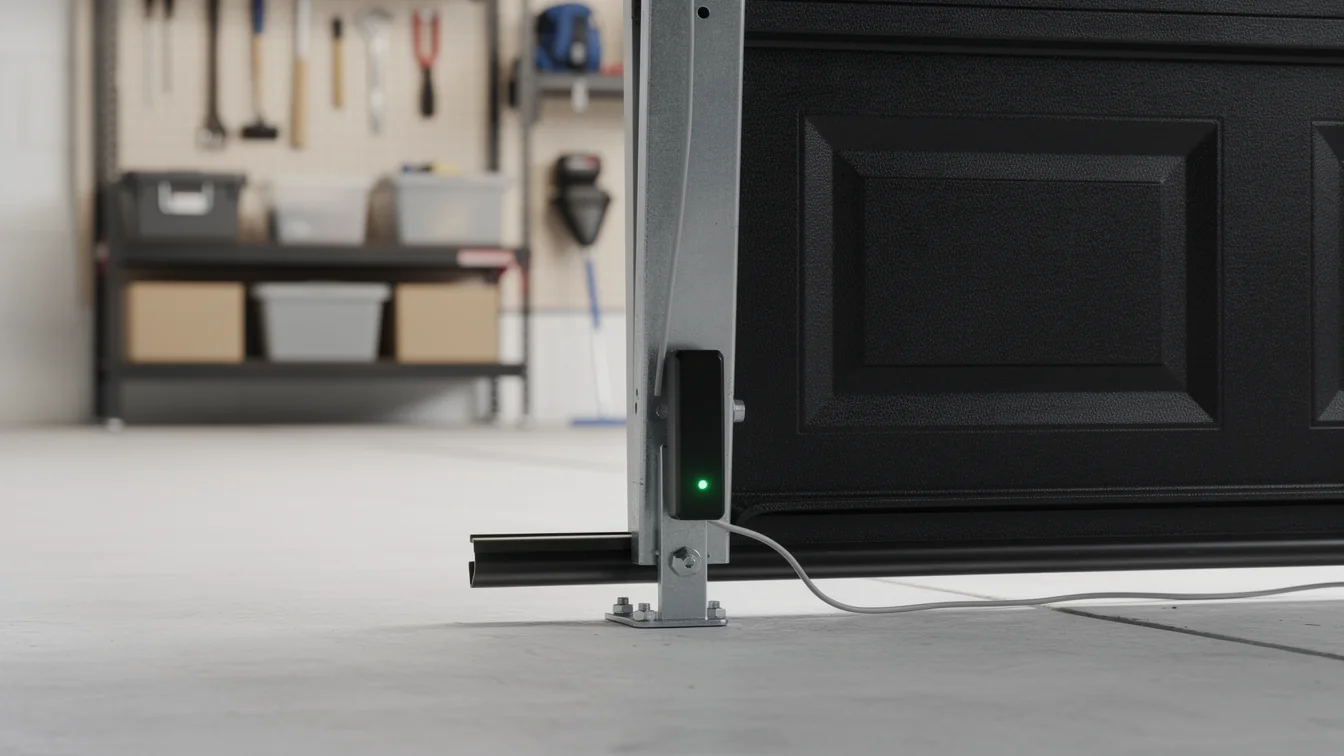
The two sensors sit a few inches off the slab, aimed at each other across the width of the track. When they're aligned, the receiving sensor sees a steady infrared beam and the opener knows it's safe to close. Nudge one sensor a degree or two - from a bump, a settling bracket, or just the door track flexing in cold weather - and the beam clips the edge of the lens instead of hitting it square.
On a lot of the 1960s and 70s-built garages still standing in neighborhoods like Lochearn, Milford Mill, and Rossville, the original stud framing has shifted enough over the decades that the sensor brackets are no longer plumb to each other, even if nobody ever touched them. That shows up as a blinking opener light, a door that reverses for no visible reason, or a door that won't close at all. None of that means the sensor is broken. Most of the time the lens is just pointed a few degrees wrong, and that's a five-minute fix once you know where to look - not a part you need to replace.
What we find
What Most People Get Wrong
The usual assumption is that a blinking sensor light means a bad sensor, so people order a replacement kit before anyone's actually checked alignment. In garages built on older slabs - and a good share of what's standing in this area dates back to that 1955-2014 window, median around 1978 - the sensor itself is almost never the problem. It's the bracket position relative to a slab that's moved.
The other mistake is wiping the lens and calling it done. Dust and cobwebs do block the beam, and that's worth checking first, but if the issue comes back every few weeks it's not dirt - it's geometry. We don't swap sensors as a first move, and we won't sell you a new pair if a five-minute realignment solves it. If the bracket itself is bent or the wire's been chewed through, that's a different repair, and we'll tell you straight if that's what we're looking at rather than guessing.
How we work
What You Pay
We don't have a flat number to put here, and giving you one without seeing the bracket, the slab, and the wiring run would be a guess, not a quote. What drives the cost on a sensor call is whether it's a straight realignment or a bracket replacement, and whether the wire needs rerouting because the original run was never meant to survive the kind of slab movement a severe cold climate puts it through over fifty-plus years.
What we can tell you is that most calls in older stock around here turn out to be alignment, not parts. If you're ordering a sensor kit before anyone's looked at the bracket, you may be solving the wrong problem and paying for it twice.
Questions
Common questions
Why does my garage door reverse right before it closes?
That's almost always the safety sensors sensing an obstruction that isn't there - usually because the beam between them is misaligned, not blocked. On older slabs that have shifted over the decades, even a slight settling on one side throws the beam off enough to trigger a reverse every time.
Can I fix sensor alignment myself?
Often yes. Loosen the wing nut or bracket screw, nudge the sensor until the indicator light stops blinking, and retighten. If the bracket itself is bent or the slab has settled enough that the two sensors are no longer level with each other, that's a harder fix and worth having looked at.
Why does this happen more in winter?
Cold weather makes concrete slabs contract, and the freeze-thaw cycle that's typical of a severe cold climate band shifts slab position over the heating season. A sensor bracket mounted to the slab or an adjacent stud can move just enough to break alignment.
Do I need new sensors or just realignment?
Most calls turn out to be alignment, not failed sensors. We check the bracket position and wiring before suggesting a replacement, since swapping sensors won't fix a slab that's settled.
Recommendation
You Might Also Like
More garage door guides for Baltimore homeowners.
Openers and Power Cuts in Baltimore Garages
Baltimore's older housing stock and severe cold winters mean openers fail at the worst time.
 Is Your Baltimore Garage Door Worth Fixing, or Done
Most Baltimore-area houses date to the 1960s-70s boom.
 When a Spring Goes in Cold Weather in Baltimore
Baltimore's 1960s-70s housing stock and severe cold winters put real strain on torsion springs.
Ready when you are
Need a garage door sorted in Baltimore?
Baltimore Garage Door Pros repairs and installs garage doors, springs and openers in Baltimore, MD and the surrounding area.