What You Pay
We don't quote a number here without seeing the opener, and we're not going to pretend otherwise. What we can tell you is that the conversation in Dundalk tends to go differently than it does in some of the newer-built parts of the service area.
Income changes repair math
Median household income here runs $62,349, well under the $109,661 median across the broader 489,099-household service area we cover from Baltimore. That gap matters for one reason: it changes which repairs are worth doing. A $400,000 house in a newer subdivision can justify swapping in a smart opener with a camera and a battery backup on a whim.
Repair board over unit
A lot of Dundalk households are making a more practical call - fix the logic board or the gear, not replace the whole unit, unless the motor itself is actually dead. We'll tell you straight when a repair isn't worth the parts cost, and when it is.
No upselling small fixes
We're not going to upsell a $600 opener to someone who needs a $90 sensor realignment. That said, if the drive gear or the circuit board is the kind that hasn't been made in fifteen years, replacement may be the only real option - we'll say so before we start, not after.
Can You Do This Yourself
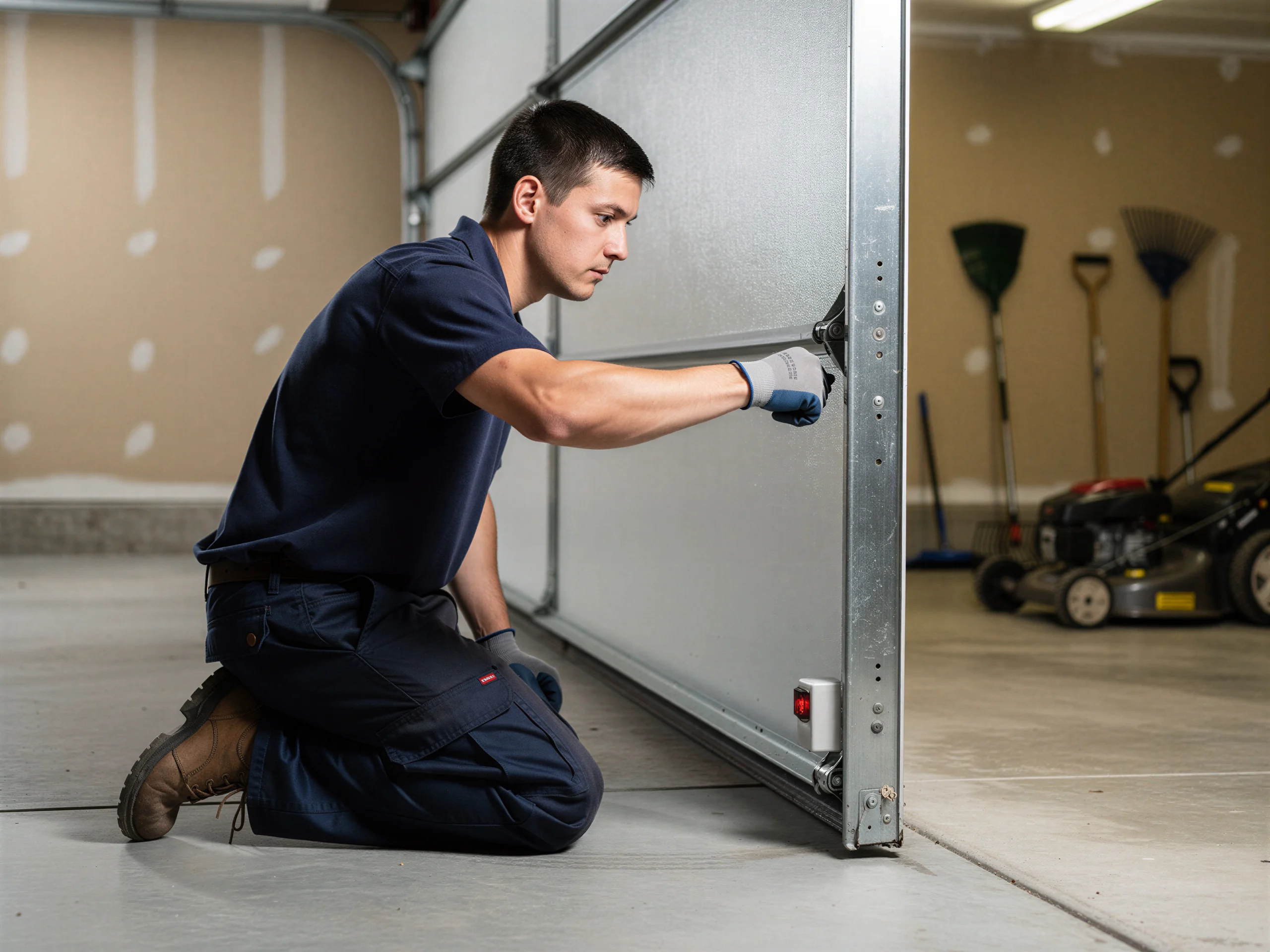
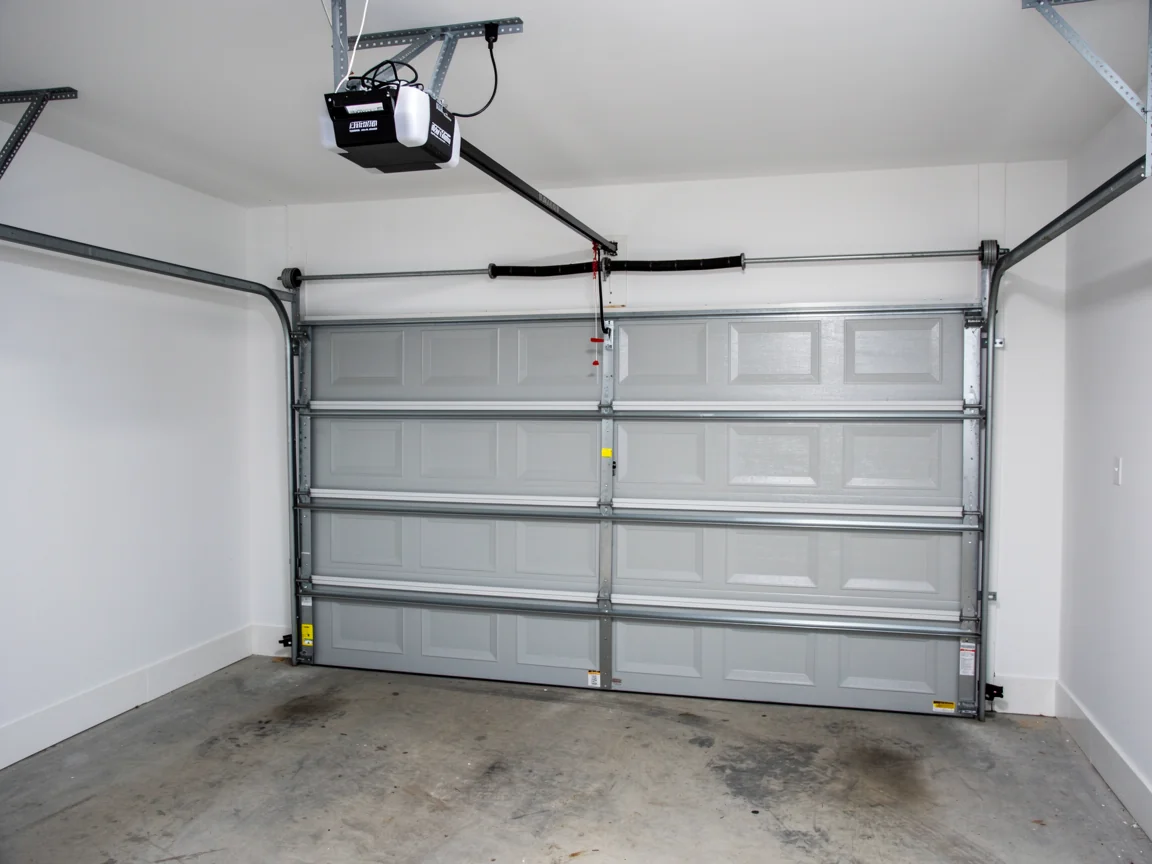
Some of it, yes. If the opener runs but the door won't close, check the two photo-eye sensors near the floor on each track - a cobweb, a nudge out of alignment, or a stray line of sunlight will trip them.
Adjusting down-limit switch
If the door reverses right after touching the floor, the down-limit switch likely needs adjusting, and that's usually a dial or a set of buttons on the unit itself, no tools required.
Retrofit hardware mismatch
Where it gets harder is a house with a 1955-era opener retrofit, which describes a good share of Dundalk's housing stock - homes built well before garage door openers were standard, with units added later on hardware that was never really designed for them. On those, the travel limits, the force settings, and sometimes the whole drive mechanism are older logic that doesn't match what you'll find in a big-box manual.
Missing photo-eyes is serious
We've also seen openers in this part of the service area wired into circuits that predate any kind of safety reversal standard - if yours has no photo-eyes at all, stop and call someone, because that's not a DIY fix, that's a code issue. If you're not sure which kind of system you've got, that uncertainty alone is a reason to have someone look at it before you start unplugging things.
How Long You Are Without the Door
Dundalk sits about 6 miles from where the trucks run out of Baltimore, which isn't far, but it's also not nothing when you're trying to plan a day around a dead opener.
Route determines timing
The drive itself is short enough that it rarely adds much to the day, but it does mean the job isn't a walk-across-the-street fix - there's no depot in Dundalk itself, so the timing depends on what else is already scheduled out of Baltimore that day.
Cold grease and contraction
Winters here fall into the climate data's cold-severe band, and cold makes opener trouble worse in two specific ways: grease in an old gear set thickens and strains the motor, and metal housings contract just enough to throw off a limit switch that was already borderline. If your opener quits on a cold morning, that's often the day it was always going to quit - the cold just picked the date.
Diagnosing unfamiliar retrofits
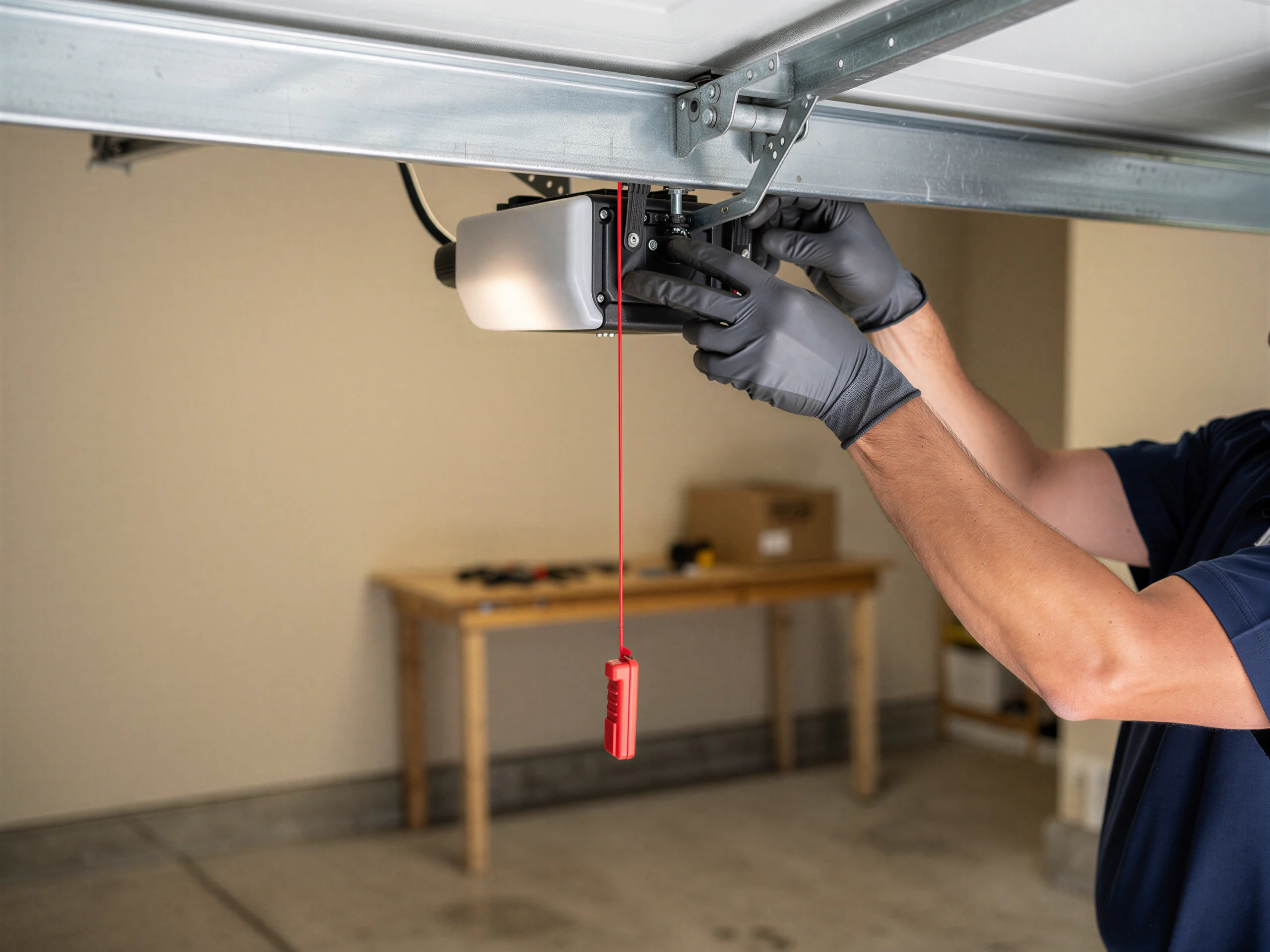
Most opener repairs, once we're on-site, don't take long: a board swap, a sensor realignment, a gear replacement. What takes time is diagnosing an old retrofit system we haven't seen before, which is common enough in this part of the service area that we build it into the visit rather than treat it as a surprise.
How It Shows Up
The trouble pattern in Dundalk tracks pretty closely with the age of the housing. A lot of the stock here goes back to around 1955, years before the rest of the service area's housing - which spans 1955 to 2014 with a median around 1978 - caught up to anything built after the war. That means more of the openers we see in Dundalk are not original to the house; they're retrofits bolted onto older doors and tracks, sometimes decades after the house was built, sometimes more than once. The failure we see most isn't the motor burning out - it's a mismatch. A newer opener head fighting an old, heavier wood-panel door it was never sized for. A chain drive stretched past spec because nobody re-tensioned it in years. A circuit board from one era wired to a safety sensor kit from another, with a splice somewhere in between that's starting to corrode. None of this is dramatic - it's just old systems layered on older systems, and it's the kind of thing a straight diagnostic catches faster than guesswork. Cold-severe winters add their own wear: frozen grease, swollen wood door panels pulling against the opener's travel limits, and connectors that get brittle after enough freeze-thaw cycles.
Talk to a local pro
Garage door service in Baltimore?
Same-day service with honest, upfront quotes.