 Why a Garage Door Goes Off Track Around Baltimore
Baltimore's 1960s-70s housing stock and cold winters push doors off track in specific ways.
BlogBaltimore, MD · 4 min read
When a Spring Goes in Cold Weather in Baltimore
Baltimore's 1960s-70s housing stock and severe cold winters put real strain on torsion springs. Here's what actually happens and what it costs to fix.
Local detail
How Local Conditions Play In
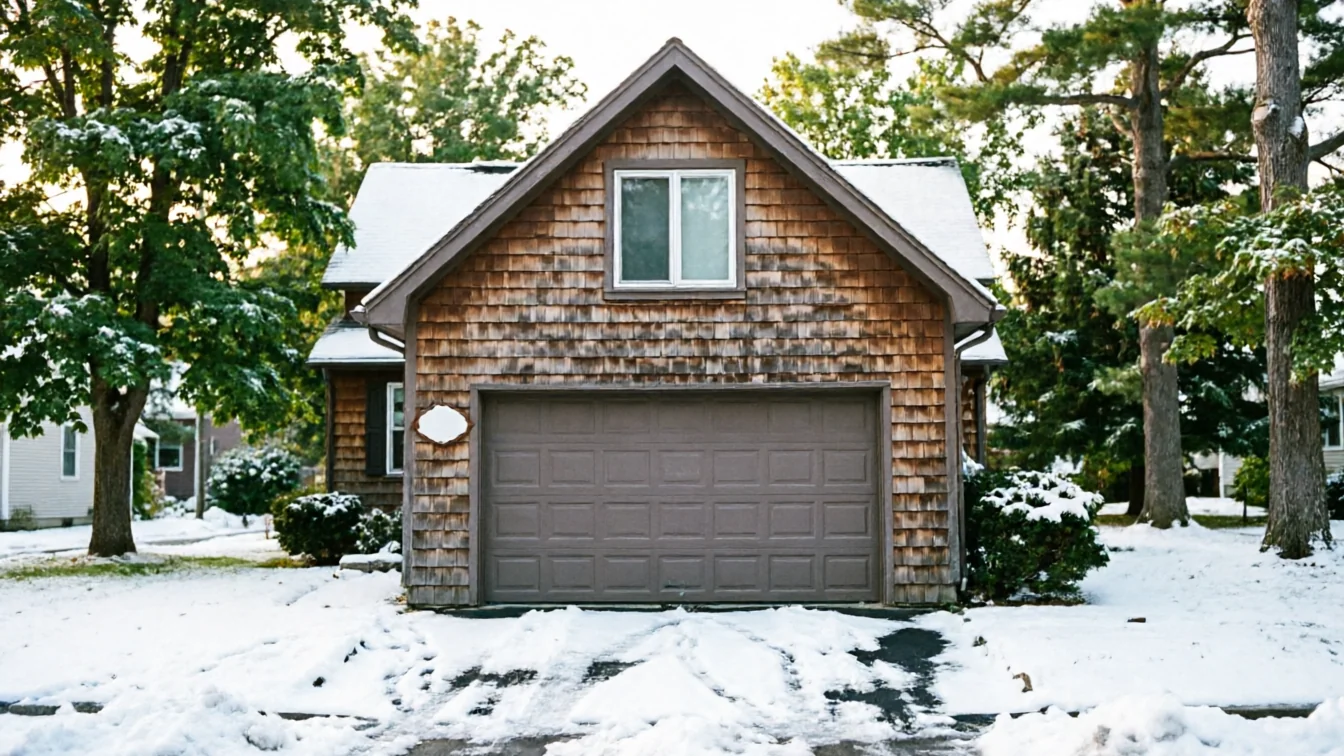
Baltimore sits in a cold-severe climate band, and that matters more for garage door springs than most homeowners think. Steel contracts as temperatures drop, and a torsion spring that's been doing fine all fall suddenly has less give in January. The metal gets brittle at the microscopic level where metal fatigue has already been building for years. Add in the fact that most of the housing stock in this service area went up between 1955 and 2014, with the median build year around 1978, and you've got a huge number of garage doors running original or first-replacement springs that are now 45-plus years old in some cases. That's not a coincidence - it's the same batch of houses hitting the same mechanical limit at the same time of year. Neighborhoods like Lochearn, Woodlawn, Catonsville, and Dundalk, all built out heavily in that 1960s-70s window, see this pattern every cold snap. A spring with microfractures from decades of cycling will often hold through summer and let go the first hard freeze of the season. It's not bad luck. It's the metal finally meeting its limit at the exact moment cold makes it least forgiving.
The area
What Is Going On
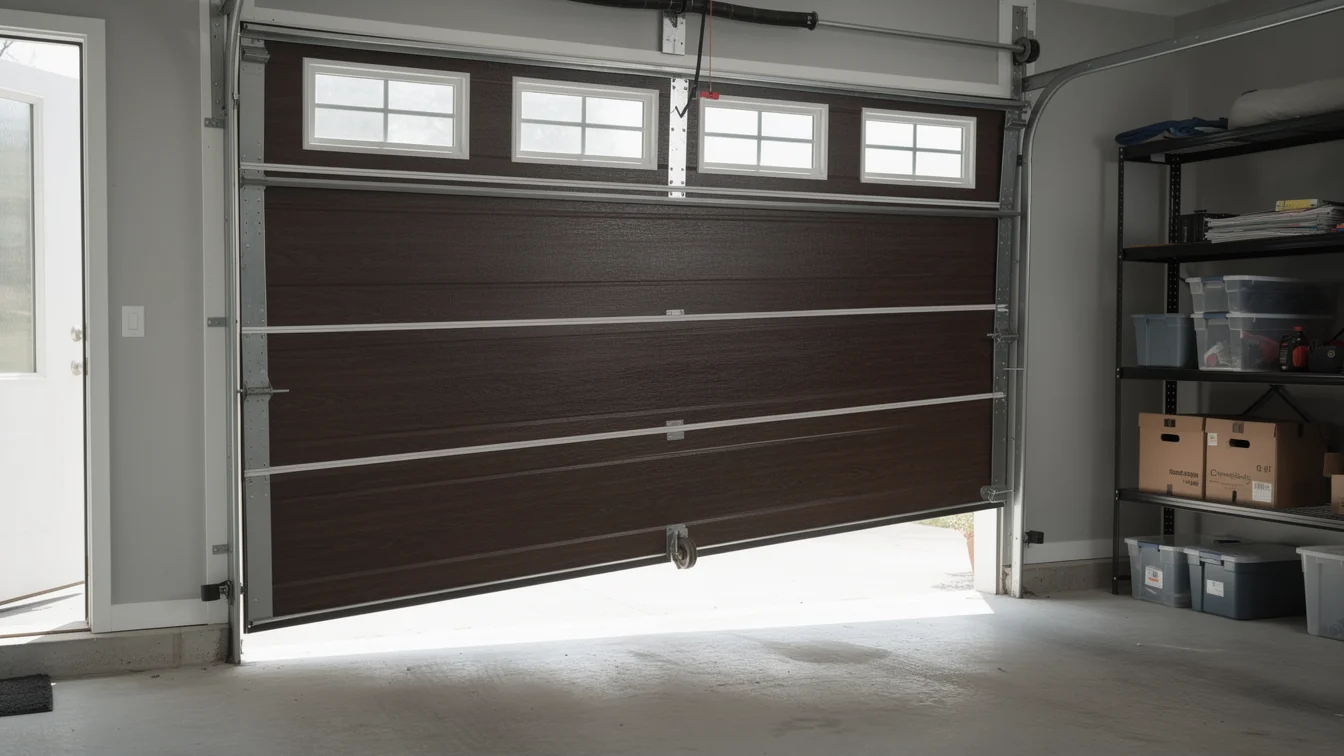
When a torsion spring breaks in cold weather, it's almost always a spring that was already near the end of its cycle life, not a spring that failed because of the cold alone. Cold doesn't create the weakness - it exposes it. Metal that's fatigued from years of winding and unwinding loses flexibility as it chills, and the last few degrees of temperature drop are often what pushes a spring over the edge during a torque spike, usually right as the door opens. In a service area where so much of the housing was built in that 1960s-70s stretch, we're dealing with springs that have had 50-plus years of seasonal cycling behind them in a lot of cases, even accounting for a replacement or two along the way. The door itself usually doesn't know anything is wrong until the spring is gone - it just suddenly won't lift, or it drops hard and uneven. If you hear a bang from the garage on a cold morning, that's almost always the spring, not the opener.
What we find
What Most People Get Wrong
The biggest mistake is assuming the opener did it. Most garage door openers are not built to lift the door's full weight unassisted - the spring carries that load, and the opener just adds the motion. When the spring snaps, the opener tries to force the door up anyway, strains the drive gear, and sometimes burns out trying to do a job it was never built for. People replace the opener, the door still won't lift right, and now they're paying twice. The second mistake is waiting. A spring under tension that's starting to fail doesn't usually give without warning - there's often a telltale uneven lift or a door that's heavier on one side right before it goes. In this climate, waiting through one more cold stretch can mean the spring fails while someone's got a hand near the door or the car's halfway out. We don't recommend DIY spring replacement - torsion springs store a dangerous amount of energy, and this is one job where the tools and the experience matter more than saving a service call.
How we work
What You Pay
What a spring repair runs depends mostly on whether it's one spring or a matched pair, and whether the drums, cables, or bearings went with it when it broke - a spring letting go under tension can take hardware with it on the way out. Doors built in the 1960s and 70s, which make up a lot of the stock in this area, sometimes use spring sizes that aren't stocked everywhere, which can add a day to the job if a part has to be ordered in. We'll always quote the job after we've seen the door and sized the spring correctly - guessing on spring size from the phone leads to callbacks, and we'd rather get it right once. One honest note: if the door itself is also showing its age - sagging panels, worn rollers, a track that's been bent and straightened more than once - putting a new spring on an old door sometimes just moves the next failure down the road a few months. We'll tell you straight if that's where you're at instead of selling a spring job that won't hold.
Questions
Common questions
Why do springs break more in winter in Baltimore?
Cold makes steel less flexible, and a spring that's already fatigued from years of cycling loses its last bit of give right when a hard freeze hits. It's usually not the cold causing the failure on its own - it's exposing wear that built up over years, often in houses from the 1960s-70s stock common across this area.
Is it the opener or the spring when the door won't lift?
Almost always the spring. The opener isn't built to lift the full weight of the door by itself - the spring does that work. If the spring breaks and you keep running the opener, you can burn out the drive gear trying to force a door it was never meant to lift alone.
Can I replace a torsion spring myself?
We don't recommend it. A wound torsion spring holds enough stored energy to cause serious injury if it releases wrong, and the tools needed to wind and unwind one safely aren't something most homeowners have on hand.
How old does a spring usually get before it fails?
It varies with use, but a lot of the springs failing in this area are original or first-generation replacements on houses built in the 1960s and 70s - meaning decades of seasonal cycling behind them before a cold spell finally finishes the job.
Recommendation
You Might Also Like
More garage door guides for Baltimore homeowners.
Why a Garage Door Goes Off Track Around Baltimore
Baltimore's 1960s-70s housing stock and cold winters push doors off track in specific ways.
 What That Noise Is Actually Telling You
Baltimore's 1960s-70s housing stock and severe cold winters mean specific garage door noises point to specific failures.
 Openers and Power Cuts in Baltimore Garages
Baltimore's older housing stock and severe cold winters mean openers fail at the worst time.
Ready when you are
Need a garage door sorted in Baltimore?
Baltimore Garage Door Pros repairs and installs garage doors, springs and openers in Baltimore, MD and the surrounding area.