What You Pay
Dundalk's housing stock centers on 1955, a good two decades earlier than the 1978 median across the wider service area we cover. That matters for what a repair involves, because doors from that era were built around torsion springs and drum sizes that production shifted away from decades ago.
Springs not off-shelf
Finding the right spring isn't always a same-day grab off the shelf the way it is for a door built in 2005. We don't post a flat price list for this site because the job itself varies too much - a single broken spring on a steel panel door is a different call than a seized opener on a door that's had three owners' worth of patch repairs.
Income shapes repair choices
What we can tell you is that Dundalk's median household income, at $62,349, runs well under the $109,661 median for the broader service area, and we factor that into how we talk through repair-versus-replace with a homeowner here.
Six miles from Baltimore
We'll tell you straight if a cheaper fix buys you another winter or if you're pouring money into a door that's done. We travel the 6 miles from Baltimore to get to Dundalk - there's no local branch, so the quote accounts for that trip, not a markup for the neighborhood.
Can You Do This Yourself
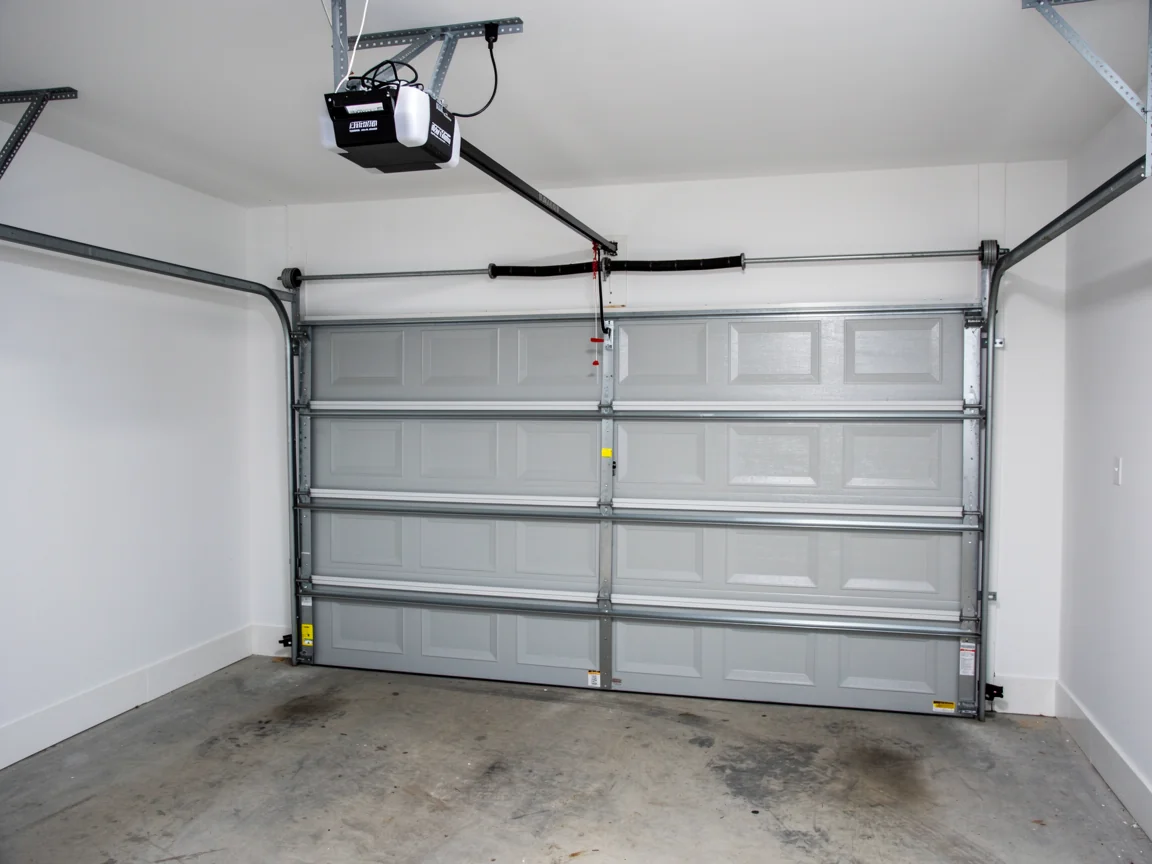
A door built around 1955 doesn't behave like a kit door from a home-improvement store, and that's the honest reason to think twice before working on your own spring or cable here.
Torsion specs and injury
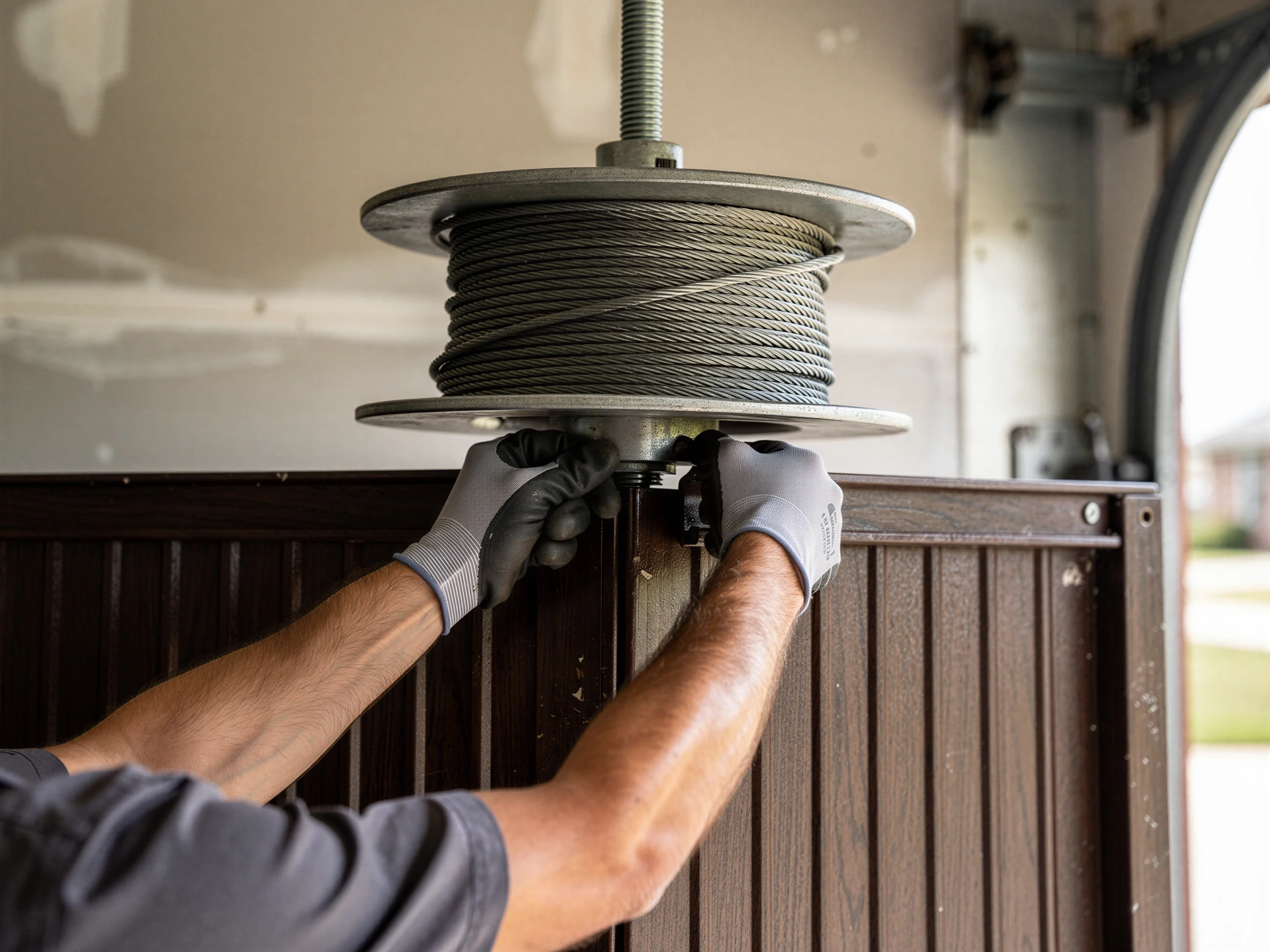
Torsion springs on older Dundalk doors are often wound to tension specs that don't match the universal replacement kits sold today, and getting that wrong with a winding bar is how people end up in the ER, not how they end up with a fixed door.
Forgiving DIY roller work
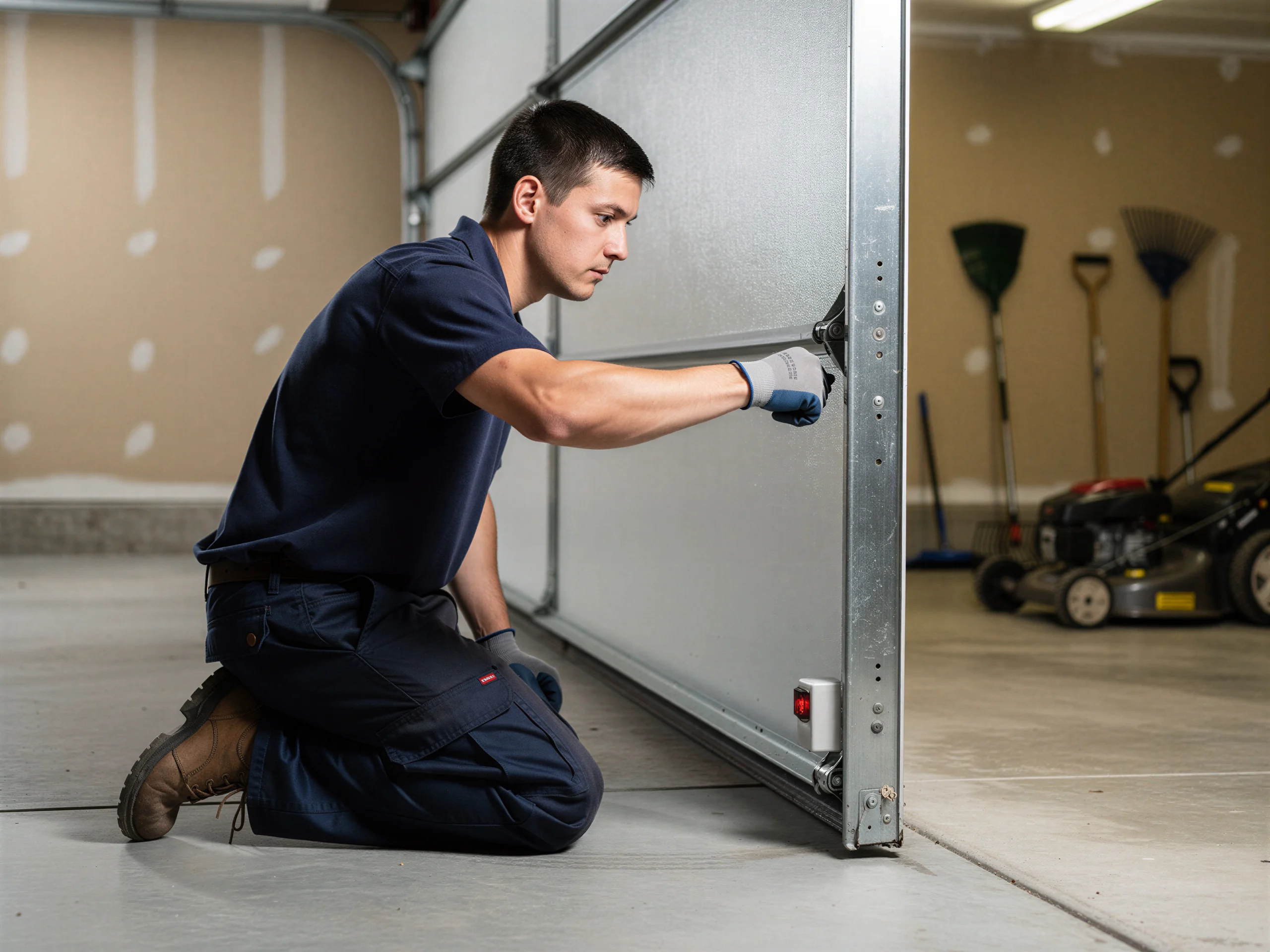
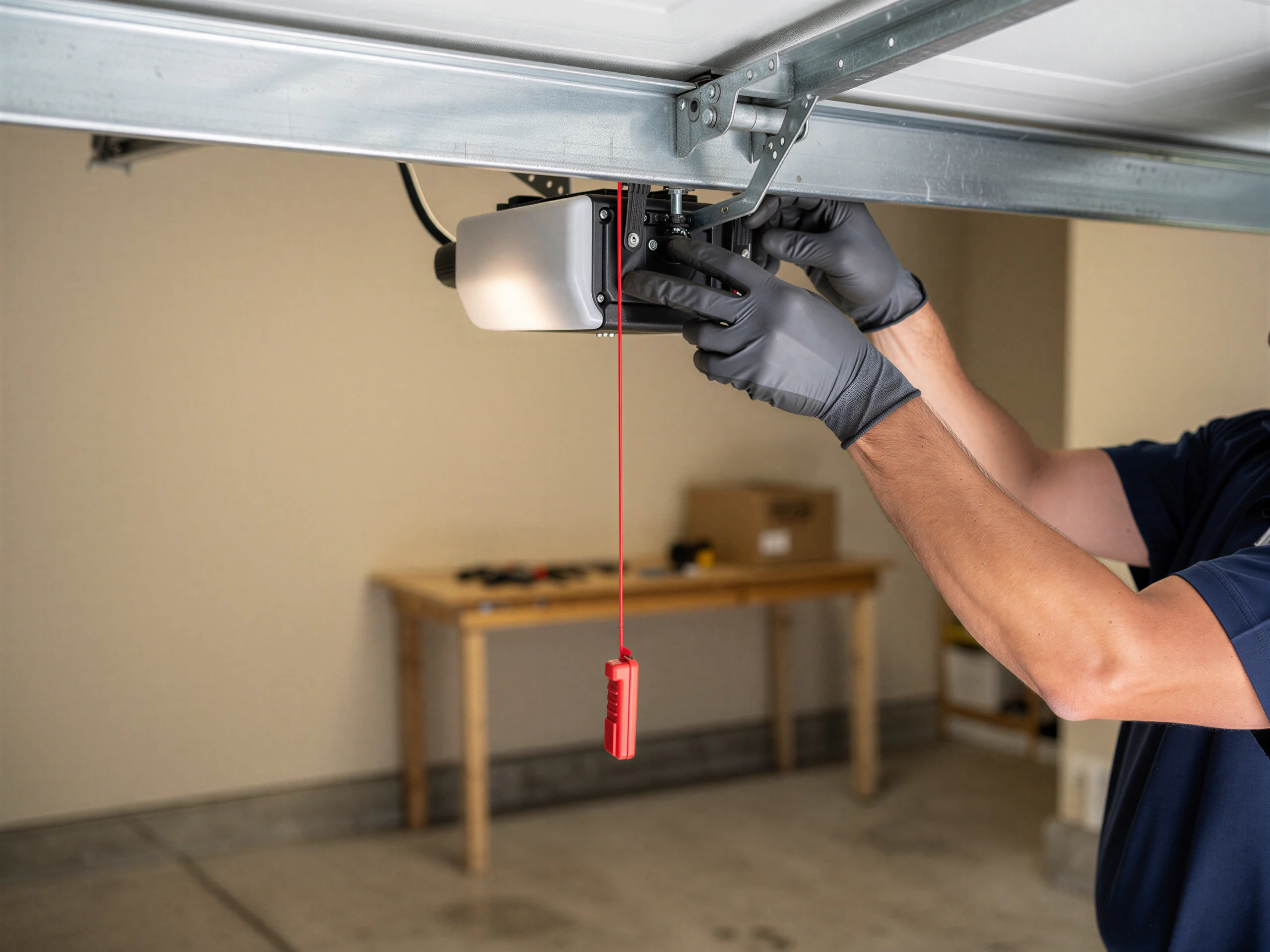
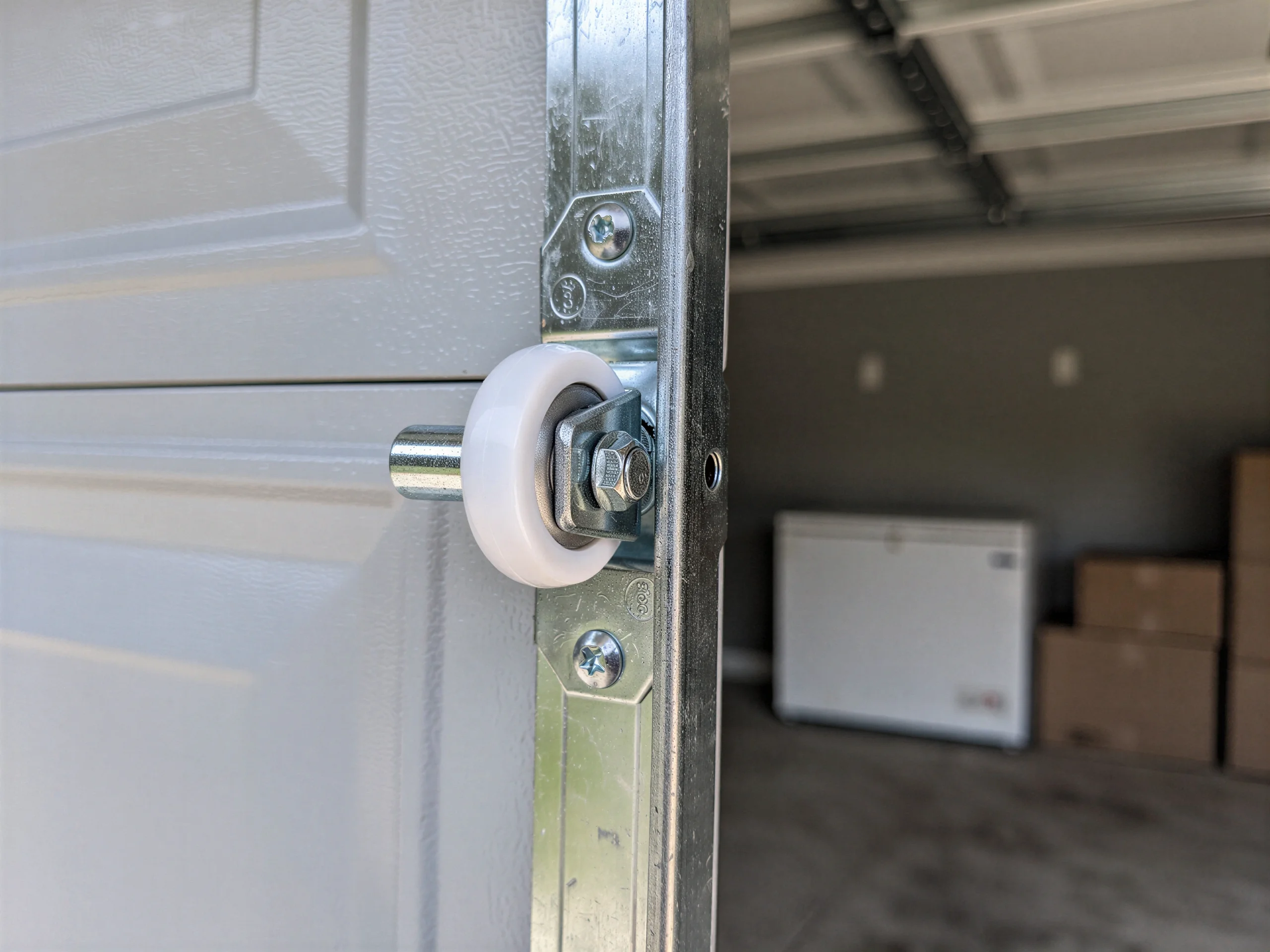
Track alignment and roller swaps are more forgiving - if a roller's worn through and the door's binding on one side, that's a job a patient homeowner can often handle with the right tools and a manual on hand. Opener board issues are a different story. Many houses in this area still run openers that are old enough that replacement parts aren't stocked anymore, and diagnosing a dead circuit board without the right tester just wastes a Saturday.
No phone DIY coaching
Our limitation here is plain: we don't walk people through DIY spring jobs over the phone. If you want to do your own roller or hinge work, go ahead - just don't touch the torsion spring on a door this old without someone who's done it before standing next to you.
How Long You Are Without the Door
Because we come from Baltimore, 6 miles out, the drive itself isn't the bottleneck - getting the right part is. Dundalk's older housing stock means some jobs need a spring, drum, or track bracket sized for a door that predates the current standard, and that part isn't always sitting on the truck.
Size drives supplier wait
When it's a common size, the door's back in service the same visit. When it's an older size, you may be waiting on a supplier order, and we'll tell you that up front rather than promise a fix we can't deliver that day.
Winter stuck-open danger
Winter adds its own pressure. This region sits in a severe cold climate band, and a door that's stuck open or won't seal in January isn't a cosmetic problem - it's a heating-bill and pipe-freeze problem.
No 24-hour dispatch
If your door won't close at all, we treat that differently than a door that's just noisy or slow, and we'll say so when you call. The honest limit: we're not a 24-hour dispatch service with a depot sitting in Dundalk itself. We're closing the distance from Baltimore, and that's part of what you're paying for in the visit.
How It Shows Up
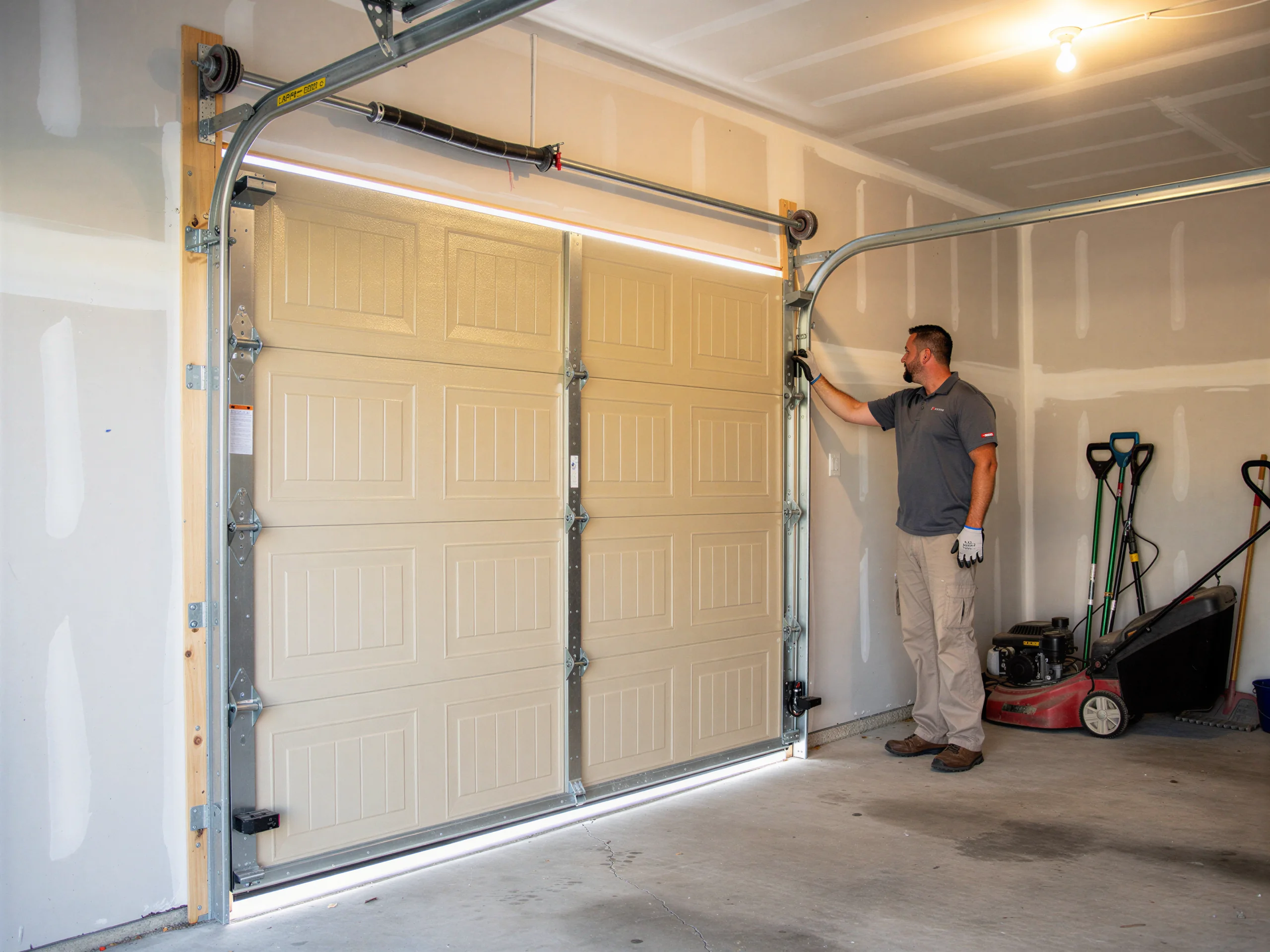
On a street of houses built around 1955, the failures tend to look the same from one address to the next. Original torsion springs that have done seventy years of cycles let go without much warning - a loud bang, then a door that won't lift past a few inches, or one that slams down because the spring's no longer carrying its half of the weight. Steel panels from that era, especially on doors that haven't been replaced, show rust along the bottom section first, where decades of ground moisture and road salt do their work.
Rollers on these older tracks wear unevenly because the track hardware itself has shifted slightly over seventy years of settling, so you'll often see a door that binds on one side before it binds on both. Openers installed in the last couple of decades tend to fail at the circuit board or the drive gear, not the motor itself - a telltale sign is the unit humming but the trolley not moving.
None of this is unique to one house. It's a pattern that shows up across a neighborhood built in the same decade, with the same original hardware, aging out at roughly the same time.
Talk to a local pro
Garage door service in Baltimore?
Same-day service with honest, upfront quotes.