What You Pay
Most of Dundalk went up in the 1950s, a generation ahead of the service area's overall median build year of 1978. That matters for cable repair because older single-car and narrow double doors here were built with lighter cable gauge and simpler drum systems than what you'd find on a wide door poured in the 1990s.
Thinner cable, older drum
A thinner cable costs less to replace, but it also means the drum and pulley it rides on are older too, and if one's worn the other usually isn't far behind. Dundalk's median household income sits at $62,349, well under the $109,661 median across the broader service area.
One-side cable bill
That gap is worth saying out loud because it changes the math on repair versus replace. On a lot of these houses, a straight cable swap on one side is a smaller bill than people expect, especially if the spring and track are still sound.
Chewed groove costs more
Where it gets expensive is when the cable snapped because the drum groove is chewed up, or the door's been running off-track for months and dragging on a bent section - at that point you're not paying for cable, you're paying for the parts around it. We quote after we see the door, not before, because two houses on the same block can have completely different hardware depending on when the door was last replaced.
Can You Do This Yourself
A garage door cable under tension is not a weekend project, and that's true whether the door is a 1955 single-car or something newer. The cable on a torsion or extension system is storing enough force to take a finger off if it lets go while you're working near the drum.
Skills don't transfer
We're not saying this to scare you into calling us - we're saying it because it's the honest limitation here: if you're comfortable with electrical work or plumbing, this isn't the same kind of job, and it doesn't transfer. What you can safely do yourself is diagnose.
Kinks and rust bloom
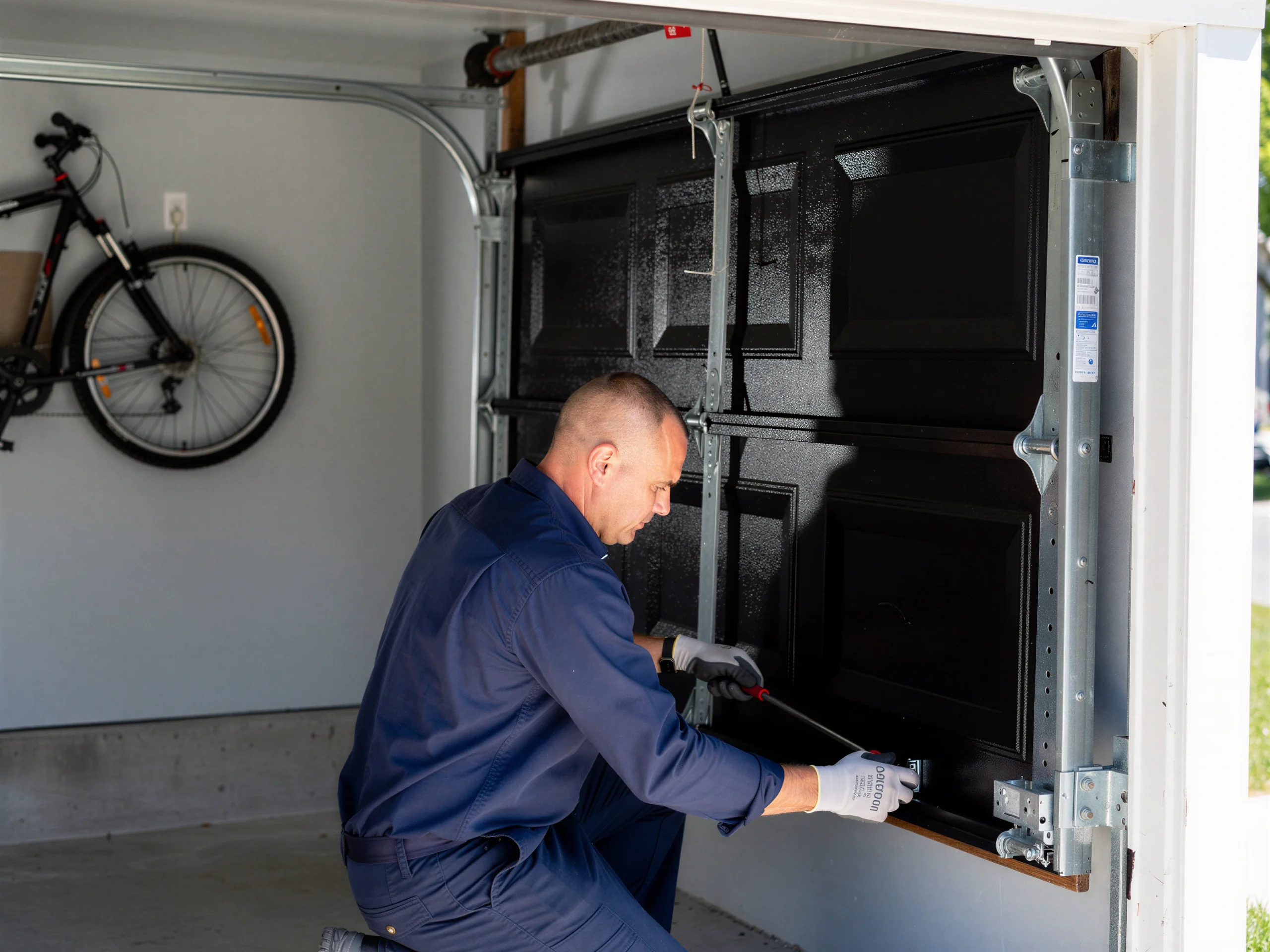
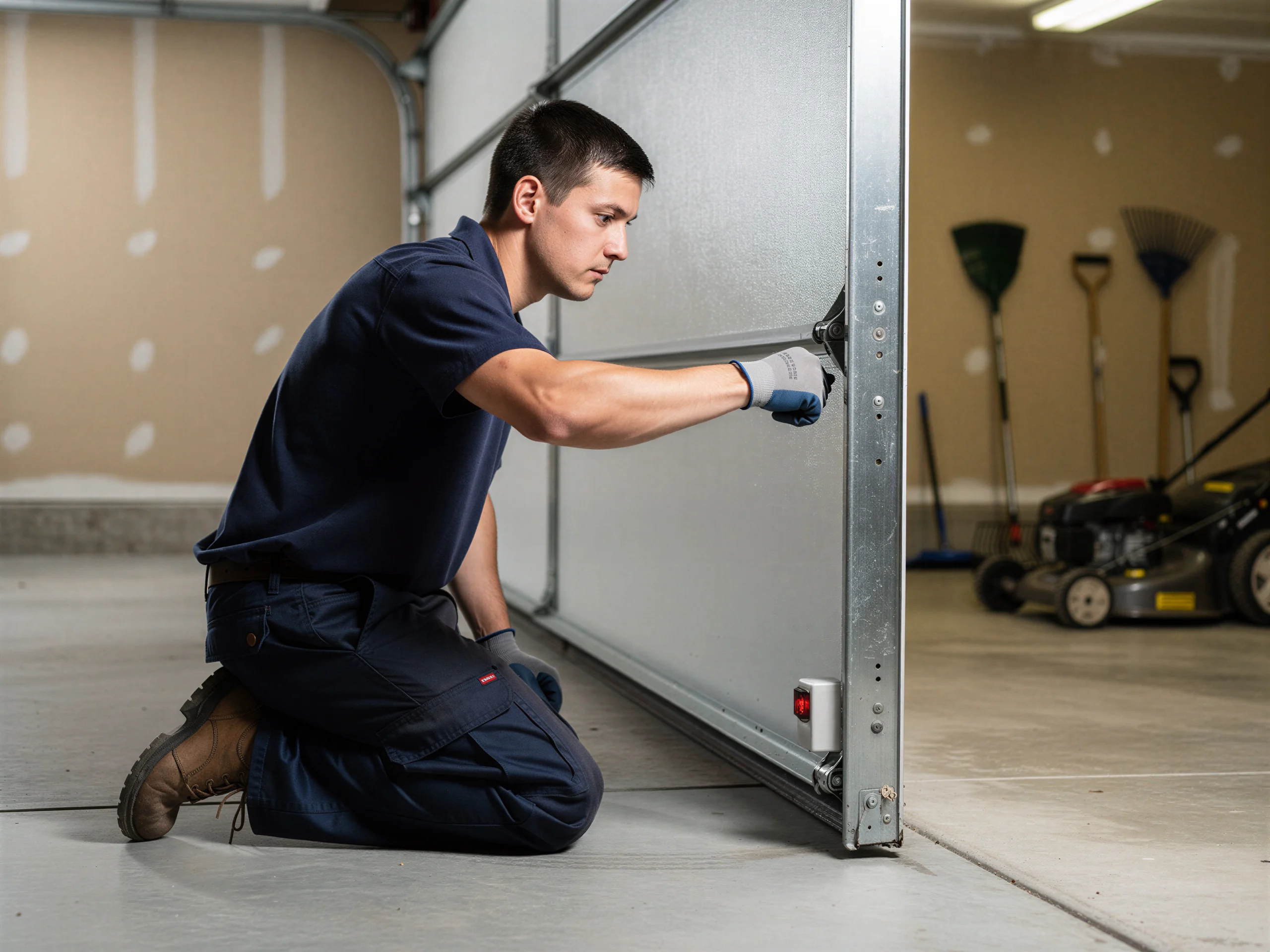
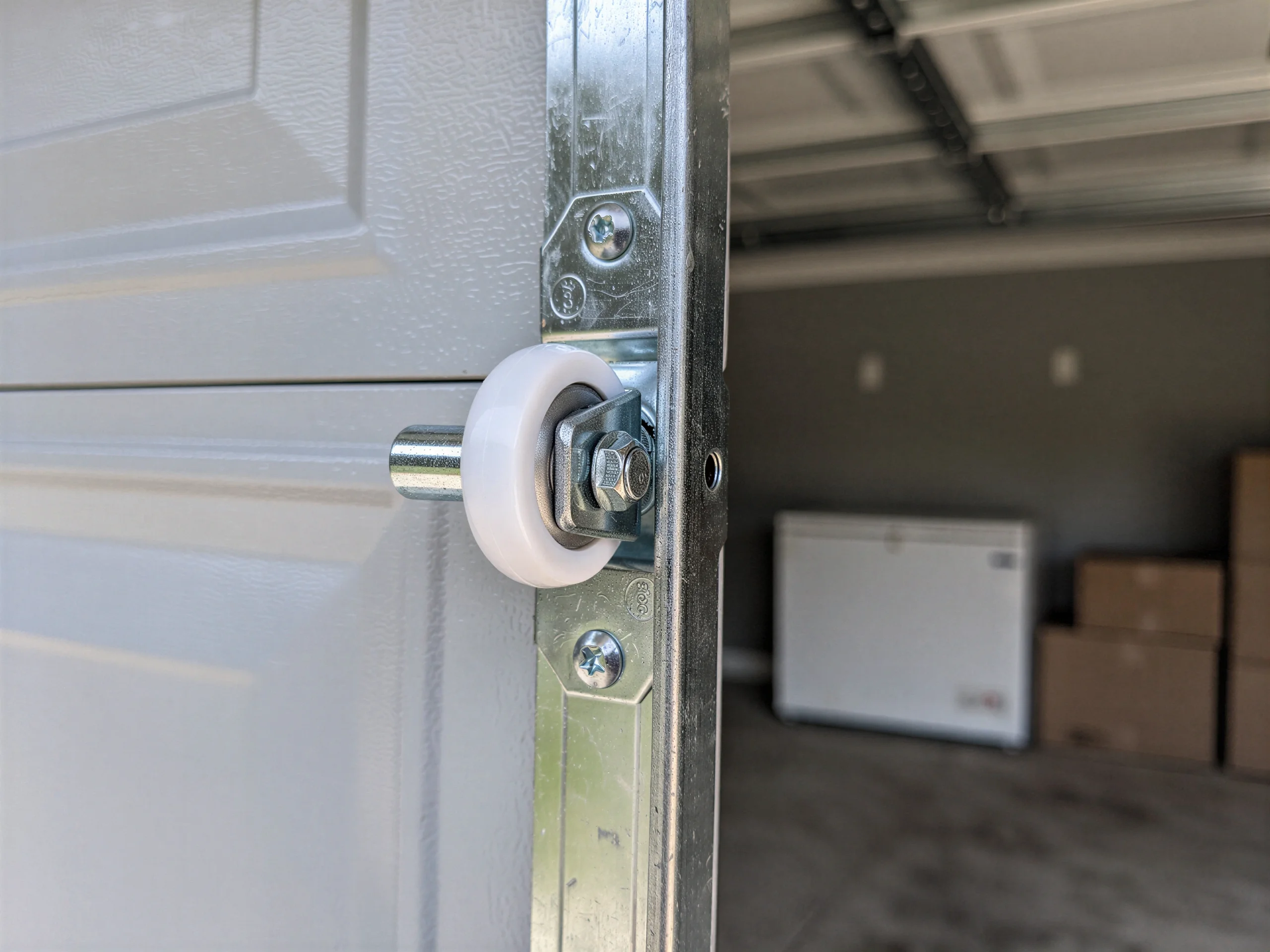
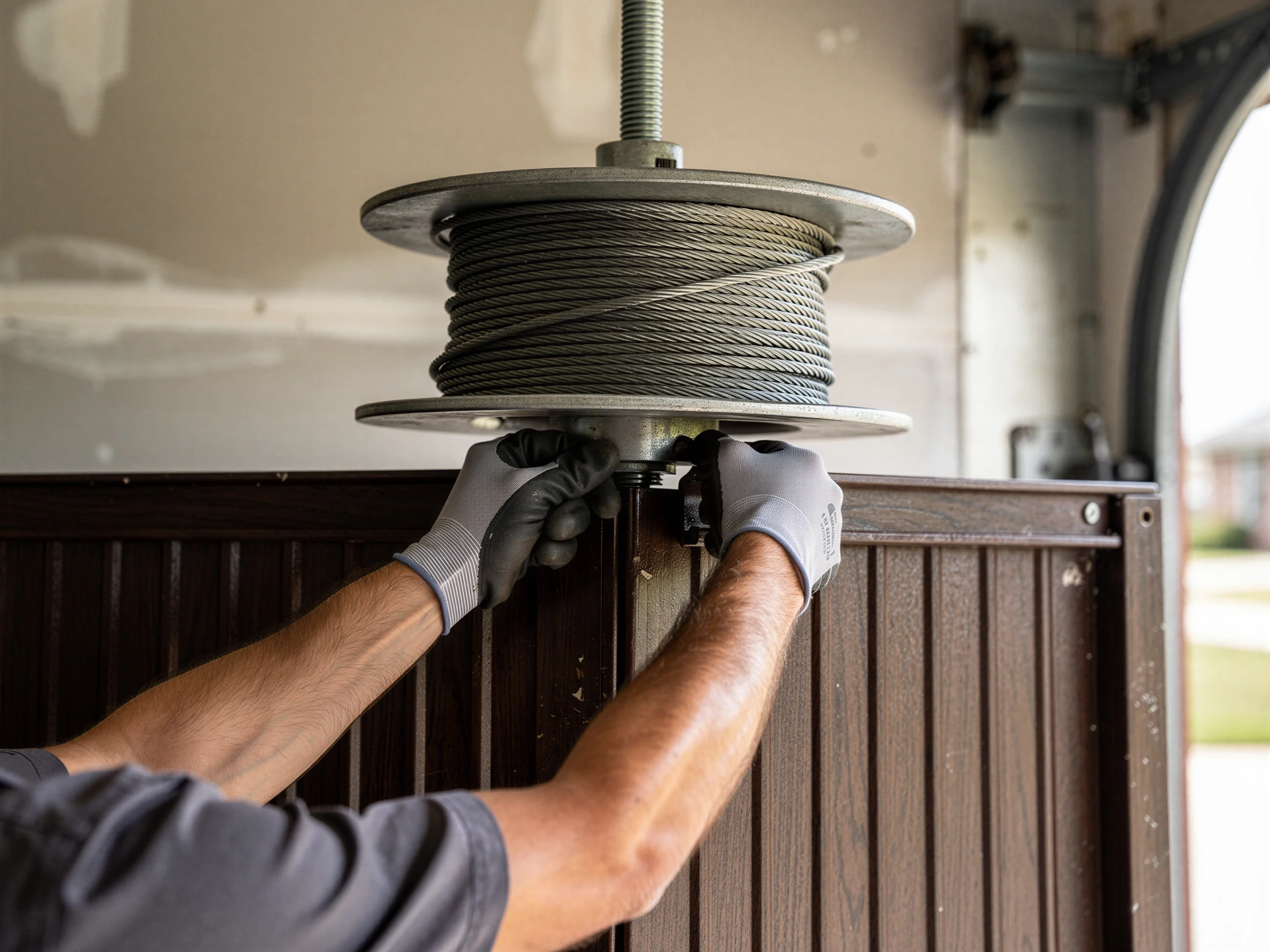
Look at the cable where it wraps the drum at the top of the track - frayed strands, rust bloom, or a kink near the bottom roller bracket all mean the cable is close to done, not just noisy. If the door is sagging on one side or the cable has already let go and the door's hanging crooked, don't try to force it up or down on the opener.
Light fix becomes big
That's how a light repair turns into a replaced track and a dented panel. If you've got a 1950s-era single-car door with original hardware, parts can take longer to source than on newer doors, since some of that gauge and drum sizing isn't what current stock is built around. That's worth knowing before you start, not after.
How Long You Are Without the Door
Dundalk sits about 6 miles from where we're based in Baltimore, so a cable repair here means a scheduled visit, not someone already parked a block away.
Usually same-visit cable
Once we're on site, a single cable replacement on one side is typically a same-visit fix - it's one of the quicker jobs on the list, well short of a full spring and track rebuild.
Snapped cable hits hardware
Where it runs longer is if the cable snapped under load and took the drum or a roller bracket with it, which happens more often on the older single-car doors common in this part of the county - the hardware's had more decades to wear.
Cold snap mid-job
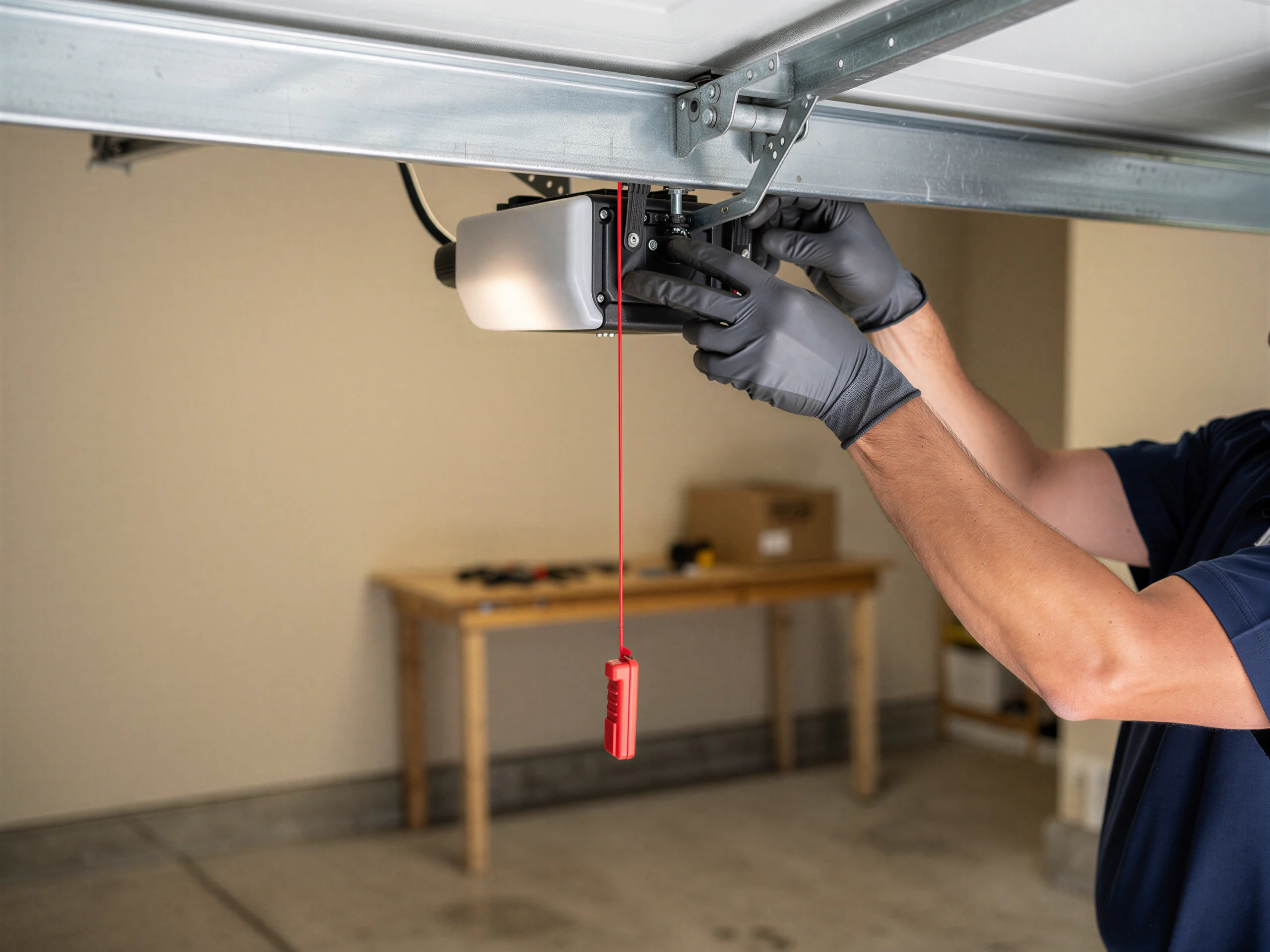
In that case we may need to source a part that isn't stocked on the truck, and winter weather here doesn't help: a cold snap stiffens the remaining cable and makes brittle strands more likely to go while we're mid-job, which can turn a planned single-cable swap into a two-cable job on the spot. In the meantime, don't run the opener. A door hanging on one cable will bind in the track and can come down unevenly, which is a bigger repair than the one you called about.
How It Shows Up
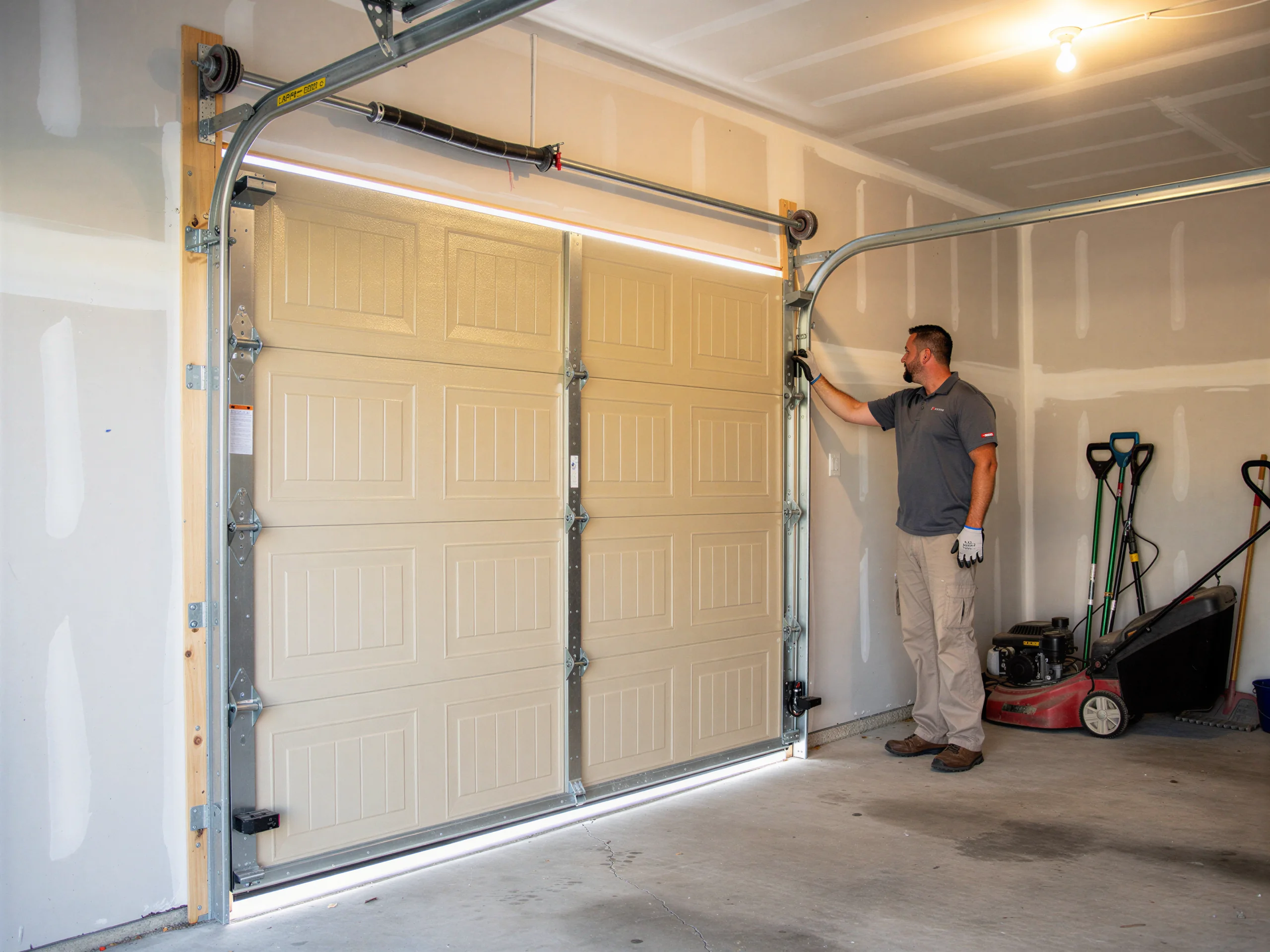
On the older stock around Dundalk, cable failure usually announces itself as a door that's suddenly crooked - one side up, one side down, hanging at an angle in the track. That's the classic sign on a single-car door with original hardware: one cable has let go while the other's still holding, and the door is literally lopsided in the opening.
Before full failure, listen for a popping or snapping sound from the top corner of the door when it opens or closes, or watch for the door jerking partway through its cycle. Cold weather makes this worse - the area sits in a severe cold climate band, and a cable with a few frayed strands that might hold on through summer can snap outright the first hard-freeze morning when the metal's stiff and the door's heavier to move. If your door's original to a 1950s build, treat any new noise from the top track as worth a look rather than something to live with.
Talk to a local pro
Garage door service in Baltimore?
Same-day service with honest, upfront quotes.