Can You Do This Yourself
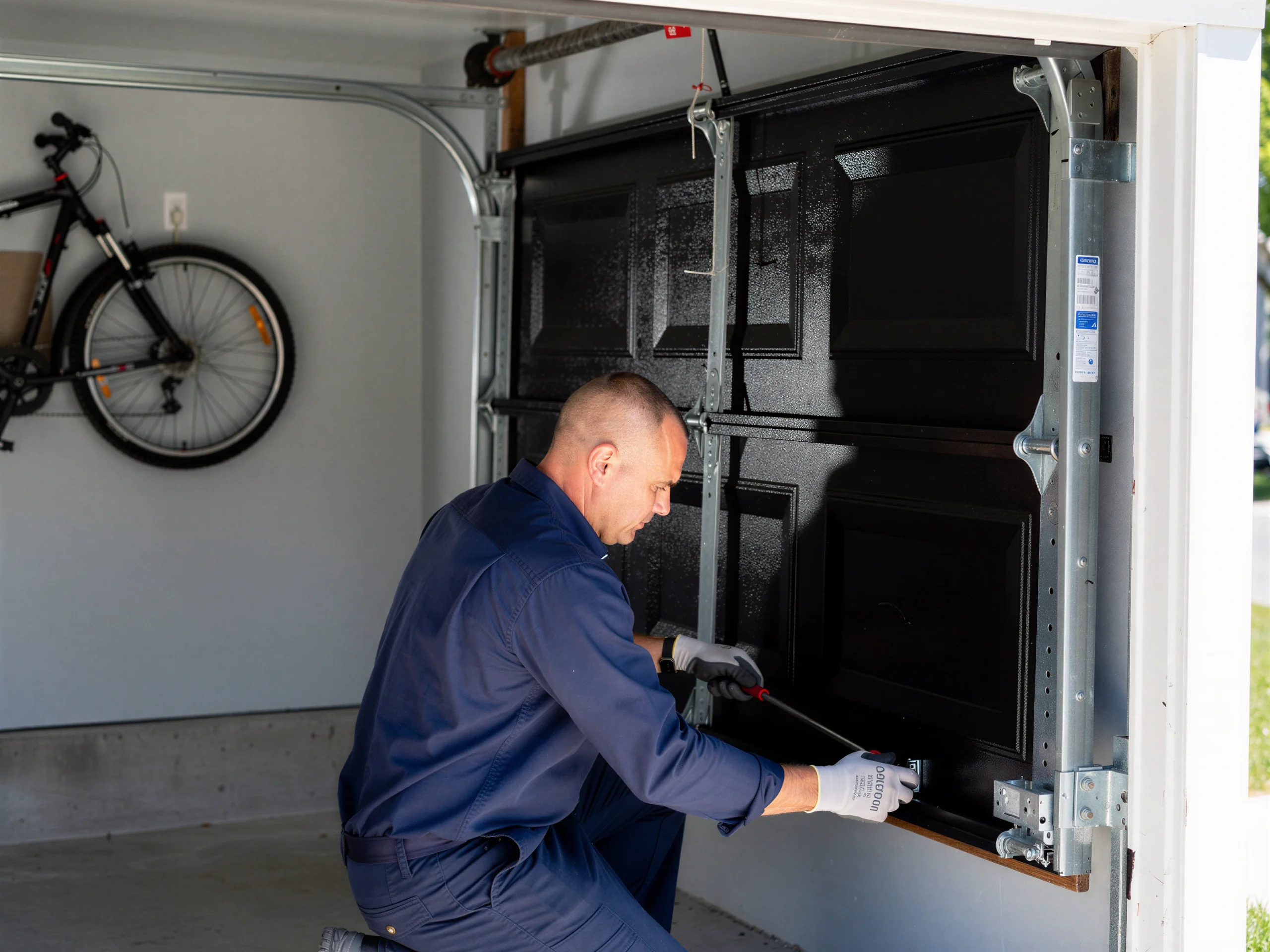
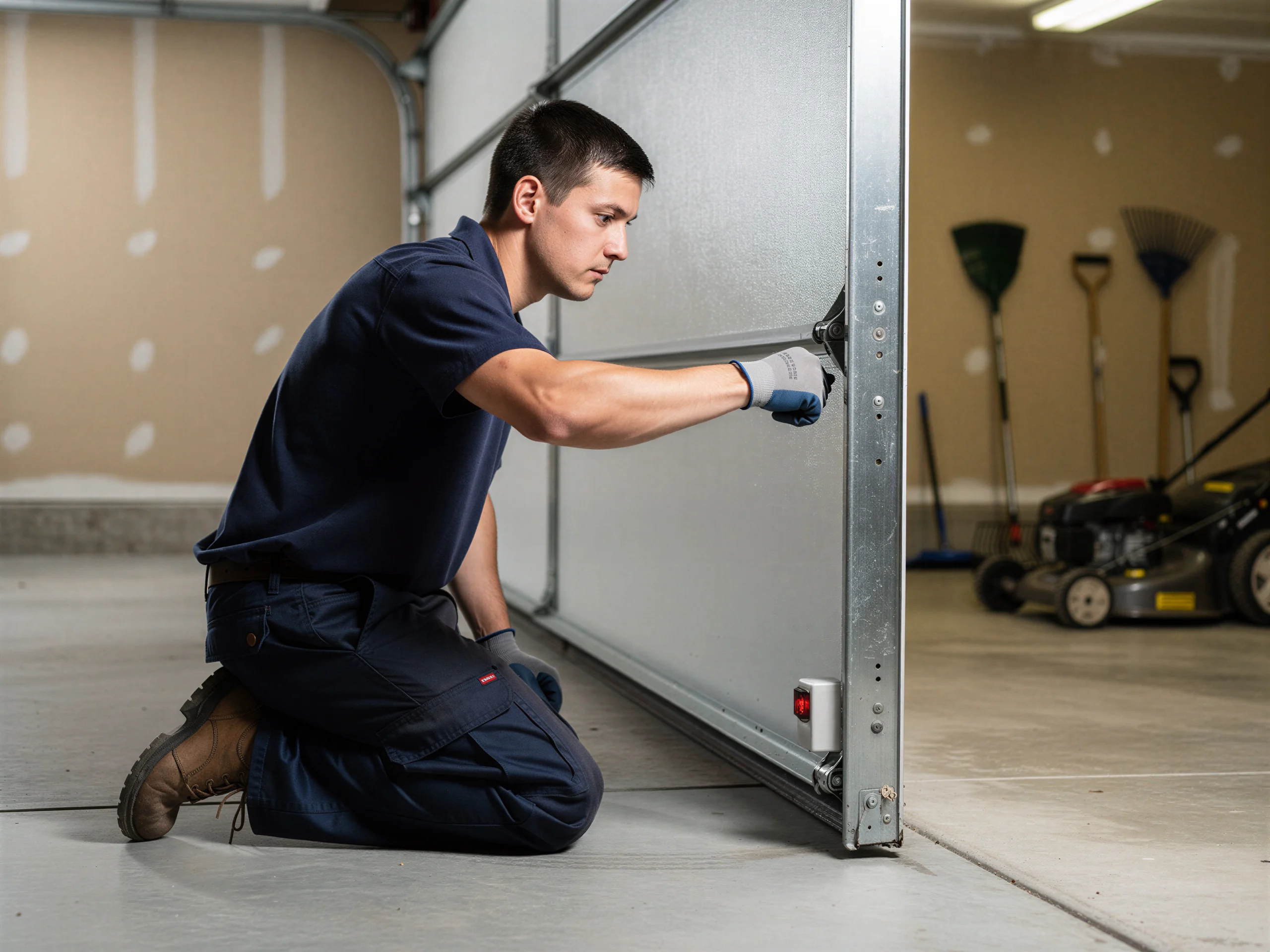
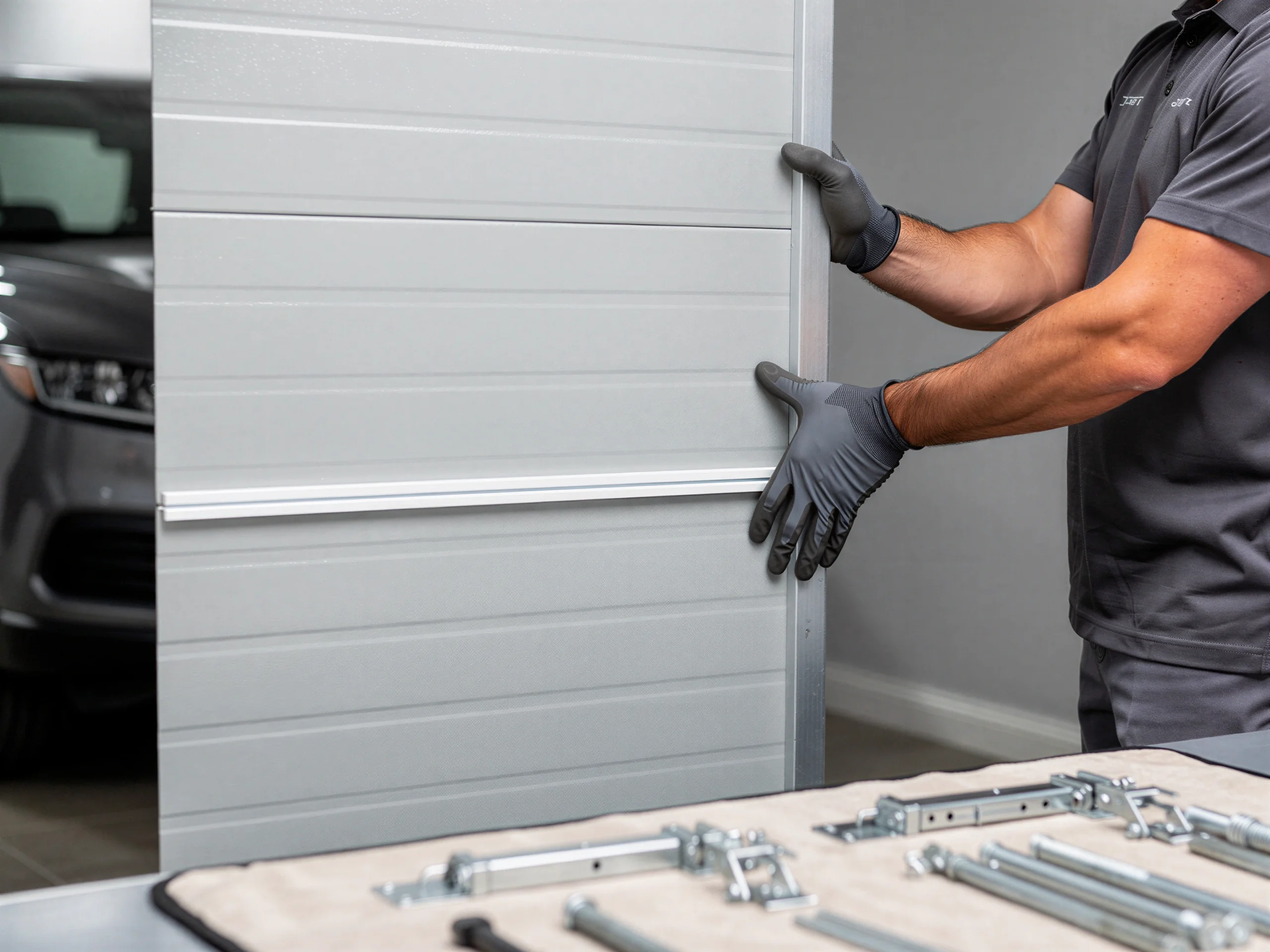
Swapping a single dented panel sounds like a weekend job, and on paper it is: unbolt the end stiles, slide the old section out, bolt the new one in.
Matching rib pattern panels
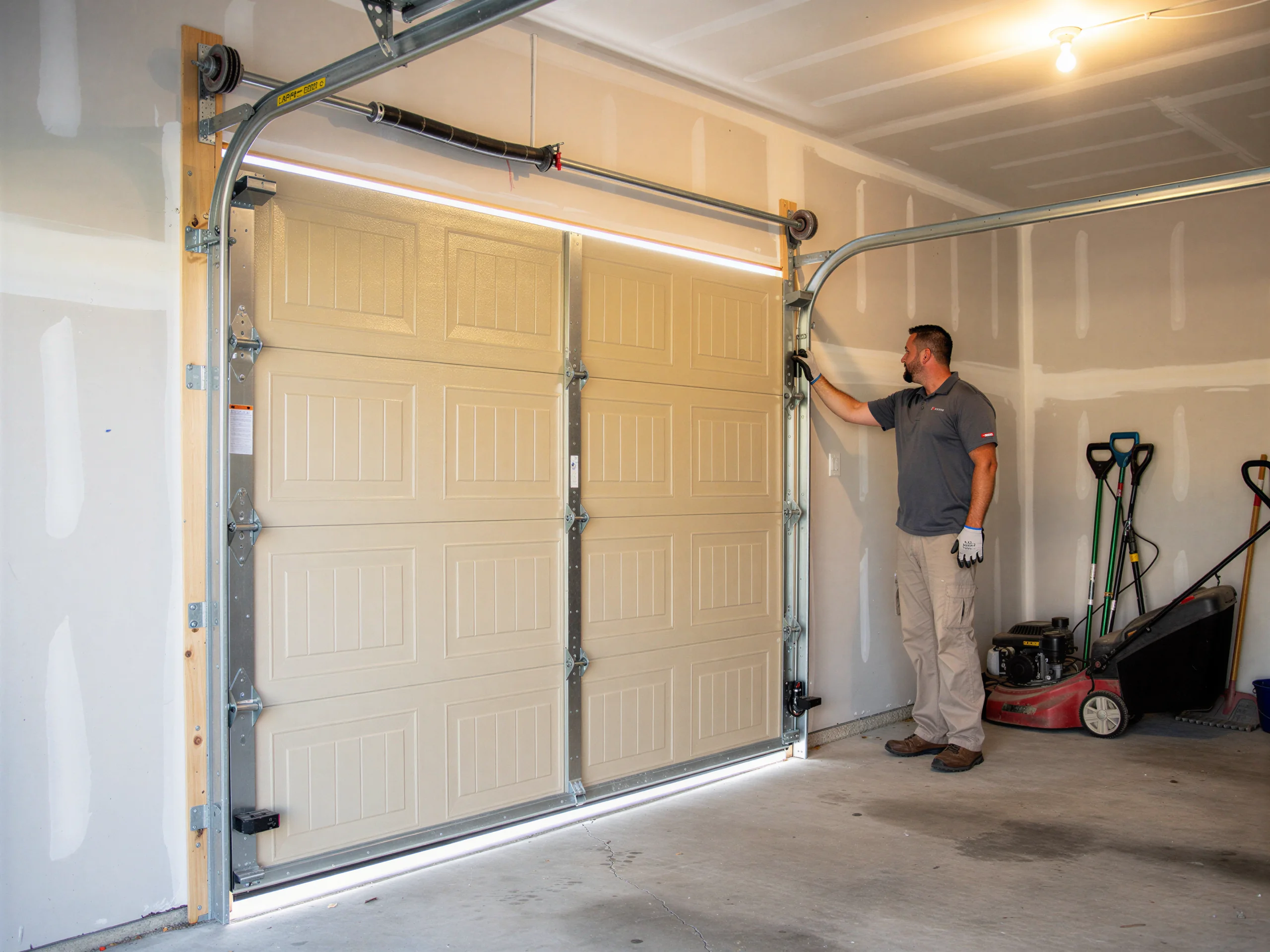
The catch is finding a panel that actually matches. Most Eldersburg garages went up around the development boom that put the area's median build year near 1988, which means a lot of sectional steel doors with a specific rib pattern and panel height that builders bought by the truckload back then. Those exact profiles aren't a universal part - some are long discontinued by the original maker.
Measuring panel before calling
You can pull the old panel and measure it yourself, and that's worth doing before you call anyone, because it tells us what we're sourcing before the truck leaves Baltimore. What you can't easily do on your own is match steel gauge and finish well enough that the new section doesn't stick out next to the rest of the door.
Fit that looks off
We've seen plenty of DIY jobs where the panel fit the track fine and still looked wrong from the driveway. If the match is close enough, fine - do it. If it's a special order, you're better off having us source the right part the first time instead of mailing back a wrong one.
What Causes It Around Here
The panels we replace in Eldersburg aren't failing the same way as the ones in the older parts of the service area. Housing stock from the late 1980s used lighter-gauge steel panels than the heavier doors common on homes from the 1960s and 70s elsewhere in the region - lighter steel dents easier under a bumper tap or a stray baseball, and once it's dented, foam-filled panels from that era don't pop back like the solid wood doors on older houses sometimes do. The region sits in a cold climate band with hard freeze-thaw swings, and on these foam-core panels that cycle works at the seam between the steel skin and the insulation. Over enough winters the seam opens, moisture gets in, and the panel bows or the paint bubbles along that line. We also see fading and chalking on the lighter aluminum trim pieces that came standard on a lot of builder-grade doors from that generation - sun does more damage to that trim than to the heavier steel face. None of this is dramatic failure. It's slow cosmetic and structural wear that shows up as one bad panel in an otherwise fine door, which is exactly the kind of job this service covers.
The Complications
The real complication isn't the swap - it's the match. A door built in the late 1980s used panel colors and wood-grain textures that manufacturers have since changed or dropped, so a replacement panel in a near-identical shade can still look off next to thirty-some years of sun exposure on the original panels.
Patched look stands out
On a street where homes carry a median household income well above the wider service area's figure, owners notice that kind of mismatch fast - a patched-looking door on a well-kept house stands out more than it would elsewhere.
Visible step off original
We're honest about this upfront: sometimes the closest available panel is a visible step off from the original, and the only way to get a true match is replacing more than the one damaged section, which changes the scope of the job. We'll tell you that before we order anything, not after.
Distance adds special-order wait
The other complication is distance - we're coming from Baltimore, roughly 20 miles out, so a part that has to be special-ordered means a second trip once it arrives rather than a same-visit fix. We plan around that, but it's worth knowing going in rather than being surprised by it.
What You Pay
We don't post a flat price for panel replacement here because the cost swings hard on two things: how common your panel profile still is, and whether one section will do or the mismatch forces a wider repair.
Standard versus special-order panel
A standard steel panel in a current profile costs a lot less than a special order matched to a door from the late 1980s that the manufacturer no longer makes in that exact run. The trip from Baltimore is part of any quote, not an add-on surprise - we build it in up front rather than tacking it on later.
Panel cost nears new door
What we can tell you honestly is that if the panel damage is extensive enough, or the door is old enough that sourcing one section costs close to what a new door would run, we'll say so instead of selling you a patch job that won't hold up.
Number before work starts
That's not a sales line - it's just the math on an older, discontinued panel style. Ask for the number before we start, and we'll give you a real one based on what your door needs, not a quote pulled from a price sheet that doesn't know what's actually on your garage.
Booking a Visit
If you've already got a cracked or dented panel and want it looked at properly, start with our Eldersburg garage door repair page, where we cover the broader range of repair work we do out this way.
Related panel page link
If you're further along and know it's specifically a panel swap you need, or you want to read about how we handle panel work across the wider service area, our Baltimore panel replacement page has that detail.
Panel details ready on call
Either way, have the door's panel count, height, and any model or part numbers visible on the inside of the section ready when you call - it saves a trip and speeds up sourcing the right match, especially on an older profile.
Scheduled visit, bring part
We travel from Baltimore to reach Eldersburg, so we're not running a same-day drop-in depot here; we schedule the visit, confirm what part we're bringing, and show up with it rather than guessing on site.
Talk to a local pro
Garage door service in Baltimore?
Same-day service with honest, upfront quotes.