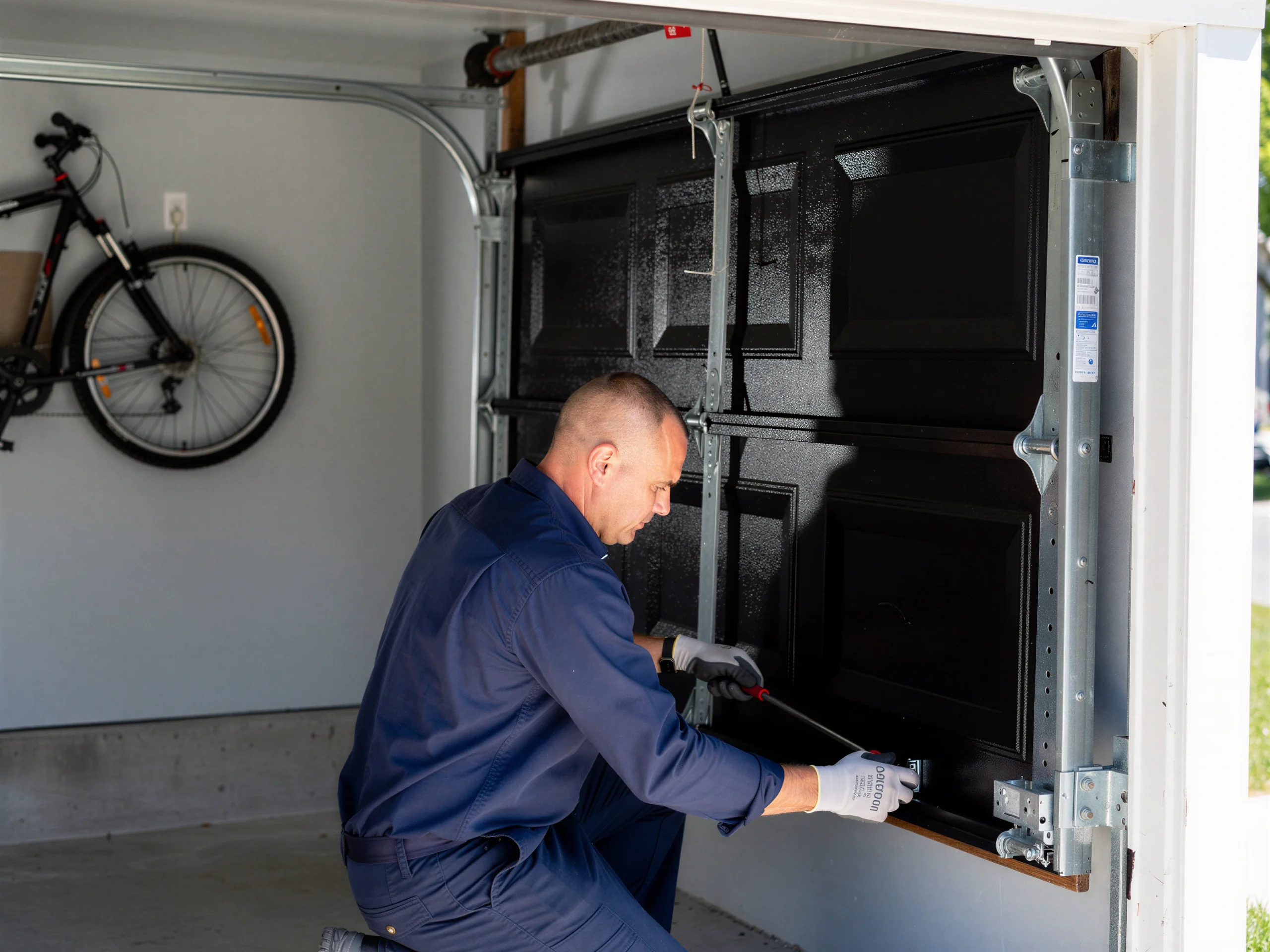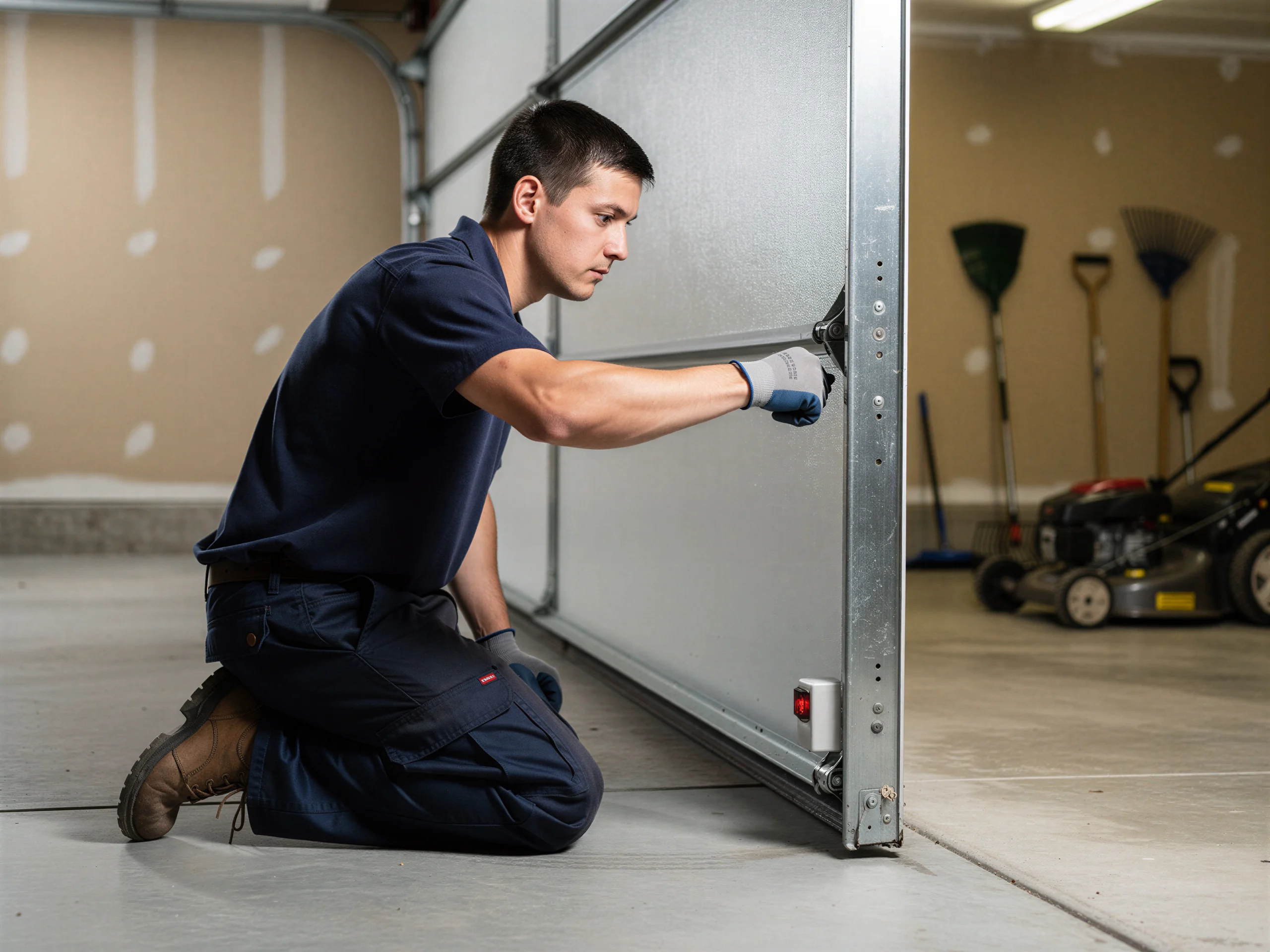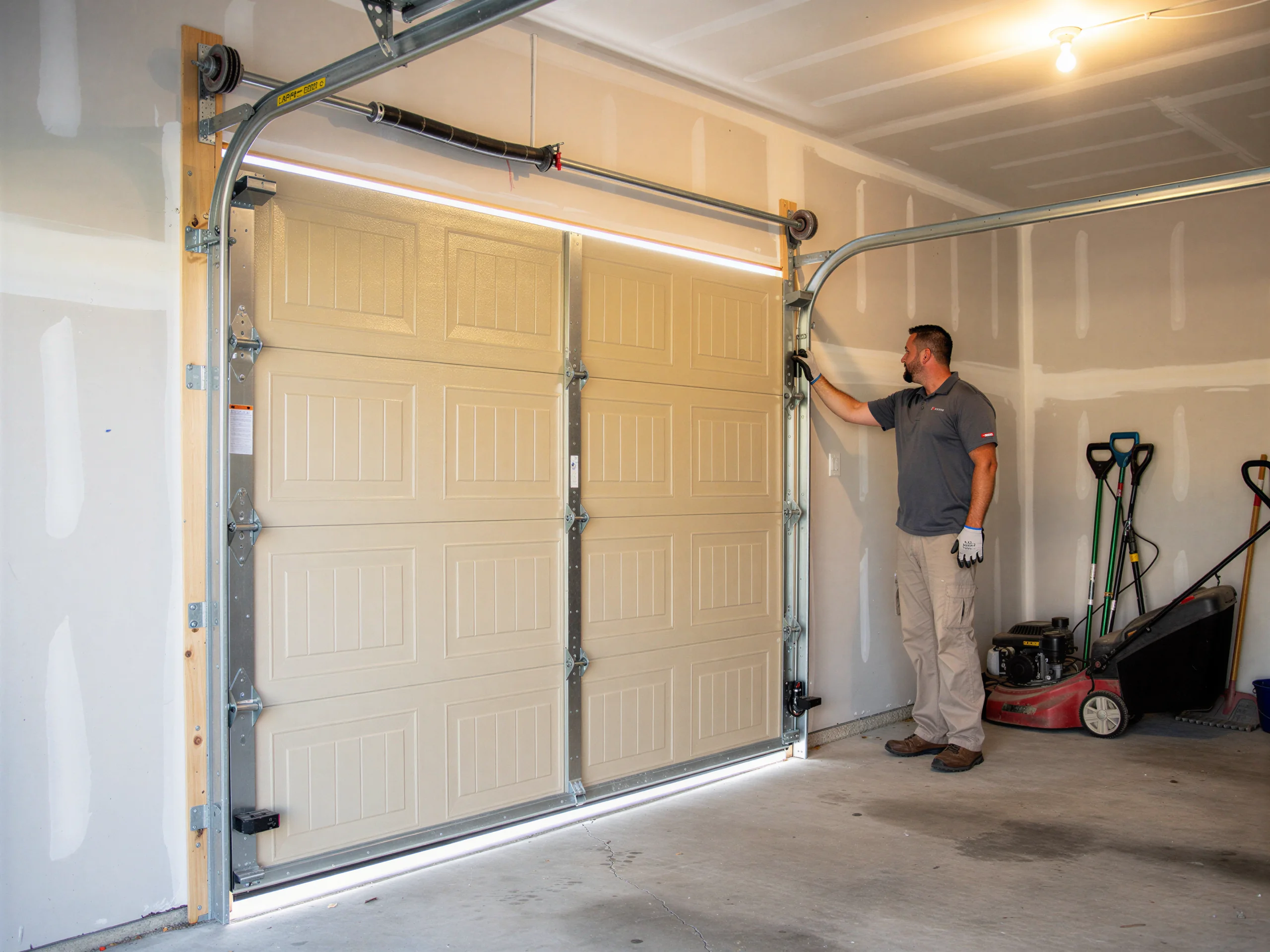
The Complications
Brooklyn Park's housing stock centers on 1955, a full generation earlier than the broader service area's 1978 median build year. That matters for cable work because a door built in the mid-1950s has had decades for its original lift cables, drums, and end terminals to work, and in a lot of cases nobody has ever touched them.
Fraying cable finally fails
The cable looks fine until the day it doesn't - a few strands fray at the drum, the door racks sideways on its tracks, or the whole thing drops on one side when the last strand lets go. With close to 5,540 households in Brooklyn Park, that kind of failure isn't an occasional thing - it's a steady, predictable call every week from houses of the same era.
Drum and cable wear together
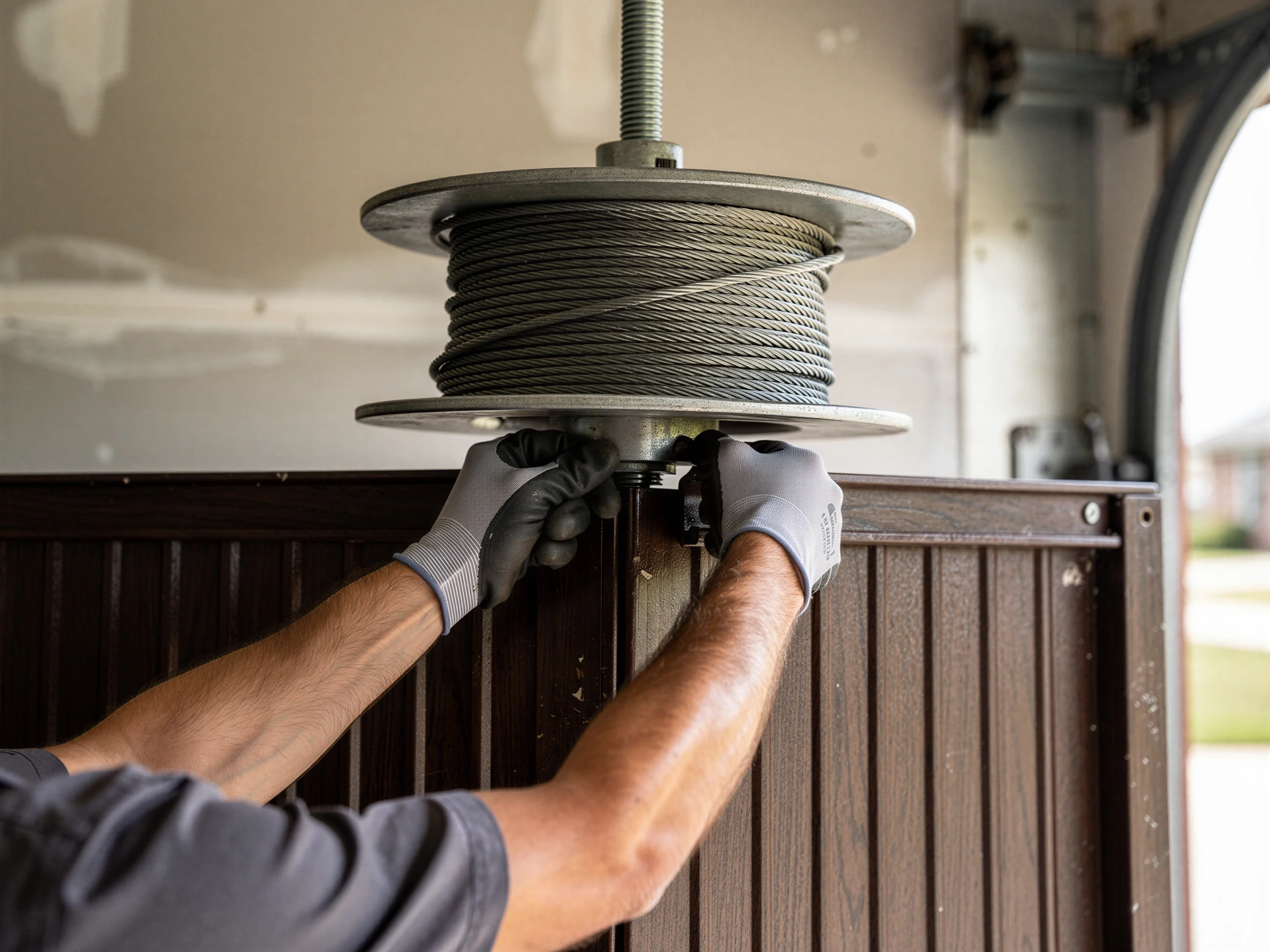
The complication with older cable setups is that the drum and the cable are often a matched, worn-together pair. Replace one without checking the other and you're back out again in six months. We check drum wear, track alignment, and whether the opposite-side cable is close behind before we call the job done.
Galvanized cable in freeze
The area's severe cold-winter climate adds its own wear: galvanized cable from the 1950s doesn't flex the same in freezing temperatures as the coated cable used today, so winter is when a lot of these original cables finally give out.
Can You Do This Yourself
A broken garage door cable is under real tension - the kind that can snap a finger or drop a 150-pound door section on your hand if you don't know exactly how to release it first.
Injury risk, no coaching
We won't talk anyone through doing this themselves, not because it's impossible, but because the margin for a serious injury is too thin to gamble on. What you can do yourself is spot the problem early.
Spotting cable wear early
Look at the cable where it wraps the drum at the top corners of the door - if you see frayed strands, rust, or the cable sitting unevenly on the drum, that's a cable on its way out, not one that's fine for now. Catching it before it snaps means a controlled repair instead of an emergency one with a door stuck halfway open or closed.
Cable swap won't suffice
One honest limitation: if the drum itself is worn or the track has bent from the door dropping unevenly, a cable swap alone won't fix it. We'll tell you straight if the job is bigger than a cable, because patching just the cable on a bent track means you're paying for the same call again soon.
What You Pay
Brooklyn Park's median household income of $84,276 runs well below the wider service area's $109,661, and that gap shows up in the decisions people make here - more households choosing a cable repair over a full door replacement when the door is otherwise sound.
Cheaper than full unit
That's often the right call. A cable and drum replacement on a door that's structurally fine costs a fraction of swapping the whole unit, and if the panels and opener are in decent shape, there's no reason to replace what isn't broken.
Price drivers on cables
What drives the price on any given job is whether it's one cable or both, whether the drums need replacing alongside the cable, and whether the tracks need realignment after the door has been running crooked.
Flat quote needs inspection
We don't have a flat number to quote here without seeing the door - a single-cable swap on a door that's otherwise sound is a different job than one where the drum is chewed up and the track is bent from months of the door riding unevenly.
What Causes It Around Here
The most common cause we see tracing back to Brooklyn Park's 1955 median build year is simple age - cable wears from thousands of open-close cycles over close to seventy years, and a lot of these houses are still running cable that predates any of their current owners. Rust at the drum groove is common too, especially on doors where the original cable was never swapped out when the springs were serviced, which is a mismatch that accelerates wear on both parts.
The region's severe cold winters play a real role as well. Cold makes steel cable more brittle and less forgiving of the small nicks and kinks that build up over decades of use, so a cable that's survived fine through mild weather can finally fray through on a hard freeze. A door that's slightly out of track alignment - common on older homes where the framing has settled over the decades - also puts uneven load on one cable, wearing it faster than its twin on the other side.
Talk to a local pro
Garage door service in Baltimore?
Same-day service with honest, upfront quotes.