The Complications
Most houses in Brooklyn Park went up around 1955, which puts this pocket near the oldest end of the service area's 1955 to 2014 build range.
Retrofitted opener mismatch
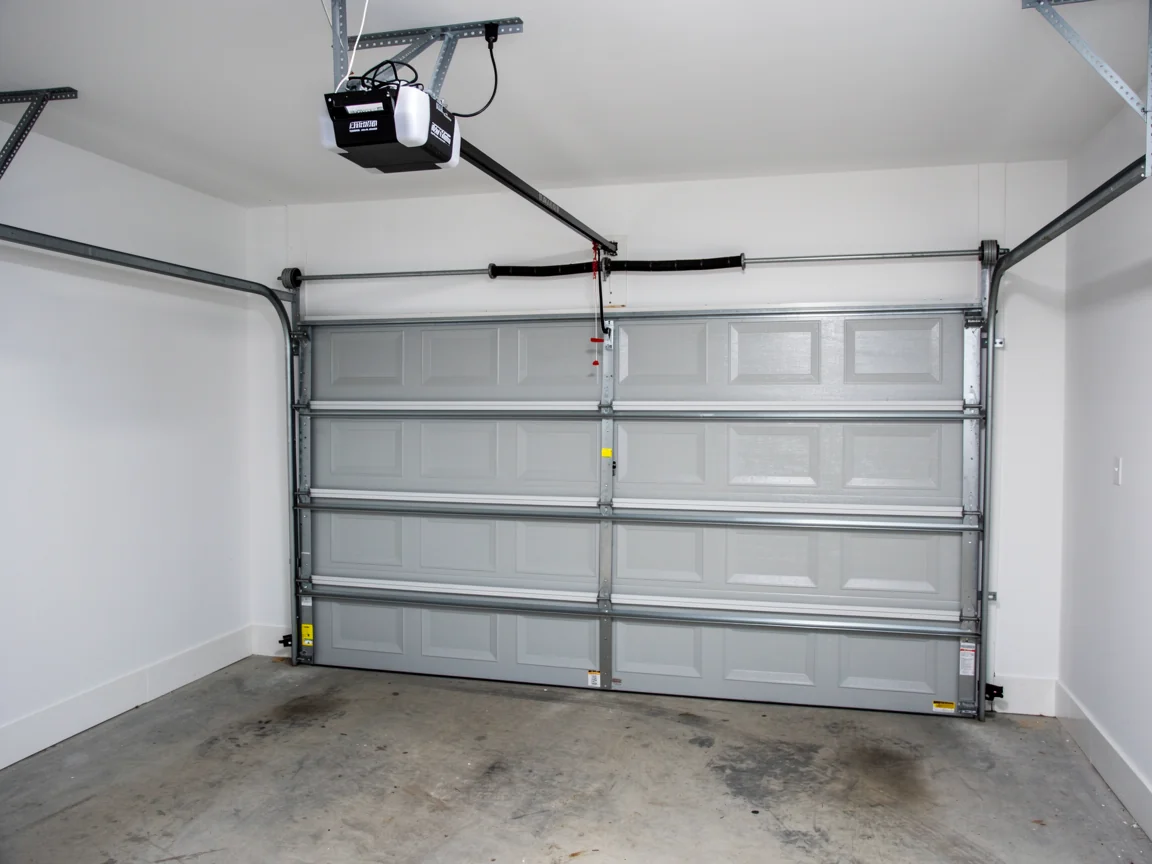
A garage from that period wasn't built with an opener in mind. Openers got added later, usually bolted onto whatever bracket and header the original door had, not engineered together as a matched system. That mismatch is the root of a lot of the calls we get from this side of town.
Unreinforced header strain
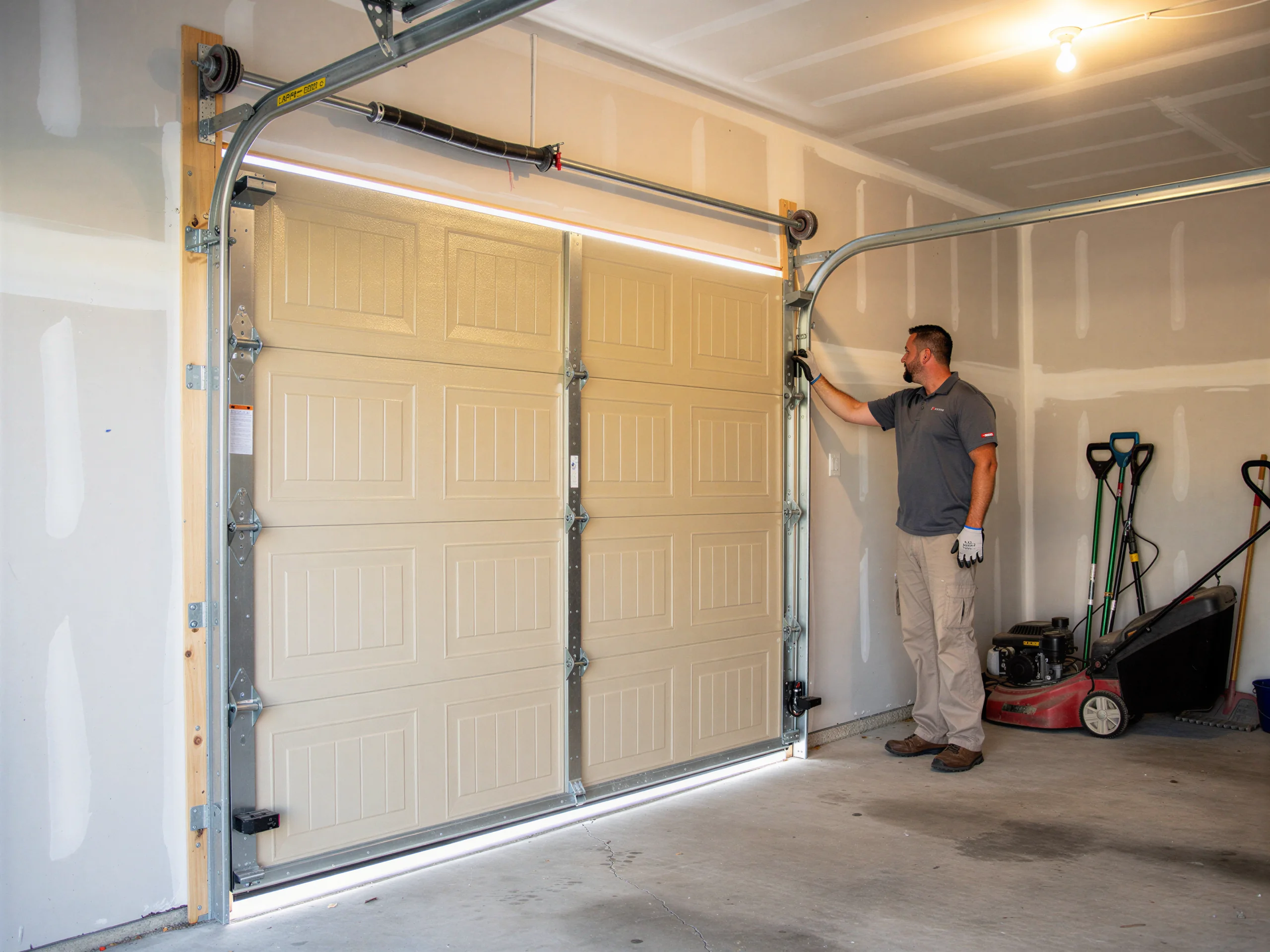
What that means in practice: a chain or belt drive straining against a header that was never reinforced for the load, a travel limit that drifts because the rail was shimmed at an angle to clear old framing, or a safety reversal sensor mounted wherever it would fit rather than where it should go. None of that shows up as an opener problem at first.
Reversal faults in cold
It shows up as "the door reverses for no reason" or "it only works if I hold the button. Add the area's winters. The region sits in a cold, severe climate band, and cold is hard on opener electronics and on anything with grease in it. Circuit boards get sluggish, chain tension changes as metal contracts, and the gear set in an older unit wears faster when it's fighting stiff hardware on a 20-degree morning.
Can You Do This Yourself
Some of it, yes. Replacing the light bulb, reprogramming a remote, wiping down and lubricating the rail - that's homeowner work and there's no reason to pay someone for it.
Bracket tightening is fine
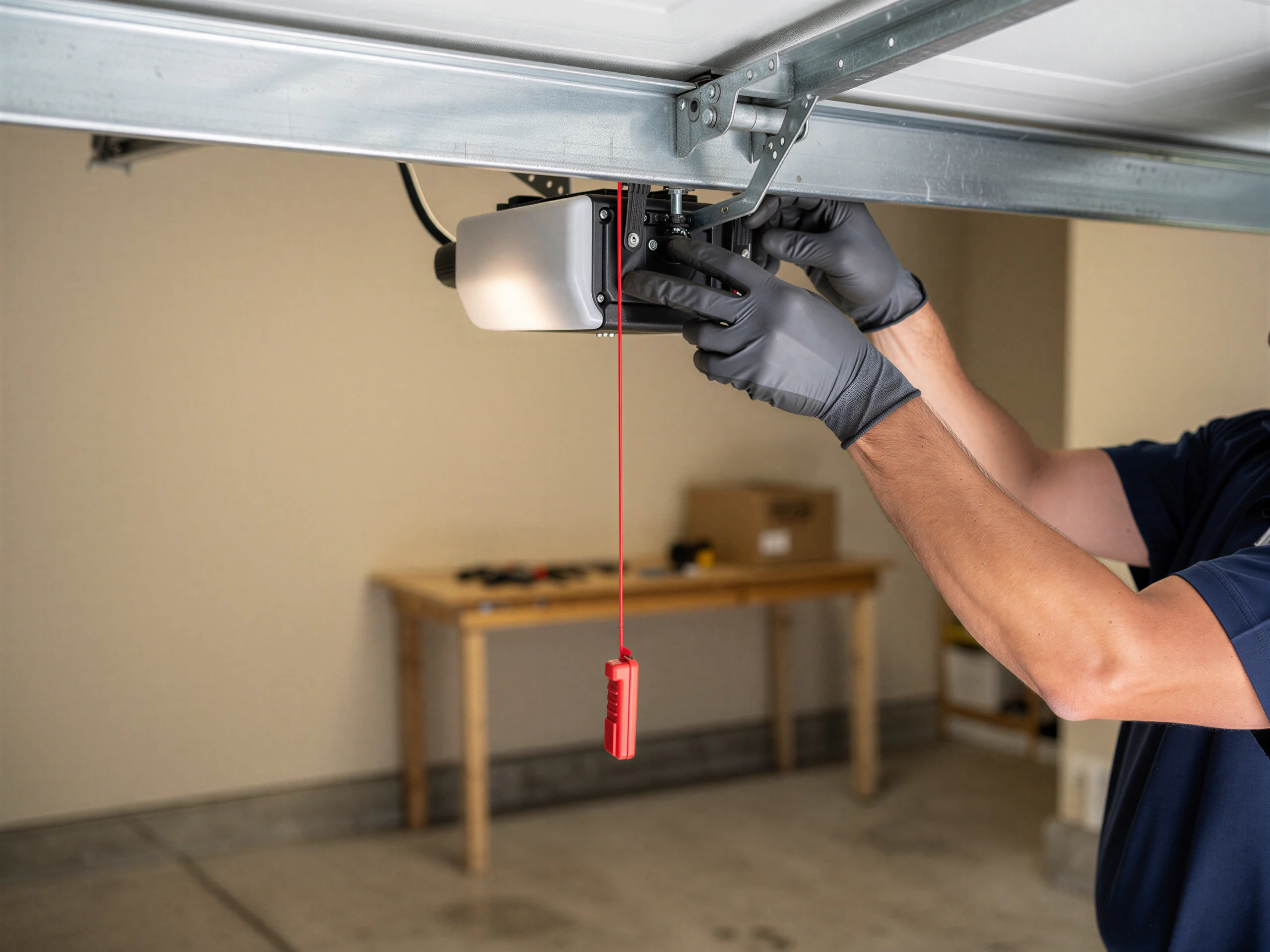
Tightening a loose mounting bracket on the header is usually fine too, as long as you can get a ladder stable under it. Where we'd tell you to stop: anything involving the safety reversal sensors, the travel limit adjustment, or the drive gear inside the opener housing.
Off-spec retrofit sensors
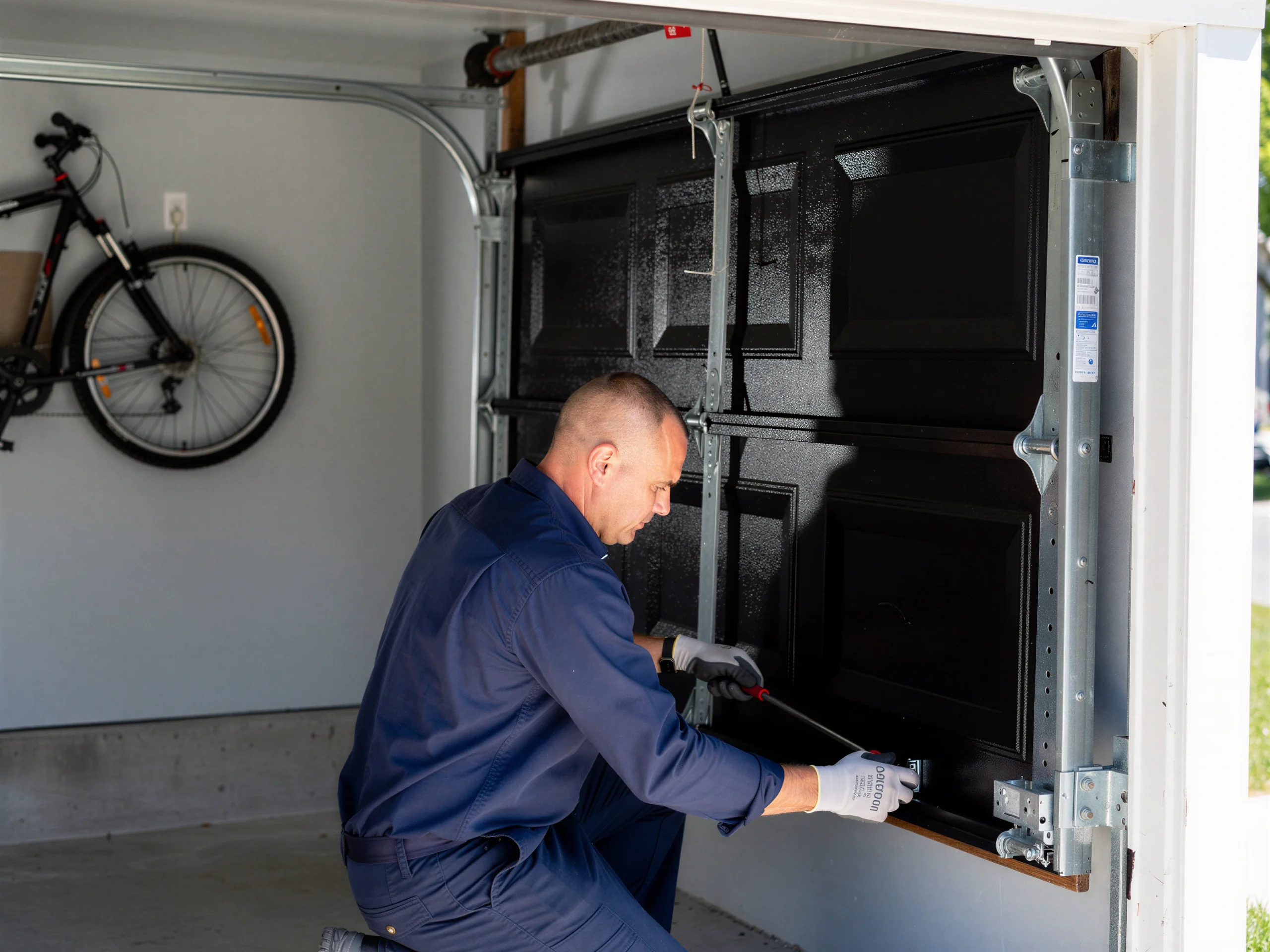
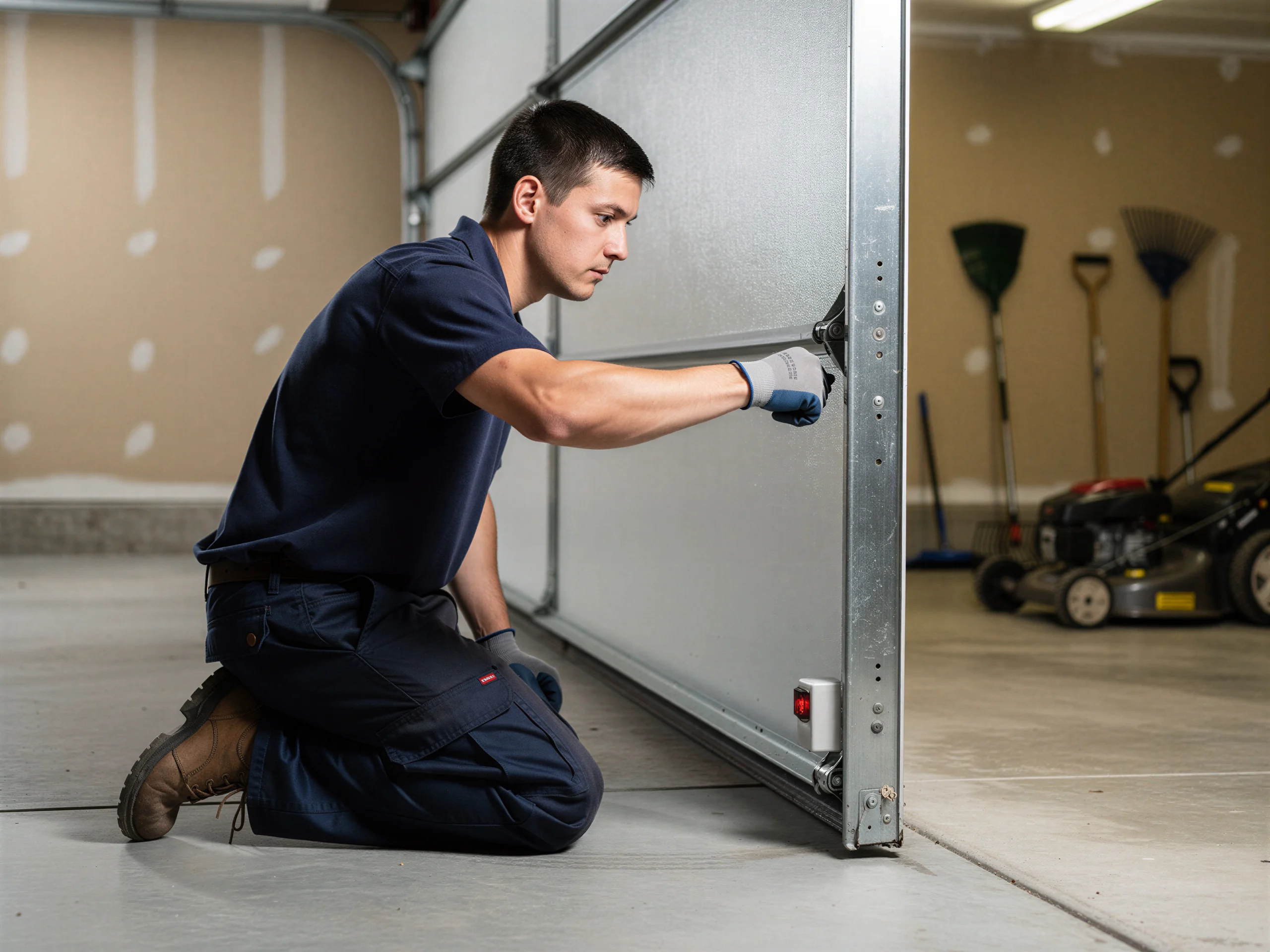
On a retrofit install - which is what most Brooklyn Park garages have - those sensors are often mounted off-spec to begin with, and moving them without knowing where they should sit can leave you with a door that doesn't reverse when it should. That's not a convenience issue, that's a door coming down on something it shouldn't. The other limit is parts.
Board or gear availability
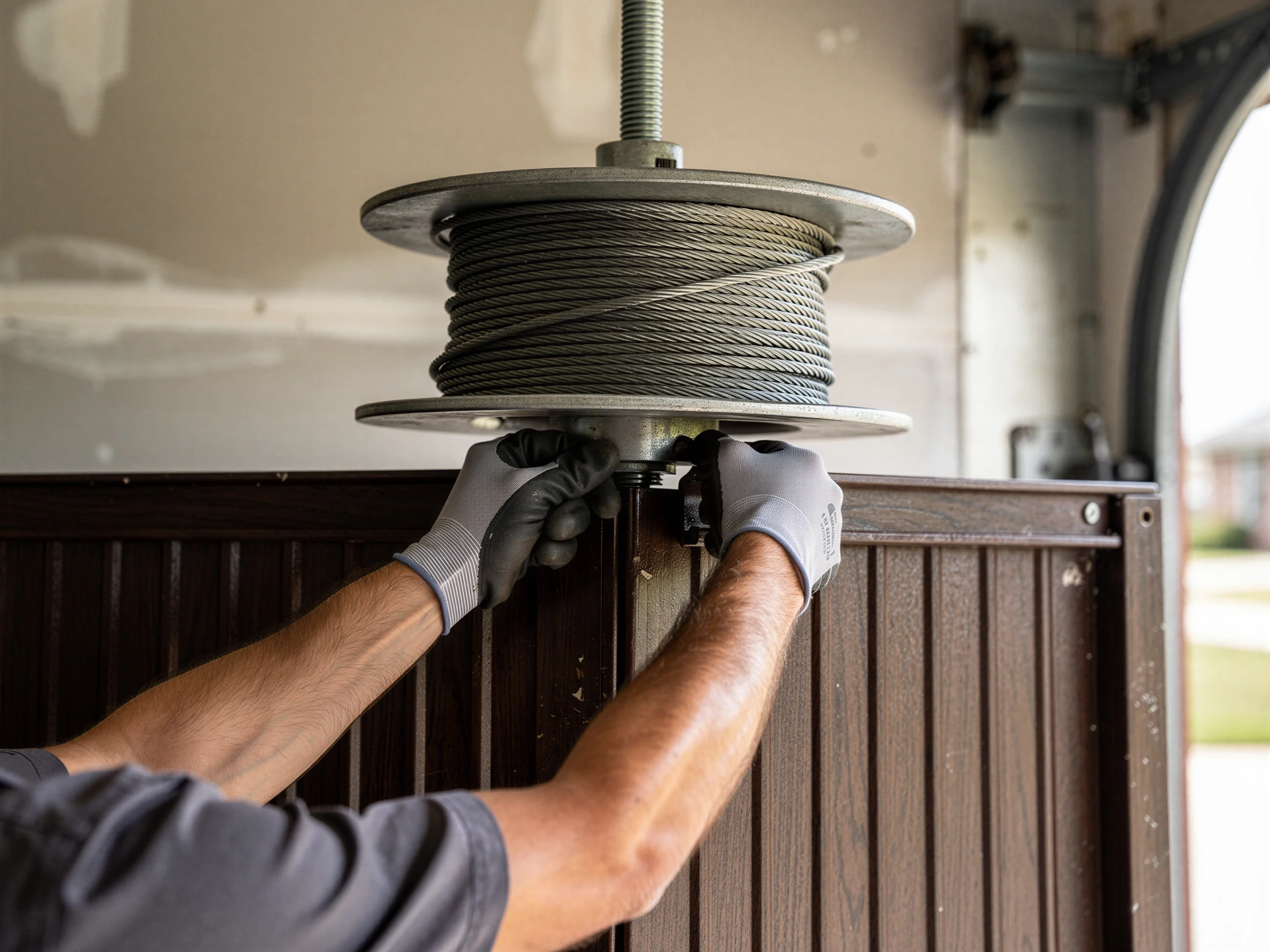
If the opener itself is the kind of older unit that was common on houses from this era, the circuit board or gear kit may not be something we can get same-day. We're straight with customers about that: sometimes it's faster and not much more expensive to replace the unit than to wait on a part for a motor that's near the end of its life anyway.
What You Pay
We don't have a flat number to quote here because what the job costs depends on whether you're looking at a logic board, a gear set, a sensor realignment, or a full opener swap - and on a retrofit install like most of what's in Brooklyn Park, we won't know which one it is until we're looking at the bracket and the header in person.
What we can tell you is how we think about the decision. Brooklyn Park's median household income runs lower than the wider service area's - a little over $84,000 here against roughly $109,000 across the territory we cover from Baltimore - and we take that into account when we talk repair versus replace. If a 1955-era opener needs a board and a gear set both, that's often two repairs chasing a motor that's already tired. We'll tell you straight if a new opener is the better use of the money instead of patching an old one twice.
What Causes It Around Here
The two things we see most in Brooklyn Park are age and cold, and they compound each other. An opener installed as a retrofit on a 1955 garage is already carrying load it wasn't designed around - an off-angle rail, a header bracket that's been re-drilled once or twice over the decades. Add a severe-cold winter and the stress shows up as stripped gears, a chain that jumps the sprocket, or a logic board that stops responding until the garage warms up past freezing.
We also see openers that were sized for a lighter original door and then paired, at some point, with a heavier insulated replacement door. The motor keeps running but it's working harder than it should, and that shortens its life. None of this is unique to one house - it's a pattern across the older stock here, which is part of why Brooklyn Park's opener calls skew toward full-unit fatigue rather than a single clean part failure.
We travel to Brooklyn Park from Baltimore, about 6 miles out, so there's no separate branch here - just the same crew working the same hardware pattern across this side of the county.
Talk to a local pro
Garage door service in Baltimore?
Same-day service with honest, upfront quotes.