The Complications
The problem we run into most in Brooklyn Park isn't the install itself, it's the opening. A lot of these houses went up fast in the mid-1950s, and the garages that came with them were sized for cars nobody drives anymore - narrow single bays, low headroom, and rough framing that was never meant to carry a modern steel or insulated door.
Standard sizes do not fit
Brooklyn Park's housing mostly dates to around 1955, a few years ahead of the broader service area's median build year of 1978. That gap matters on an install. A door made for today's standard sizes often doesn't sit flush in an opening framed before those sizes existed.
Trimming jamb and blocking
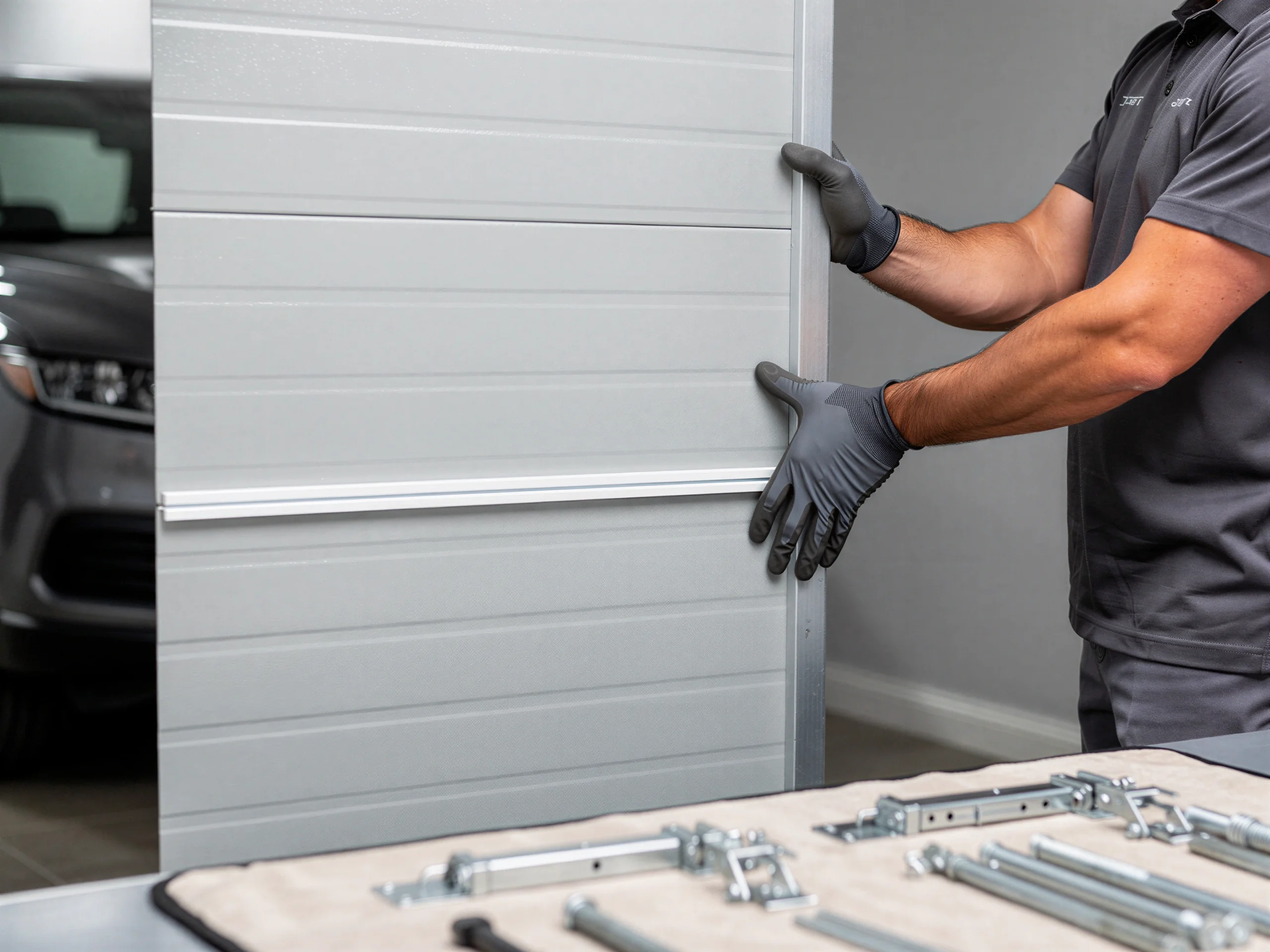
We end up trimming jamb, adding blocking, or special-ordering a door cut to the actual rough opening instead of a stock width. None of that is a problem if we catch it before the door shows up on the truck. It's a problem if we don't measure first.
Low joists need low-headroom
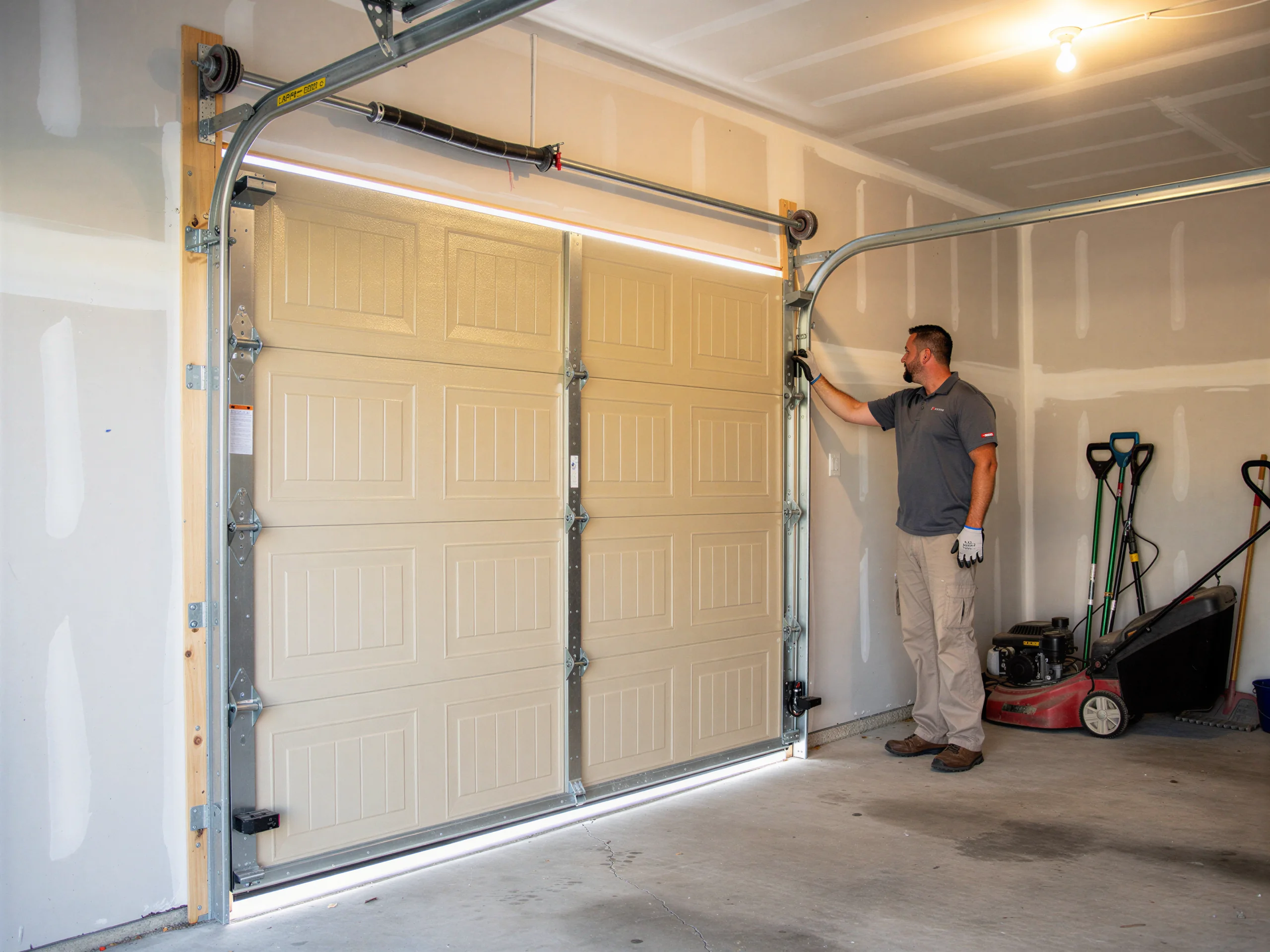
Headroom is the other recurring issue. A lot of these garages were built with low ceiling joists and no room for a standard torsion spring setup, which means the track and spring assembly has to be swapped for a low-headroom kit rather than the default hardware that comes with most new doors.
Can You Do This Yourself
A new garage door is not a weekend project, and on a house this age, it's riskier than usual. The door itself might go in fine.
Shifted framing and headers
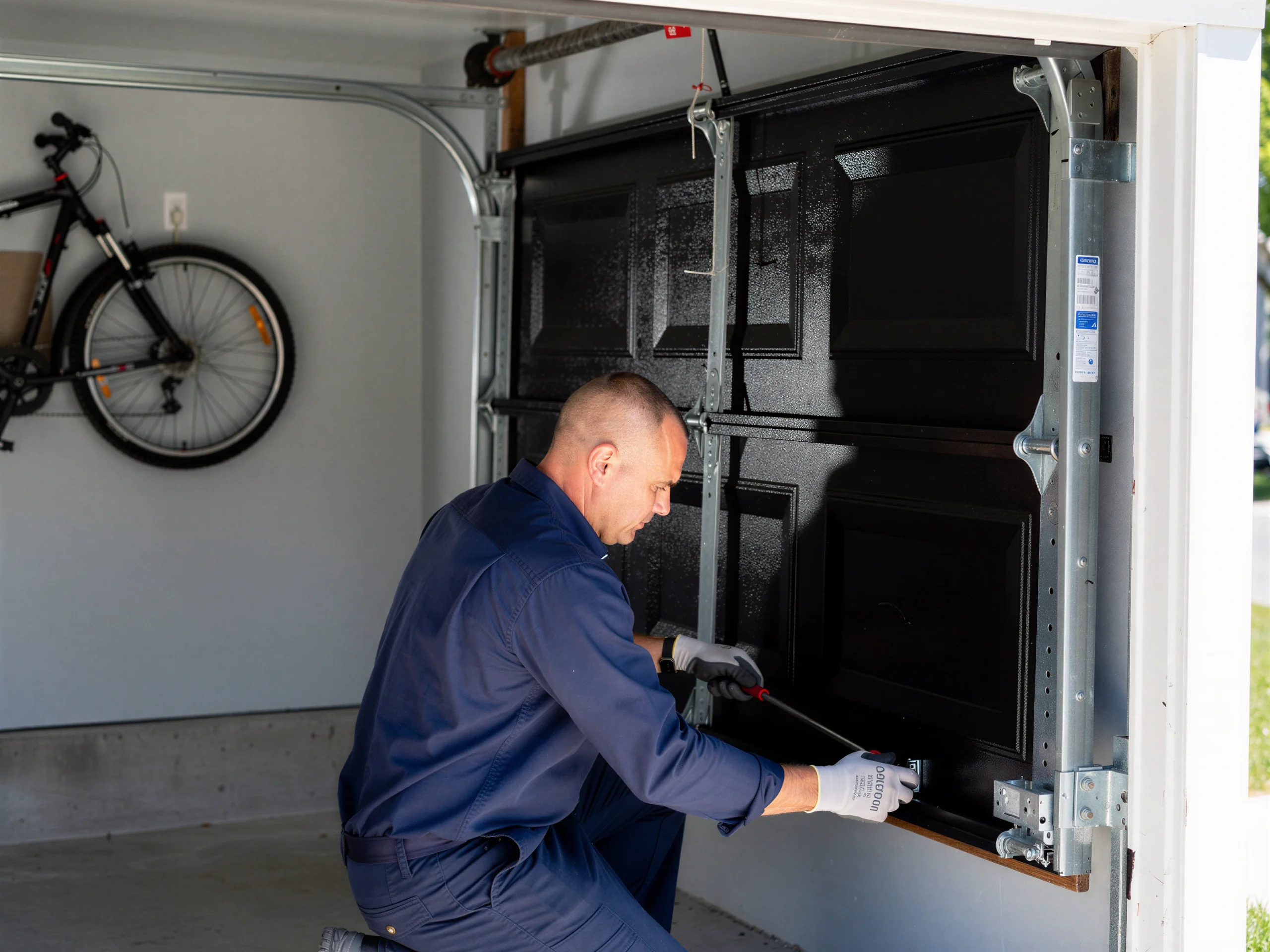
What trips people up is the opening underneath it - old framing that's shifted, a header that was never squared to begin with, or a slab that's settled unevenly over seventy years. You can hang a door on a bad opening. It just won't seal, won't balance, and won't last.
Spring tension danger
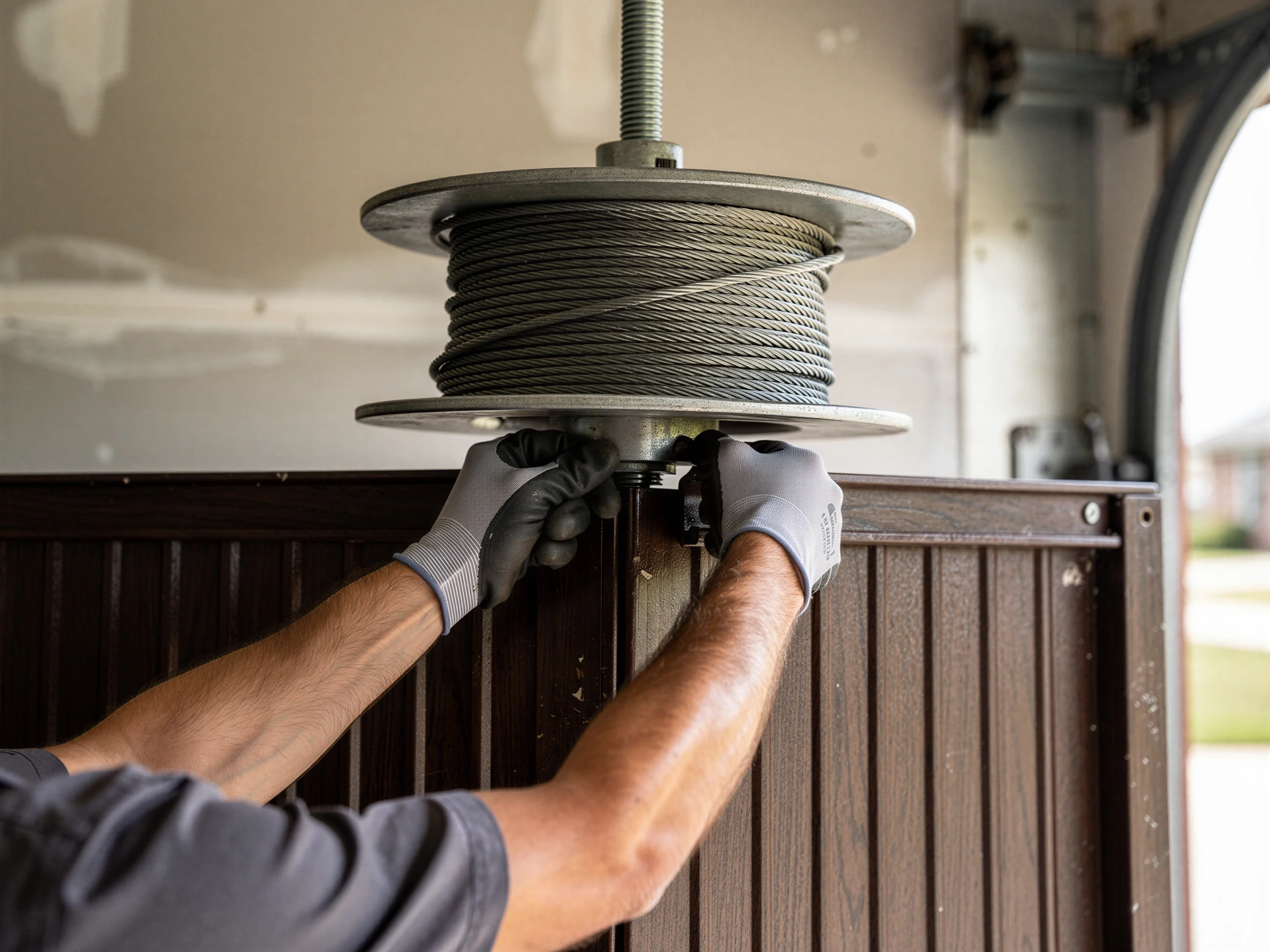
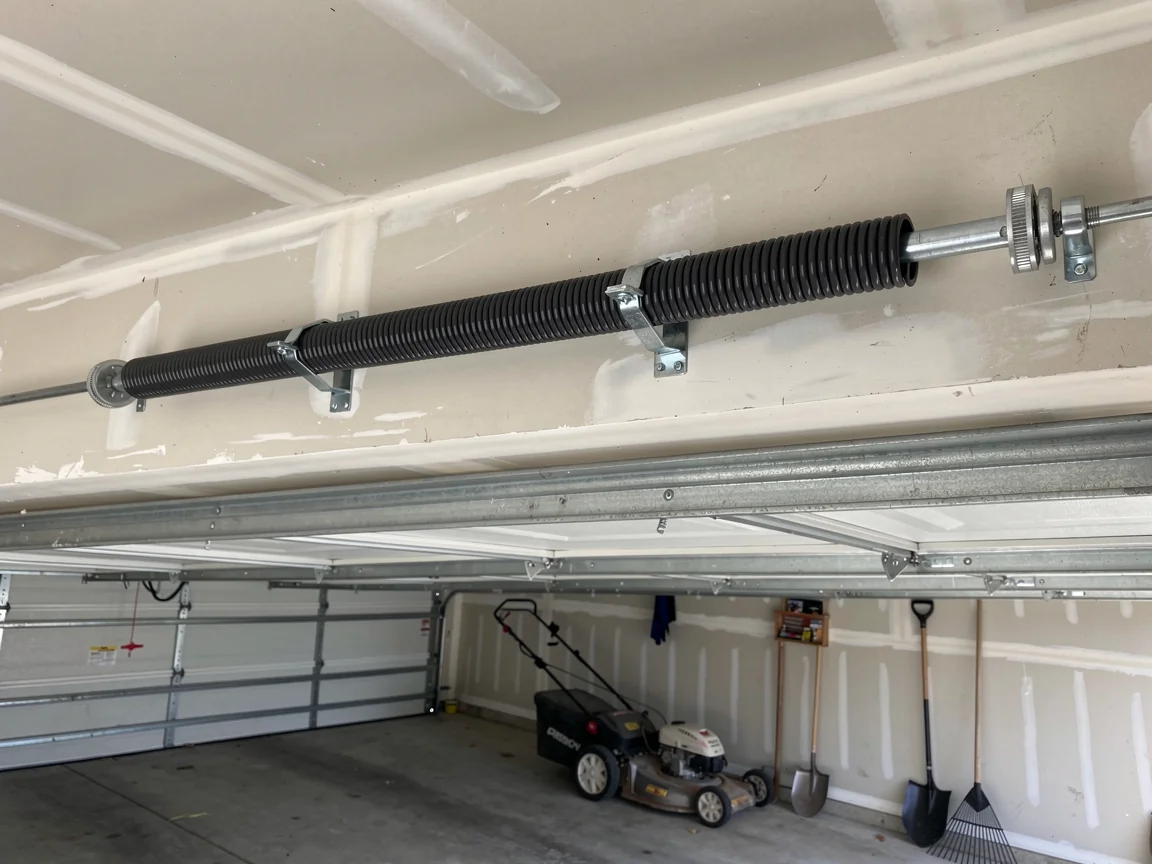
The spring system is the other reason to leave this one alone. A torsion spring under tension can put someone in the hospital if it lets go while you're working on it, and on an older opening with non-standard headroom, you're often dealing with hardware that isn't the kit that came in the box.
When DIY is reasonable
If you've got the tools, the time, and you're comfortable with spring tension, a straightforward door on a square, standard opening is doable. An opening framed in 1955 is a different job, and it's where we'd tell you to call instead of guess.
What You Pay
We don't post a flat price for new installs here because the opening dictates half the cost before we've picked a door. A standard-size steel door going into a squared, modern opening costs less than the same door going into a 1955-era single-car bay that needs a low-headroom spring kit, jamb repair, or a custom-width panel ordered to fit.
Median household income in Brooklyn Park runs $84,276, well under the $109,661 median across the wider service area we cover from Baltimore, and that gap shows up in what people choose. More owners here go with a straightforward steel panel door than an insulated composite one, not because the composite door is a bad choice, but because the steel door gets the garage weathertight for less money. We'll walk the opening with you, tell you straight whether the framing needs work first, and give you a number before anything gets ordered - not after.
What Causes It Around Here
The short version: age and climate, in that order. With roughly 5,540 households in Brooklyn Park, most sitting on lots laid out in the 1950s, a large share of these garages still have their original single-car openings, original headroom, and in some cases the original door track bolted to framing that's moved a little over the decades.
The cold is the second factor. We're in a severe cold climate band here, and an uninsulated door on a 1955 opening with no weatherstripping to speak of lets a lot of heat walk straight out of an attached garage - which matters more if there's a furnace, water heater, or finished room on the other side of that wall. Most of the new-install calls we get in Brooklyn Park come down to one of two things: the old door finally failed on hardware nobody makes anymore, or the owner got tired of a garage that never holds heat. Either way, the fix starts with measuring the actual opening, not assuming it matches what's standard today.
Talk to a local pro
Garage door service in Baltimore?
Same-day service with honest, upfront quotes.